







Definition and Purpose of the Release Form
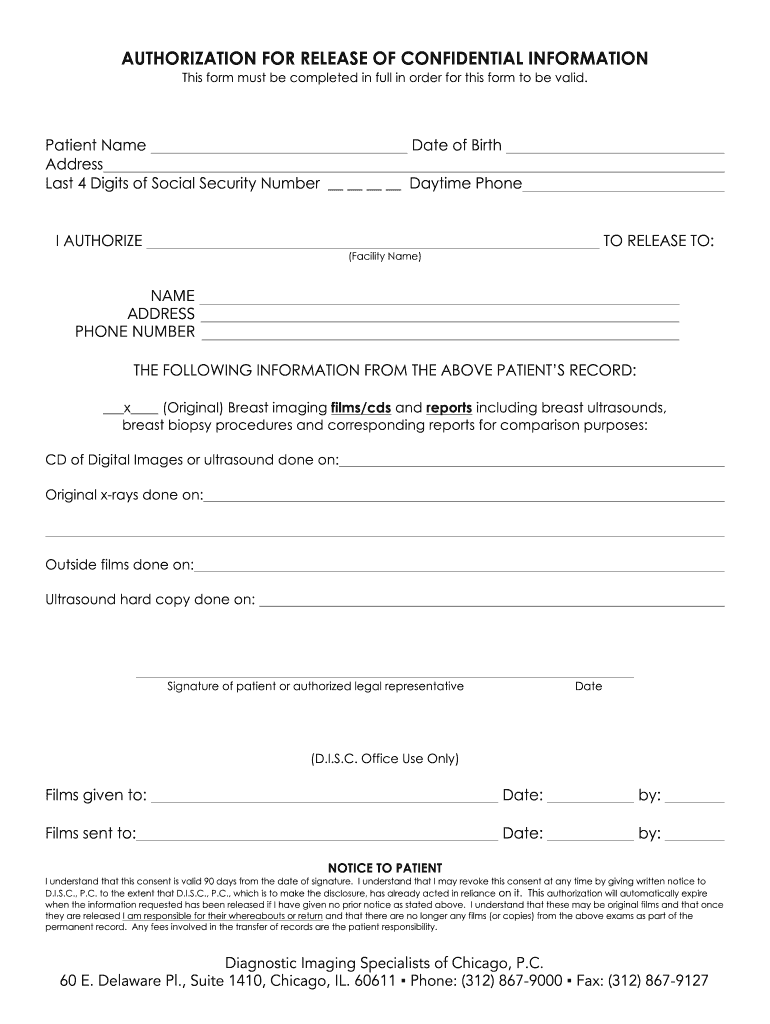
A "Release Form for Mammogram, Breast Imaging Films, CDs Patient Forms" serves as an authorization allowing healthcare facilities to release specific medical records, such as mammograms and imaging reports, to designated parties. This form is crucial for maintaining confidentiality while ensuring that medical information is shared legally and responsibly. It details the patient's consent, specifying which records are to be released and to whom, guaranteeing that both the healthcare provider and the recipient understand their responsibilities regarding the handling of sensitive medical data.
How to Use the Release Form
To use the release form effectively, patients must provide comprehensive and accurate information to ensure that the records are transmitted correctly. Here are the steps involved in using the form:
- Patient Information: Begin by filling out personal details such as name, date of birth, and contact information.
- Recipient Details: Clearly state the name and address of the individual or facility that will receive the medical records.
- Specific Records: Specify the exact medical records to be released, e.g., mammogram films or imaging CDs.
- Consent and Signatures: Sign the form to give consent for the records to be shared. This section often includes an expiration date for the consent.
Steps to Complete the Release Form
Completing the release form involves detailed steps to ensure its validity:
- Download the Form: Access the form online or request a paper version from your healthcare facility.
- Fill Out Personal Information: Input your full name, birth date, and phone number for identification.
- Specify Medical Records: Detail the type of records to be released, such as mammogram images or reports.
- State Recipient's Information: Indicate the name and address where the records should be sent.
- Set Validity Period: Define the period during which the consent is valid, if applicable.
- Patient's Signature: Sign the document to confirm your consent, ensuring the signature matches records with your healthcare provider.
Legal Use and Compliance
The use of "Release Form for Mammogram, Breast Imaging Films, CDs Patient Forms" must adhere to legal standards, such as HIPAA in the U.S., ensuring patient confidentiality is protected during the transfer of medical records. Legal compliance involves understanding:
- Authorization: Patients must voluntarily authorize the release of their records.
- Revocation Rights: Patients can revoke consent at any time, usually in writing.
- Expiration: The consent has a defined expiration period, limiting how long the records can be shared or accessed.
Key Elements of the Form
Critical components within the release form ensure completeness and legality:
- Patient Identification: Essential personal information for identifying the patient.
- Recipient's Name and Address: Identifies who will receive the records.
- Description of Information: Details of the specific medical records to be released.
- Authorization Statement: Provides clear consent from the patient to release the records.
- Signature Lines: Includes space for the patient’s signature and date, often requiring witnesses or additional authorization.
State-Specific Regulations
State laws can affect how medical release forms are handled. Some states have additional protections or requirements:
- Additional Signatures: Some states require a witness's signature or a notary.
- Specific Wording: States may have unique wording requirements to comply with local laws.
- Age Requirements: Different states have varying age criteria for patient consent.
Examples of Use Cases
Real-world scenarios where the release form might be utilized include:
- Transferring Care: When a patient moves and needs to transfer records to a new healthcare provider.
- Consultations: Sharing imaging results with specialists for a second opinion.
- Legal Proceedings: Providing medical records for legal cases involving health matters.
Alternatives and Variations
There may be variations or similar forms used in different contexts:
- Digital Versions: Some facilities offer e-forms that ensure quicker processing and transfer.
- CD Alternative Forms: Specific forms may be available for digital copies of imagery, differing slightly from traditional film release forms.
By understanding and effectively navigating these components, patients and healthcare providers can ensure the secure and compliant sharing of vital medical information.




