




01. Edit your form online
Type text, add images, blackout confidential details, add comments, highlights and more.

Type text, add images, blackout confidential details, add comments, highlights and more.

Draw your signature, type it, upload its image, or use your mobile device as a signature pad.

Send it via email, link, or fax. You can also download it, export it or print it out.
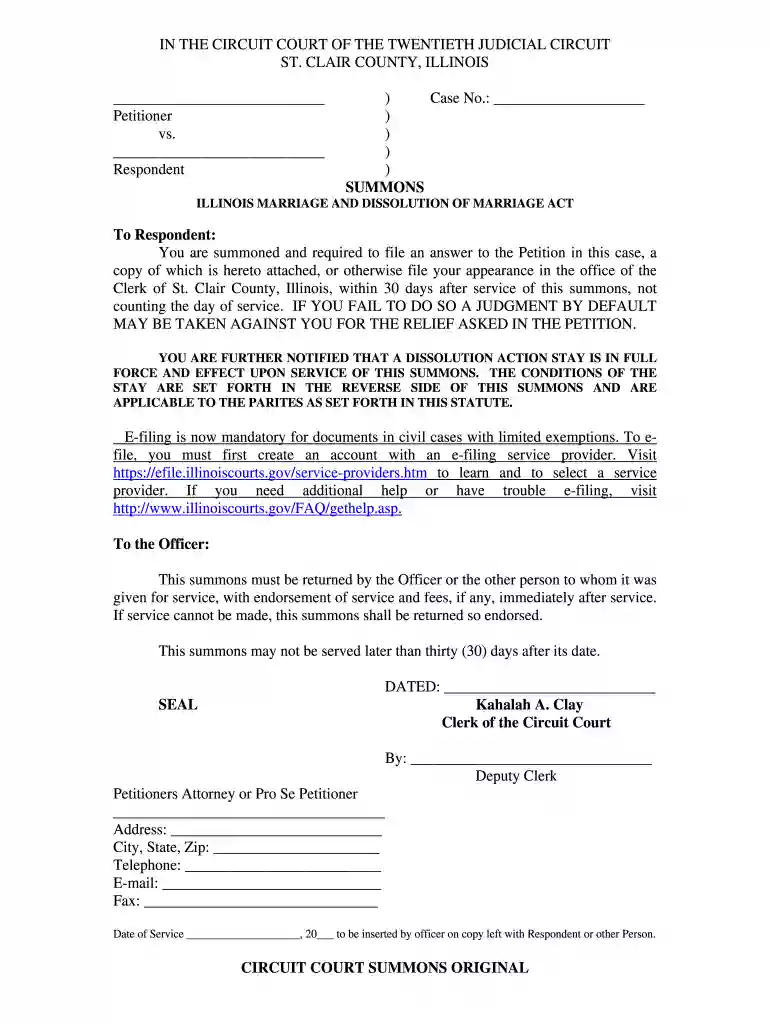
The F DIVORCE SUMMONS document is a crucial legal form used in the initiation of divorce proceedings. This form notifies the respondent—the spouse who did not file the divorce petition—of their legal obligation to respond to the divorce case within a specified timeframe, usually 30 days from receipt. Failure to respond can result in a default judgment, granting the petitioner's requests by default. The summons typically outlines any temporary court orders, such as restraining orders regarding property disposal or asset transfers, that are effective during the divorce proceedings.
Acquiring the F DIVORCE SUMMONS document involves the following steps:
Filling out the F DIVORCE SUMMONS involves several detailed steps:
Fill in Party Information: Include full names, addresses, and contact information for both petitioner and respondent.
Add Case Information: Indicate the court name, case number, and filing date. This information is usually provided once the divorce petition is filed.
Specify Legal Requirements: Outline any temporary orders or requirements that the court needs the respondent to follow. These may involve maintaining the status quo regarding finances or child custody.
Signature and Notarization: Some states require notarization. Ensure all signatures are in place, and depending on the state, have the document notarized.
File with Circuit Court Clerk: Submit the completed form to the clerk’s office to be officially recorded and served to the respondent.
The F DIVORCE SUMMONS doc is legally binding and carries significant consequences:
Key components include:
Each state in the U.S. may have variations impacting the F DIVORCE SUMMONS:
Before filing the summons, ensure you have these documents:
Here are some practical scenarios:
By understanding these elements and procedures, individuals involved in divorce proceedings can better navigate the legal implications and requirements that come with the F DIVORCE SUMMONS document.
We've got more versions of the F DIVORCE SUMMONS doc form. Select the right F DIVORCE SUMMONS doc version from the list and start editing it straight away!
At DocHub, your data security is our priority. We follow HIPAA, SOC2, GDPR, and other standards, so you can work on your documents with confidence.
Mar 27, 2026 Summons for Divorce - SCCA400.01SRL-DIV; Complaint for Divorce - SCCA400.02SRL-DIV; Financial Declaration - SCCA430; Motion and Affidavit toRead more
To download these forms, Case FL Divorce 200 Summons: 025 FL Divorce 201 Petition for Divorce (Dissolution) Certificate of Dissolution, Declaration of


