




01. Edit your pneumonia vaccine consent form cdc online
Type text, add images, blackout confidential details, add comments, highlights and more.

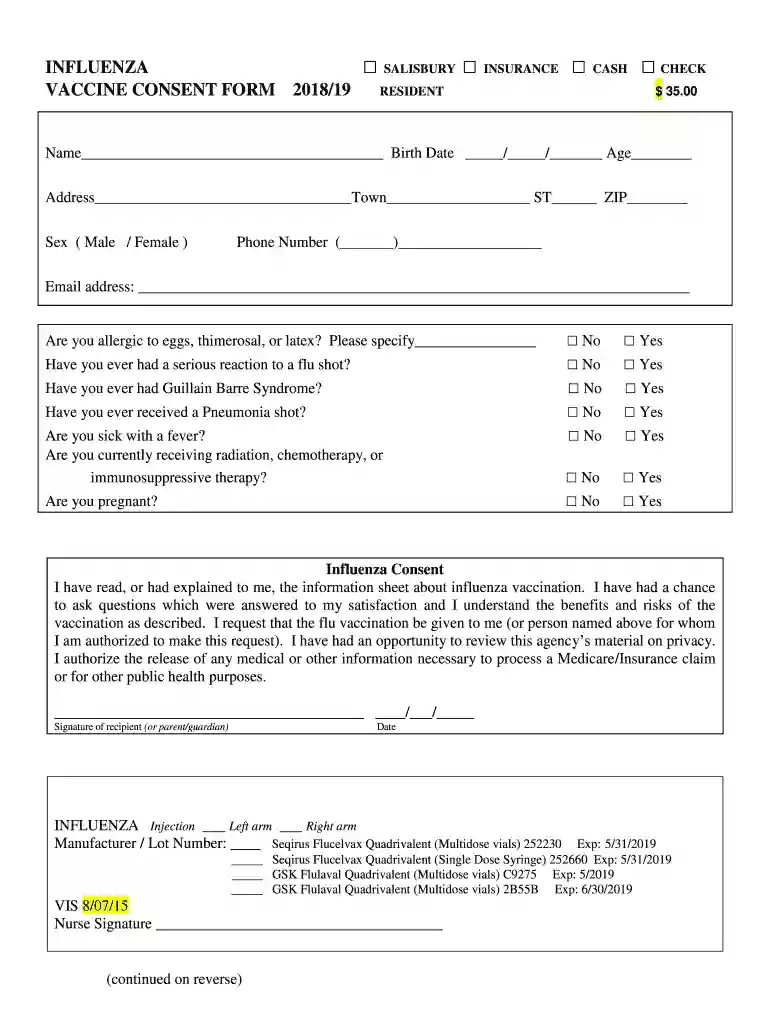
Type text, add images, blackout confidential details, add comments, highlights and more.

Draw your signature, type it, upload its image, or use your mobile device as a signature pad.

Send it via email, link, or fax. You can also download it, export it or print it out.
The pneumonia vaccine consent form provided by the Centers for Disease Control and Prevention (CDC) is a vital document used to collect informed consent from individuals receiving the pneumonia vaccine. This form ensures that recipients understand the benefits and potential risks associated with the vaccine and records their acknowledgment and agreement to proceed with the vaccination process. It serves as a legal document that protects both the healthcare provider and the patient by documenting consent and any relevant medical history.
Utilizing the pneumonia vaccine consent form involves a series of straightforward steps designed to capture all necessary information:
Patient Information: Recipients should fill out their personal information, including full name, date of birth, and contact details.
Medical History: The form usually requests information on any allergies, existing medical conditions, or previous adverse reactions to vaccines.
Consent Acknowledgment: Patients must read through the information provided about the vaccine, including its benefits and potential side effects, and sign to indicate their understanding and agreement.
Signature: The recipient provides their signature, affirming consent, and in some cases, a witness or guardian signature may be required if the patient is a minor.
Healthcare Provider Section: This part is filled out by the healthcare professional administering the vaccine, including details on the vaccine type, lot number, and date of administration.
The pneumonia vaccine consent form is generally available through several channels:
Healthcare Providers: Physicians and clinics offering the pneumonia vaccine typically provide the consent form at the time of the appointment.
CDC Website: The form may be downloadable from the CDC's official website, allowing individuals to complete it in advance.
Public Health Clinics: Community or public health clinics often distribute these forms as part of their vaccination programs.
Completing the form involves the following key steps:
Review the Information: Thoroughly go over the details about the vaccine's purpose and potential side effects.
Provide Accurate Details: Ensure all personal and medical information is correct and up-to-date.
Understand the Consent: Carefully read the consent section to fully understand what you are agreeing to by signing the form.
Sign and Date: Fill in the date and affix your signature to validate your consent.
Return the Form: Submit the completed form to the healthcare provider or clinic ahead of your vaccination appointment or at the time of service.
The CDC's pneumonia vaccine consent form holds significant importance:
Informed Decision-Making: It educates individuals about the vaccine, supporting informed health decisions.
Legal Protection: Serves as a legal record of consent, protecting both the provider and the patient.
Medical Record Keeping: Ensures accurate record-keeping, which is crucial for future medical treatments and vaccination history.
This consent form is commonly used by:
Healthcare Providers: Clinics, hospitals, and private practices that administer vaccines.
Patients: Individuals eligible for the pneumonia vaccine, typically older adults or those with specific health conditions.
Educational Institutions: Schools or universities requiring vaccines for enrollment may use these forms to facilitate vaccination clinics.


The form contains several critical sections:
Personal Information: Identifies the patient and provides contact details.
Medical History: Captures pertinent information about existing health conditions and past reactions to vaccines.
Consent Statement: Explanation of the vaccine, its purpose, and potential side effects with a signature line for consent.
Vaccination Details: Information documented by the healthcare provider regarding the administration of the vaccine.
The consent form must be used in compliance with legal standards to ensure:
Accurate Documentation: Properly recorded consent can be used as part of the healthcare provider's legal obligation to inform patients.
Patient Rights: Ensures the patient is fully aware of what they consent to, protecting their rights to informed decision-making.
By following the guidelines associated with the pneumonia vaccine consent form CDC, healthcare providers and patients can ensure a smooth and legally compliant vaccination process.
At DocHub, your data security is our priority. We follow HIPAA, SOC2, GDPR, and other standards, so you can work on your documents with confidence.


