







Definition and Importance of the Annual Tuberculosis Questionnaire
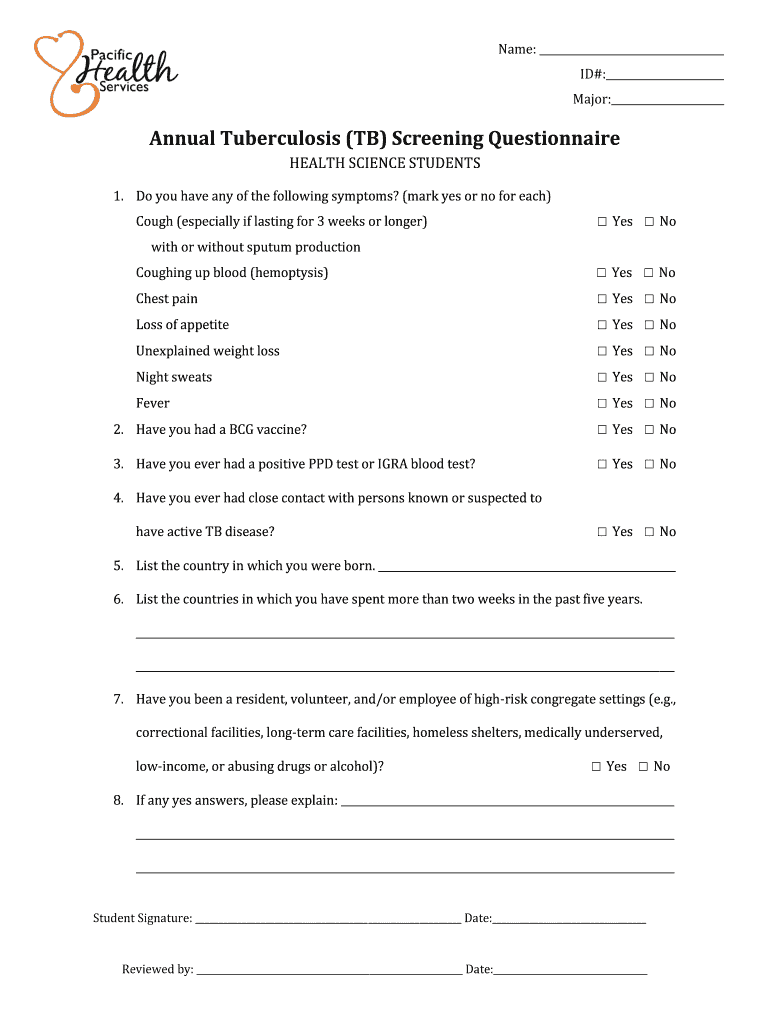
The annual tuberculosis questionnaire is a critical tool used to assess the risk of tuberculosis (TB) infection, particularly among populations that may be at higher risk, such as healthcare personnel, health science students, and individuals residing in high-risk environments. The questionnaire includes a variety of TB screening questions designed to evaluate symptoms, exposure history, vaccination status, and previous test results related to TB.
Understanding the importance of the annual TB questionnaire extends beyond mere compliance; it plays a pivotal role in public health surveillance. By systematically gathering information on TB risk factors, health facilities can identify and manage potential outbreaks efficiently. This proactive approach not only safeguards the individual filling out the questionnaire but also protects the wider community, especially vulnerable populations.
Key Components
- Symptoms Assessment: Queries aimed at identifying any current signs of TB.
- Exposure History: Questions focused on known or suspected exposure to TB-infected individuals.
- Vaccination Status: Confirmation of prior vaccinations, particularly the Bacillus Calmette-Guérin (BCG) vaccine.
- Residency Information: Inquiry about living or working in areas or facilities known for high TB prevalence.
This structured screening approach allows health administrators to make informed decisions regarding further testing or preventive measures necessary for managing TB risks in susceptible populations.
Steps to Complete the Annual Tuberculosis Questionnaire
Completing the annual tuberculosis questionnaire is a straightforward process that involves several key steps. Adhering to these steps ensures accurate information is provided, facilitating an effective assessment of TB risk.
-
Obtain the Questionnaire: Access the form through institutional healthcare providers, educational institutions, or health departments. It may be available online as a PDF or as a physical form.
-
Read Instructions: Carefully review any guidelines provided with the questionnaire for clarity on how to answer each section appropriately.
-
Provide Personal Information: Fill in essential details, including name, contact information, and any relevant demographic data pertinent to the screening.
-
Answer Screening Questions:
- TB Symptoms: Indicate any existing symptoms such as a persistent cough, fever, or weight loss.
- Exposure History: Accurately report any known contact with TB patients or recent travel to high-incidence areas.
- Vaccination and Testing History: Include information about TB vaccinations and any previous positive or negative TB test results.
-
Review Responses: Double-check all responses for completeness and correctness to minimize the risk of follow-up or additional testing.
-
Submit: Return the completed questionnaire as instructed, whether online, via mail, or in person, ensuring it is submitted by any outlined deadlines.
Following these steps not only ensures compliance with health regulations but also contributes to effective TB management strategies within the community.
Who Typically Uses the Annual Tuberculosis Questionnaire?
The annual tuberculosis questionnaire is primarily utilized in various settings where there may be heightened exposure to TB. Key user groups include:
-
Healthcare Workers: Individuals actively involved in patient care are regularly required to complete TB screenings to minimize the risk of transmission in healthcare facilities.
-
Health Science Students: Those enrolled in programs such as nursing, medicine, or public health are often required to submit this questionnaire to participate in clinical rotations or internships.
-
Employees of High-Risk Facilities: Staff working in correctional facilities, shelters, or nursing homes may also be mandated to complete this questionnaire to ensure a safe environment for all residents.
-
International Travelers: Individuals traveling to regions with high TB infection rates are recommended to complete this questionnaire upon their return, especially if they exhibit symptoms.
By identifying these high-risk groups, health providers can implement necessary screening measures and take timely action to prevent TB outbreaks.


Important Terms Related to the Annual Tuberculosis Questionnaire
Understanding key terminology associated with the annual tuberculosis questionnaire is essential for accurate completion and compliance. Here are some of the most important terms:
-
Tuberculosis (TB): A potentially serious infectious disease caused by the bacterium Mycobacterium tuberculosis, primarily affecting the lungs.
-
BCG Vaccine: A vaccine primarily used against TB, particularly in countries with a high prevalence of the disease. Its history and effectiveness should be noted in the questionnaire.
-
Mantoux Test: Also known as the tuberculin skin test, it determines previous or current TB infection status.
-
QuantiFERON-TB Gold Test: A blood test used to detect latent TB infection by measuring immune response to specific TB proteins.
Knowledge of these terms assists individuals in accurately responding to the questionnaire and understanding its significance in the context of TB management.
Legal Use of the Annual Tuberculosis Questionnaire
The legal framework governing the annual tuberculosis questionnaire is rooted in public health policies and regulations. Compliance with legal requirements is essential for safeguarding both individual and public health interests.
-
Regulatory Compliance: Many states require healthcare facilities and educational institutions to implement TB screening protocols as part of their infection control policies.
-
Confidentiality: Information gathered through the questionnaire is often subject to privacy laws, such as the Health Insurance Portability and Accountability Act (HIPAA), ensuring that personal health information remains protected.
-
Mandatory Reporting: In cases where a TB infection is suspected, the results of the questionnaire may trigger mandatory reporting to local health authorities to facilitate swift public health intervention.
Understanding the legal context ensures that individuals filling out the questionnaire are aware of their rights and the importance of providing accurate information for effective TB control measures.
Examples of Using the Annual Tuberculosis Questionnaire
Practical examples help illustrate how the annual tuberculosis questionnaire is applied in different contexts:
-
Scenario in a University Health Center: A nursing student completes the annual TB questionnaire as part of the health requirements for clinical placements. The student reports a history of BCG vaccination and negative Mantoux tests, helping the university assess the overall TB risk within its healthcare training programs.
-
Health Facility Requirements: A group of healthcare workers is required to complete the TB screening questionnaire annually. Following a review, those who report symptoms or exposure undergo further testing, leading to timely diagnosis and treatment for affected clinicians.
By analyzing these scenarios, one can see the questionnaire’s role in prevention, early detection, and management of TB within at-risk populations.
The comprehensive utilization of the annual tuberculosis questionnaire proves invaluable in protecting public health, especially within healthcare settings and among populations at increased risk of TB exposure.




