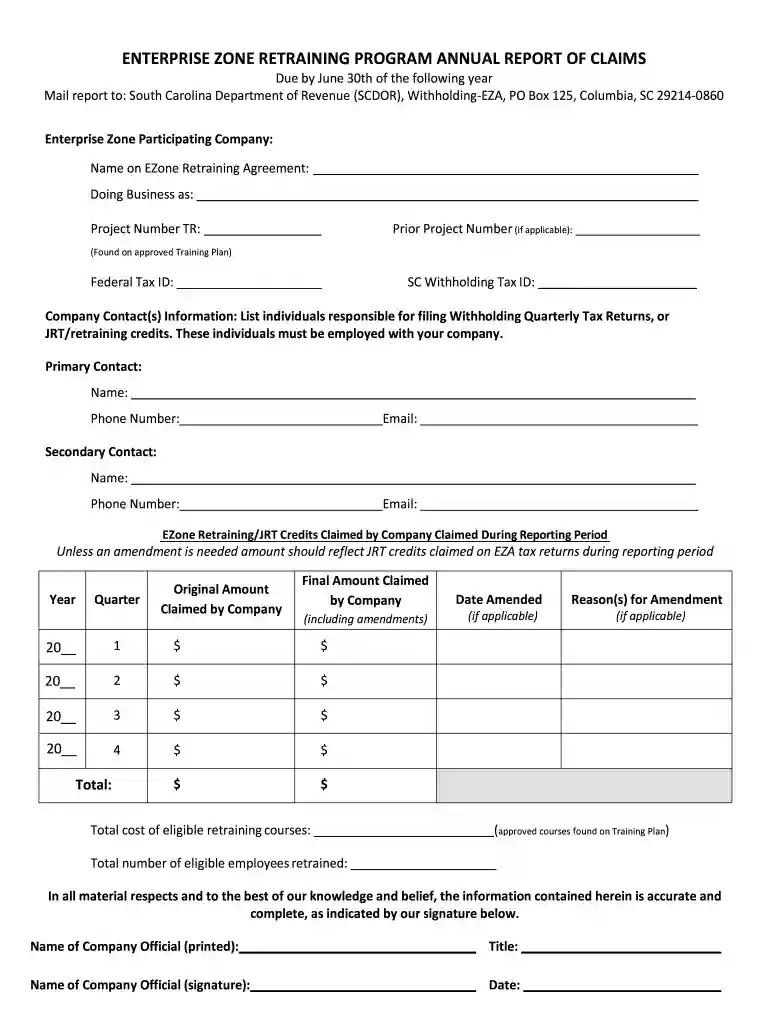
Definition & Meaning of the Enterprise Zone Retraining Program Annual Report of Claims
The Enterprise Zone Retraining Program Annual Report of Claims refers to a mandatory documentation process that participating businesses must complete to claim retraining credits. These credits are incentives designed to encourage companies to invest in employee retraining, ultimately enhancing workforce skills and boosting economic development within designated enterprise zones. The annual report serves as an official record detailing the claims made by companies for these credits, ensuring transparency and accountability.
Purpose and Functionality
- Workforce Development: Aims to improve employee skills in enterprise zones, leading to business growth and competitive advantage.
- Economic Incentives: Encourages businesses to reinvest in their workforce, contributing to regional economic progress.
- Transparency: Maintains a comprehensive record of claimed credits, supporting auditing and compliance processes.
Key Features
- Company Identification: Includes business name, address, and contact information.
- Claimed Credits: Details the retraining credits claimed during the reporting period.
- Cost Documentation: Lists total outlays for eligible retraining courses.
- Accuracy Declaration: Requires a declaration of accuracy by an authorized company official.
How to Use the Enterprise Zone Retraining Program Annual Report of Claims
To effectively utilize this annual report form, businesses must keep accurate and detailed records throughout the year. Here’s a structured approach to gathering and using the necessary information:
Record Maintenance
- Document Eligible Courses: Track and keep receipts for all retraining courses attended by employees.
- Track Employee Participation: Maintain logs of employee attendance and completion of training programs.
- Monitor Expenses: Ensure all costs associated with retraining are documented meticulously.
Completing the Report
- Access the Form: Obtain the latest version of the report, typically available from state economic development offices.
- Fill Out Company Information: Enter accurate and current business details, including contact information.
- Detail Claimed Credits: Enter each credit, ensuring it aligns with training initiatives and expenses.
- Verify Accuracy: Conduct a thorough review of the completed form to confirm all data is correct before submission.
Submission and Follow-up
- Submission Methods: Follow specified state guidelines for submitting the report, whether online, via mail, or in person.
- Track Submission: Use tracking numbers or acknowledgments to confirm receipt.
- Maintain Copies: Keep a duplicate of the submitted form and all supporting documents for records.
Key Elements of the Enterprise Zone Retraining Program Annual Report of Claims
Several critical components require particular attention to ensure the report is correctly and comprehensively completed:
Company Specifics Section
- Business Name and Address
- Contact Person and Role
- Industry Type
Claimed Credits Information
- Training Type and Provider
- Number of Participants
- Total Training Hours and Costs Incurred
Declaration of Accuracy
- Authorized Signature: Must be completed by a senior company official.
- Date and Location of Signing: Document where and when the form was signed.
- Acknowledgment of Fines: Understanding penalties for misreporting.
Steps to Complete the Enterprise Zone Retraining Program Annual Report of Claims
Ensuring accuracy when completing the form is crucial. Here's how to do it effectively:
- Prepare Documentation: Gather all necessary records of retraining activities and costs.
- Complete Company Details: Fill in your business's official identification information.
- Itemize Claims: Log each retraining event and associated credit claims, ensuring alignment with program criteria.
- Obtain Approvals: Have the form reviewed and signed off by an executive or designated authority.
- Submit the Form: Follow state-specific instructions for submission.
Validation and Follow-Up
- Verification Process: Await confirmation of receipt and review from the issuing body.
- Respond to Inquiries: If questions or audits arise, provide any additional information promptly.
Who Typically Uses the Enterprise Zone Retraining Program Annual Report of Claims
This annual report is primarily utilized by businesses located within enterprise zones, who are actively engaging in workforce development through retraining programs:

Typical Users
- Manufacturing Companies
- Service Providers
- IT firms
- Other Regional Businesses
User Characteristics
- Located in Enterprise Zones: Must be within designated areas benefiting from the retraining program.
- Participating in Employee Training: Businesses must actively engage in eligible training programs.
Important Terms Related to the Enterprise Zone Retraining Program Annual Report of Claims
A clear understanding of key terminology is critical for correctly completing the report:
Glossary of Terms
- Retraining Credits: Financial incentives for approved employee training activities.
- Enterprise Zone: A region designated for economic development with various business incentives.
- Eligible Courses: Training programs that qualify for retraining credits.
- Declarant: The authorized company official who attests to the form’s accuracy.
Legal Use of the Enterprise Zone Retraining Program Annual Report of Claims
Legal compliance when utilizing this form is essential to avoid penalties:
- Accuracy Verification: Misreporting can result in fines or disqualification from credit claims.
- Recordkeeping Obligations: Maintain all supporting documentation for a specified period per state law.
- Audit Risks: Be prepared for potential audits verifying the claims presented in the report.
Filing Deadlines and Important Dates
Understanding deadline requirements is crucial for timely filing:
- Annual Deadline: Typically set by state authorities, often aligning with the fiscal year end.
- Extension Possibilities: Inquire with state offices about possible extensions if circumstances prevent timely filing.
Failure to adhere to these deadlines can result in forfeiture of retraining credits.