Definition and Meaning
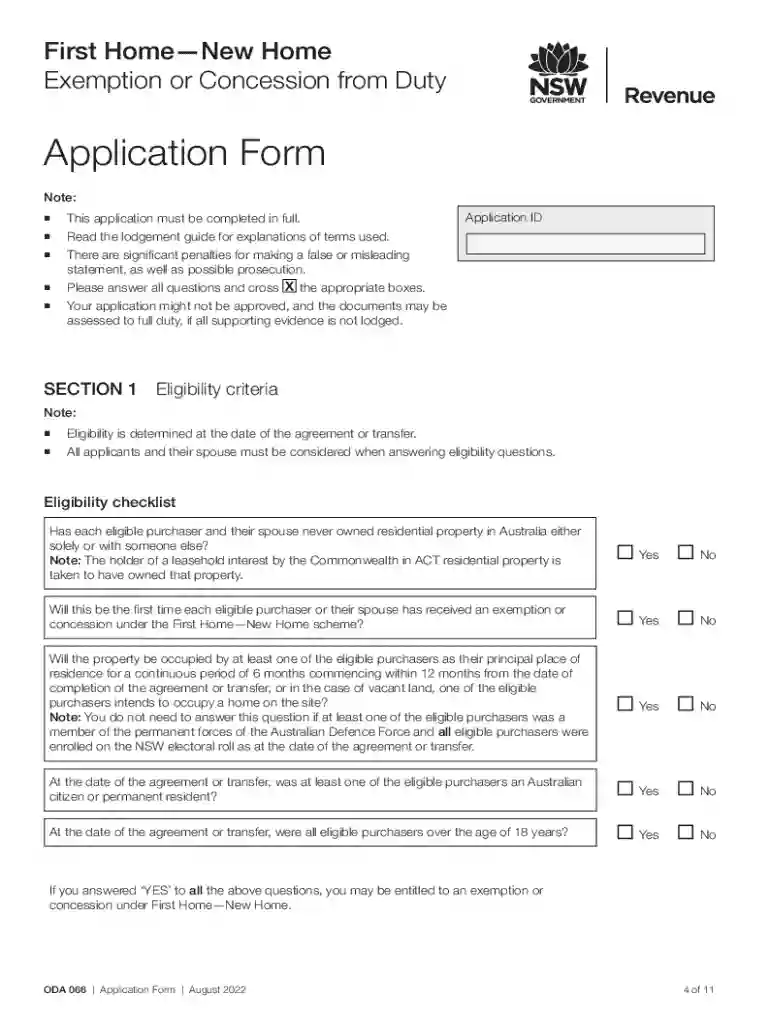
The First Home—New Home exemption or concession from duty is a benefit designed primarily for first-time homebuyers. This form, known as "ODA 066 F," facilitates the application process for eligible individuals seeking exemptions or concessions on their home purchase agreements or transfers. The provision applies specifically to transactions executed between January 1, 2012, and June 30, 2017, underlining the importance of understanding eligibility and timing requirements for prospective applicants.
Basic Eligibility Requirements
- First-Time Homebuyer: Applicants must be purchasing their first residential property.
- Residency Status: It is essential to establish residency in the home as a primary residence.
- Purchase Agreements: The transaction should fall within the specified dates: January 1, 2012 to June 30, 2017.
Additional Considerations
- Proof of Identity: Valid identification must be submitted to verify buyer identity.
- Documentation: Complete and accurate documentation is required, including previous property history to affirm first-time buyer status.
How to Use the Application Form
Step-by-Step Completion
- Download the Form: Access the ODA 066 F from the relevant government website or authorized portals.
- Fill in Personal Details: Provide accurate personal information, including full name and contact details.
- Enter Property Information: Include specifics about the property, such as address and transaction details.
- Submit Residency Proof: Attach evidence of residency, such as utility bills or a lease agreement.
- Documentation Review: Ensure all sections are completed and double-check for any errors.
Submission Guidelines
- The form should be submitted promptly after completion via the prescribed method, ensuring all documentation accompanies the application.
Essential Documentation
- Identification Proof: Government-issued ID such as a driver's license or passport.
- Residency Evidence: Documents like utility bills, mortgage statements, or rental agreements.
- Agreement of Sale: A copy of the agreement or transfer document for the property purchase.
Supporting Materials
- Financial Records: Some applications require financial statements to verify income levels or other financial qualifications.
- Previous Residency Proof: For first-time buyer verification, any previous addresses should be documented.
Steps to Complete the Form
Detailed Instructions
- Gather Required Documentation: Ensure you have all necessary documents before beginning.
- Read Instructions Carefully: Understand each section of the form to prevent mistakes.
- Fill Out Paperwork: Use black ink if completing by hand, or fill it digitally if an online submission is enabled.
- Cross-Verify Information: Double-check all entries to ensure their accuracy.
- Submit with Required Attachments: Send the form accompanied by all required documents.
Review Process
- Allow sufficient time for the processing of the application, keeping in mind that any errors might lead to delays.
Penalties for False Information
Consequences for Non-compliance
- Financial Penalties: Incorrect or misleading information may result in fines or sanctions.
- Revocation of Benefits: Incorrect declarations can lead to the suspension of the duty benefit.
- Legal Action: Severe cases of deception may result in legal proceedings.
How to Avoid Penalties
- Ensure all information is accurate and up-to-date.
- Double-check all submitted documentation for completeness and precision.
Typical Users
- First-Time Homebuyers: Primary users seeking duty exemptions.
- Real Estate Agents: Professionals assisting clients with the required paperwork.
- Legal Advisors: Attorneys or legal consultants overseeing property transactions.
Additional User Groups
- Government Officials: For verification and approval processes.
- Property Consultants: Assisting buyers in navigating the procedural aspects.
Available Submission Options
- Online Submission: Digital form completion through authenticated portals.
- Mail Submission: Physical submission via postal services, ensuring all documents are included.
- In-Person: Directly at the relevant government office, which can offer immediate feedback on application completeness.
Considerations for Each Method
- Online submission often requires digital versions of documents.
- Mailing the form should include tracking to ensure safe delivery.
- In-person submissions may require appointments.
Compliance Requirements
- Disclosure: Ensure all necessary disclosures are made according to local laws.
- Verification Processes: Follow necessary protocols for authentication and verification of information.
Common Legal Issues
- Misrepresentation during application can lead to revocation of the benefit.
- Failure to accurately disclose all relevant facts could result in legal repercussions.
By following these structured guidelines, applicants can effectively navigate the process of applying for the First Home—New Home exemption or concession from duty, ensuring compliance and maximizing their benefit eligibility.