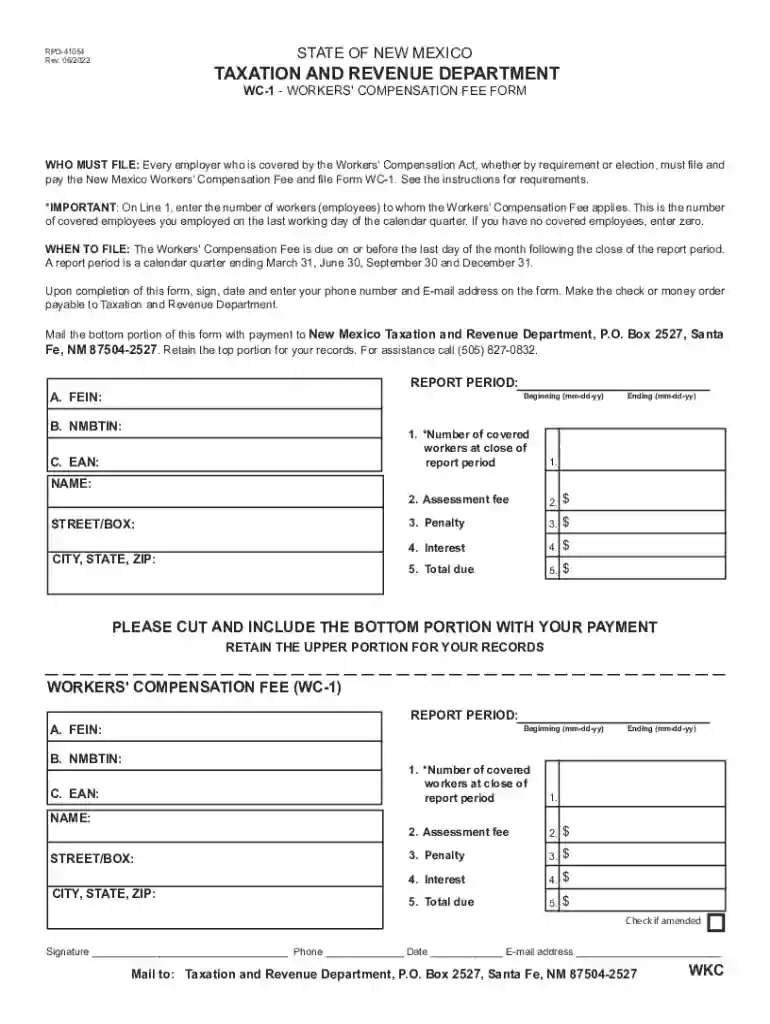
Chapter 97 Workers' Compensation Act Article 1 2026

Get Form
Chapter 97 Workers' Compensation Act Article 1 Preview on Page 1

Here's how it works

01. Edit your form online
Type text, add images, blackout confidential details, add comments, highlights and more.

02. Sign it in a few clicks
Draw your signature, type it, upload its image, or use your mobile device as a signature pad.

03. Share your form with others
Send it via email, link, or fax. You can also download it, export it or print it out.

Definition & Meaning

Chapter 97 Workers' Compensation Act Article 1 is a legislative provision in the United States that defines the framework for workers' compensation. The primary purpose is to ensure that employees who suffer work-related injuries or illnesses receive appropriate medical care and financial benefits. This article serves as the foundational guideline for determining eligible claims, compensation rates, and the overall process needed to access these benefits. By establishing the rights and responsibilities of both employers and employees, it aims to balance the needs of injured workers with the operational requirements of employers.

Key Terms Explained

  • Workers' compensation: A form of insurance providing wage replacement and medical benefits to employees injured in the course of employment.
  • Claim: A request for compensation benefits following a work-related injury or illness.
  • Compensation rates: Pre-determined amounts set forth in the Act that dictate the benefits receivable by an injured worker.

How to Use the Chapter 97 Workers' Compensation Act Article 1

Employers and employees in the United States use this Act to navigate the workers' compensation process efficiently. Employers must familiarize themselves with the provisions to ensure compliance and adequate coverage, while employees rely on the Act to understand their rights and the benefits available to them. Using this Act involves reviewing the defined processes for reporting injuries, filing claims, and accessing benefits. It's crucial for both parties to comprehend notification timelines and documentation requirements to prevent disputes or delays in benefit disbursements.

Practical Usage

  • Employers: Ensure insurance coverage complies with Article 1, report claims promptly, and keep accurate records.
  • Employees: Report work-related injuries immediately, provide all necessary documentation, and adhere to medical appointment schedules prescribed under the Act.

Steps to Complete the Chapter 97 Workers' Compensation Act Article 1

Completing processes under this Act requires adherence to a set protocol to ensure all parties involved meet legal and procedural standards. Below is a step-by-step approach:

  1. Report the Injury: The employee must notify the employer of the injury as soon as possible to initiate the claims process.
  2. Seek Medical Attention: Immediate medical care should be sought, both to address health concerns and to document the injury for claims purposes.
  3. Employer Notification: Employers must notify their workers' compensation insurance provider and file the necessary reports with the state agency.
  4. Claim Submission: The employee, often with the assistance of the employer or insurer, submits a claim form detailing the injury and relevant employment information.
  5. Review and Investigation: The insurer examines the claim to verify its legitimacy and ensures compliance with Chapter 97 guidelines.
  6. Compensation Disbursement: Upon approval, benefits are disbursed according to the compensation rates outlined in the Act.

Who Typically Uses the Chapter 97 Workers' Compensation Act Article 1

This Act primarily serves the needs of employees who have sustained injuries or contracted illnesses due to their workplace conditions. It is also crucial for employers, particularly those in industries with elevated risk factors such as construction, manufacturing, and healthcare. The Act benefits insurance companies that provide workers' compensation coverage, legal professionals who specialize in occupational injury claims, and human resources personnel tasked with ensuring organizational compliance with state and federal regulations.


decoration image ratings of Dochub

Related Roles

  • HR Managers: Implement processes to comply with the Act’s requirements.
  • Legal Advisors: Provide guidance on compliance and dispute resolution.
  • Insurance Providers: Evaluate claims and administer appropriate benefits.

Key Elements of the Chapter 97 Workers' Compensation Act Article 1

This Act contains essential elements that outline the rights of employees and the obligations of employers. Notably, it includes procedures for filing claims, limitations on the type and duration of benefits, and stipulations for medical examinations. It also details the appeals process for disputes in claim decisions and sets forth privacy considerations regarding employee health information.

Essential Components

  • Claim Filing Procedures: Specifies how and when claims should be reported.
  • Benefit Limitations: Defines the scope and extent of benefits, including wage replacement and medical costs.
  • Dispute Resolution: Provides a framework for resolving disagreements over claim determinations.

State-Specific Rules for the Chapter 97 Workers' Compensation Act Article 1

While Chapter 97 provides a comprehensive framework for workers' compensation, each state may have specific rules and variations in implementing these provisions. These differences can manifest in approved treatment options, compensation limits, and the duration an employee can receive benefits.

State Variations

  • California: Offers unique provisions for farmworkers and domestic employees.
  • Texas: Allows certain private employers to opt out of the workers' compensation system under specific conditions.
  • New York: Provides special considerations for first responders and public safety workers.

Required Documents

To process a claim under Chapter 97 Workers' Compensation Act Article 1, various documents are required, which facilitate the accurate evaluation and processing of claims. These include a fully completed injury report, medical evaluation records, and employment details. Additional verification such as identification documents might be required to establish credentials and facilitate communication.

Document List

  • Injury Report: A detailed account of the incident and injuries sustained.
  • Medical Records: Certification from a licensed healthcare provider on the nature and extent of the injury.
  • Employment Verification: Documentation proving active employment status at the time of injury.

Penalties for Non-Compliance

Failure to adhere to the requirements of Chapter 97 Workers' Compensation Act Article 1 can result in significant penalties. Employers may face fines, legal action, or increased insurance premiums. Employees could lose the right to claim compensation if claims are not submitted within prescribed timeframes.

Penalty Examples

  • Employers: May incur financial penalties and legal repercussions for failing to provide adequate coverage or timely reporting.
  • Employees: Risk forfeiting compensation benefits if they do not report injuries within specified deadlines or fail to comply with medical evaluations.

Business Types That Benefit Most from Chapter 97 Workers' Compensation Act Article 1

Businesses with higher injury risks, such as construction companies and manufacturing plants, find this Act particularly beneficial. It provides a structured approach to managing workplace injuries, reducing downtime, and ensuring compliance with legal standards. Additionally, businesses that require physically demanding labor.

be ready to get more

Complete this form in 5 minutes or less

Get form

Got questions?

We have answers to the most popular questions from our customers. If you can't find an answer to your question, please contact us.
Contact us
Generally, the North Carolina workers compensation system pays approximately two-thirds or 66% of an injured employees average weekly wages. If you were injured on-the-job, you can speak with a workers comp attorney from Farmer Morris Law, PLLC, to learn more about this payment system.
The North Carolina Workers Compensation Act requires that all businesses that employ three or more employees, including those operating as corporations, sole proprietorships, limited liability companies and partnerships, obtain workers compensation insurance or qualify as self-insured employers for purposes of paying
ing to the Internal Revenue Service (IRS), the amount you receive as workers compensation for a work-related illness or injury is fully exempt from taxes if paid under a workers compensation statute, per IRS Publication 525. This general principle also applies to North Carolina state income taxes.
As we mentioned before, your disability benefits will equal two-thirds of your average weekly wage, including bonuses and overtime. The third factor tells you how long you will receive disability benefits for that injury. The final factor is your wages at the time of the injury.
The simple answer is, like most states, North Carolina workers compensation laws do not provide pain and suffering benefits for injured workers.

Security and compliance

At DocHub, your data security is our priority. We follow HIPAA, SOC2, GDPR, and other standards, so you can work on your documents with confidence.

Learn more
ccpa2
pci-dss
gdpr-compliance
hipaa
soc-compliance
be ready to get more

Complete this form in 5 minutes or less

Get form

People also ask

The actual amount of the weekly Temporary Total Disability or Permanent Total Disability benefit paid to a disabled employee is 2/3rds of the Average Weekly Wage. This is referred to as the compensation rate. The compensation rate is capped at an amount set yearly by the NC Industrial Commission.
North Carolinas workers compensation program covers a percentage of an injured workers usual wages, depending on the injury. Generally, for time off due to most injuries, the compensation is two-thirds of the workers regular wage.
North Carolina General Statutes Laws of North Carolina, known as statutes, are made by the North Carolina General Assembly. The General Assembly is made up of the Senate and the House of Representatives. There are 50 senators and 120 members of the House of Representatives.
Those businesses that employ three or more employees are required to carry workers compensation insurance except agricultural employment with fewer than 10 employees, certain sawmill and logging operations and all domestic employees are exempt.
A Form 18 establishes a legal claim of injury on your behalf if filed within two years of the date of injury or occupational disease, and gives the required written notice to the employer if a copy is submitted to the employer within 30 days of the injury.

Related links