Definition & Meaning
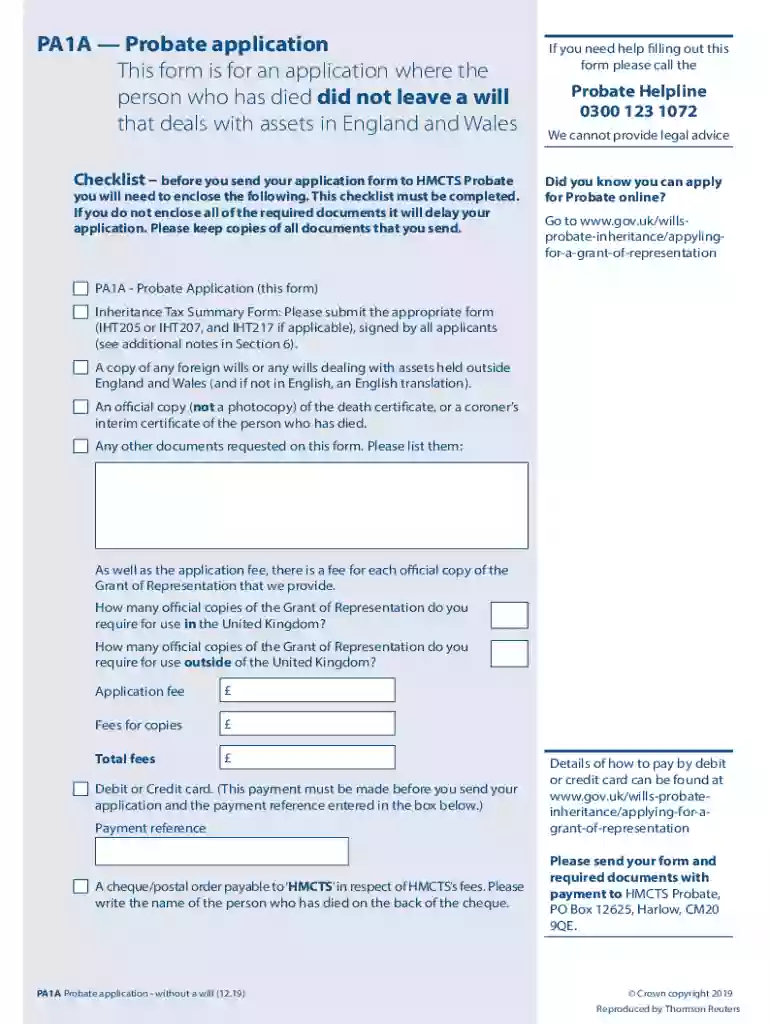
The Probate Application Form (PA1) - Simply Law England Wales is a legal document used in the process of applying for probate when a deceased individual has not left a will. Probate is the legal right to manage the estate of someone who has passed away, ensuring that all their financial affairs are settled and assets distributed according to the law. This form is integral to initiating this process and is primarily used when the deceased resided in England or Wales.
Importance in Legal Proceedings
- Establishes Legal Authority: Completing the PA1 form is essential as it grants the applicant the necessary legal authority to manage the deceased’s estate. Without probate, the applicant cannot legally distribute assets.
- Ensures Legal Compliance: The form ensures that the process adheres to the legal requirements set by the Courts and Tribunals system in England and Wales.
- Avoids Disputes: Properly filing the PA1 form helps in preventing disputes among heirs by providing a clear, legal guideline for asset distribution.
How to Use the Probate Application Form (PA1) - Simply Law England Wales
Step-by-Step Instructions
- Gather Necessary Information: Before beginning the form, collect all relevant details about the deceased, including their personal information, details of their estate, and any debts or liabilities.
- Complete Personal Details: Fill out the applicant’s details comprehensively, including their relationship to the deceased and contact information.
- Estate Details: Accurately record the asset details, such as bank accounts, properties, investments, and other significant holdings. Ensure to include any foreign assets.
- Review Inheritance Tax Requirements: Check if inheritance tax is applicable based on the total value of the estate and ensure the relevant sections of the form are filled out.
- Sign the Legal Statement: The applicant must sign a legal declaration confirming the accuracy and completeness of the information provided.
Key Considerations
- Accuracy: Double-check all entered information for accuracy to avoid any delays in processing.
- Documentation: Attach all necessary supporting documents, including the death certificate and financial statements.
Required Documents
Essential Attachments for Submission
- Death Certificate: A copy of the deceased's official death certificate.
- Asset Valuation: Documentation detailing asset valuations, including property appraisals and bank statements.
- Liabilities Evidence: Proof of any debts or liabilities owed by the deceased at the time of death.
- Inheritance Tax Forms: If applicable, completed inheritance tax forms must accompany the application.
Additional Documents
- Foreign Assets Documentation: If the deceased held international assets, additional documentation may be required to verify these holdings.
- Marriage Certificate: If relevant, a copy of the applicant's marriage certificate to establish their relationship to the deceased.
Steps to Complete the Probate Application Form (PA1) - Simply Law England Wales
Detailed Process Overview
- Read Instructions: Begin by thoroughly reading the instructions provided with the form to understand the process and requirements fully.
- Draft Completion: Complete a draft version of the form to ensure all sections are correctly understood and filled before final submission.
- Seek Legal Advice: If complex legal questions arise or if there are disagreements among potential heirs, it may be wise to consult a legal professional.
- Final Review: Conduct a final review of the completed form with a checklist to confirm all sections and documents are accurate and present.
Common Errors to Avoid
- Omissions: Ensure no sections are left incomplete, particularly around asset valuations.
- Incorrect Information: Verify all entries, especially numerical data like valuation figures and identification numbers.
Form Submission Methods (Online / Mail / In-Person)
Submission Options
- Online Filing: The form can be submitted online through the probate registry’s official website, offering a convenient and faster processing option.
- Mail Submission: Alternatively, applicants may choose to mail the completed form along with all supporting documents to the local probate registry office.
- In-Person Delivery: Some may prefer to deliver the application in person to ensure it is directly received by the probate office, although this could be subject to office availability.
Advantages of Each Method
- Online: Quick, traceable submission with instant confirmation of receipt.
- Mail: Suitable for those who need more time to gather documents before submitting.
- In-Person: Provides an opportunity to clarify any immediate questions directly with registry staff.
Key Elements of the Probate Application Form (PA1) - Simply Law England Wales
Core Components
- Applicant Information: Details of the individual applying for probate, their relationship to the deceased, and contact information.
- Deceased’s Details: Includes full name, date of birth, date of death, and last known address.
- Estate Valuation: Comprehensive listing of assets, liabilities, and overall value of the estate.
- Declaration and Signature: Legal confirmation by the applicant asserting the truthfulness of the application information.
Critical Features
- Validation Section: Section for official use where the probate office validates the application before processing.
- Guidance Notes: Embedded instructions within the form to assist applicants in completing sections correctly.
Legal Use of the Probate Application Form (PA1) - Simply Law England Wales
Compliance Requirements
- Legal Certifications: The form includes a certification statement that must be completed truthfully under penalty of perjury.
- Taxation Laws: Compliance with inheritance tax laws is mandatory if applicable, ensuring all taxes are calculated and declared accurately.
Consequences of Non-Compliance
- Processing Delays: Incomplete or inaccurate submissions can lead to significant delays in processing.
- Legal Repercussions: Providing false information may result in legal action or penalties.
State-Specific Rules for the Probate Application Form (PA1) - Simply Law England Wales
Unique Considerations in England and Wales
- Jurisdictional Restrictions: The PA1 form is specifically for estates in England and Wales and follows local probate laws.
- Inheritance Tax Regulations: Distinct rules exist concerning when and how inheritance tax must be reported and paid in these regions.
Regional Differences
- Court Variabilities: Different probate registries may have slightly varied procedures or additional requirements concerning document submission.
- Asset Appraisal Standards: There may be state-specific standards for appraising properties and other assets for probate purposes.