




01. Edit your form online
Type text, add images, blackout confidential details, add comments, highlights and more.

Type text, add images, blackout confidential details, add comments, highlights and more.

Draw your signature, type it, upload its image, or use your mobile device as a signature pad.

Send it via email, link, or fax. You can also download it, export it or print it out.
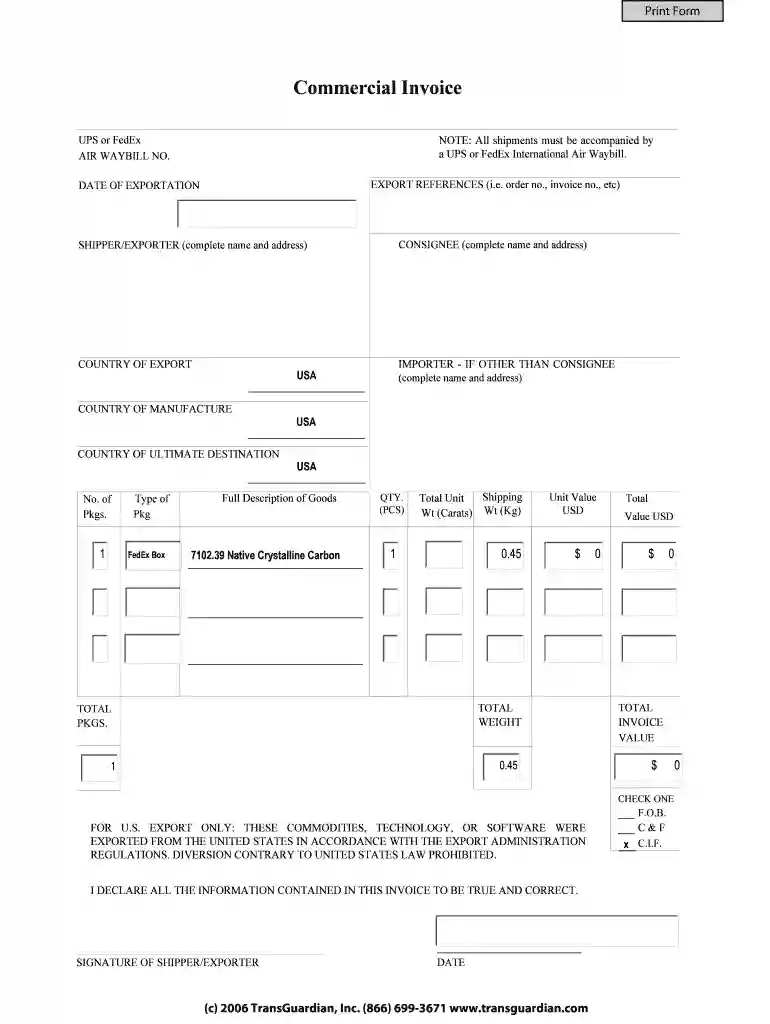
A U.S. commercial invoice fillable form is a crucial document used primarily in international trade. It serves as a comprehensive record of a transaction between a seller and a buyer, detailing the goods sold, their value, and other relevant information. This form is particularly vital for customs processing, helping ensure the accurate calculation of duties and taxes. A fillable format allows users to easily input data using digital platforms, facilitating quicker and more efficient document preparation. Understanding the significance of this form can streamline export procedures and reduce the likelihood of errors and delays.
Utilizing the U.S. commercial invoice fillable form involves several key steps to ensure compliance with international shipping protocols. First, gather all relevant transaction details, including the shipper's and consignee's information, and a detailed description of the goods involved. Enter these details into the fillable fields of the form, ensuring accuracy in quantities, pricing, and any applicable harmonized codes. It's essential to double-check for completeness and accuracy because mistakes can lead to customs hold-ups. Utilizing platforms like DocHub can simplify the process by allowing you to save, update, and manage these forms with ease.
The commercial invoice fillable form contains several critical sections that users must accurately complete. These include:
Opting for a fillable commercial invoice form offers numerous advantages, including improved accuracy and efficiency. A digital form ensures legibility, reducing the potential for misunderstandings that often occur with handwritten documents. Additionally, digital forms like those provided by DocHub offer enhanced functionality, such as electronic signatures, which can expedite the entire transaction process. By adhering to digital formats, businesses can easily update invoices and maintain comprehensive records, ensuring consistency and compliance in international trade transactions.
The U.S. commercial invoice is a legally mandated document for international shipping, serving as proof of sale and aiding in customs clearance processes. Accurate, timely completion of this form is basic for compliance with regulations enforced by customs authorities. Failure to comply can result in significant delays, fines, or legal repercussions. For businesses, maintaining meticulous records in the form of digital commercial invoices is essential for legal protection and accurate tax reporting.
Consider a company exporting electronics to Canada. The commercial invoice would need to detail each electronic item, its value, and specifications, categorized under the correct HS codes. This level of precision ensures the Canadian customs authorities can process the shipment efficiently and allocate the right duties or taxes. Conversely, incorrect or incomplete information can lead to shipment delays or increased scrutiny during customs inspections.
When completing a U.S. commercial invoice fillable form, having certain documents on hand will facilitate accurate completion:
The digital nature of a fillable commercial invoice allows for flexible submission methods. Many businesses choose to submit these forms electronically, directly integrating with customs platforms for expedited processing. Alternatively, forms can be printed and submitted physically if required by specific shipping partners or customs procedures. Utilizing a service like DocHub can enhance the submission process by providing tracking and integration features, ensuring that submitted forms are accessible and updateable when necessary.
At DocHub, your data security is our priority. We follow HIPAA, SOC2, GDPR, and other standards, so you can work on your documents with confidence.


