







Definition & Meaning
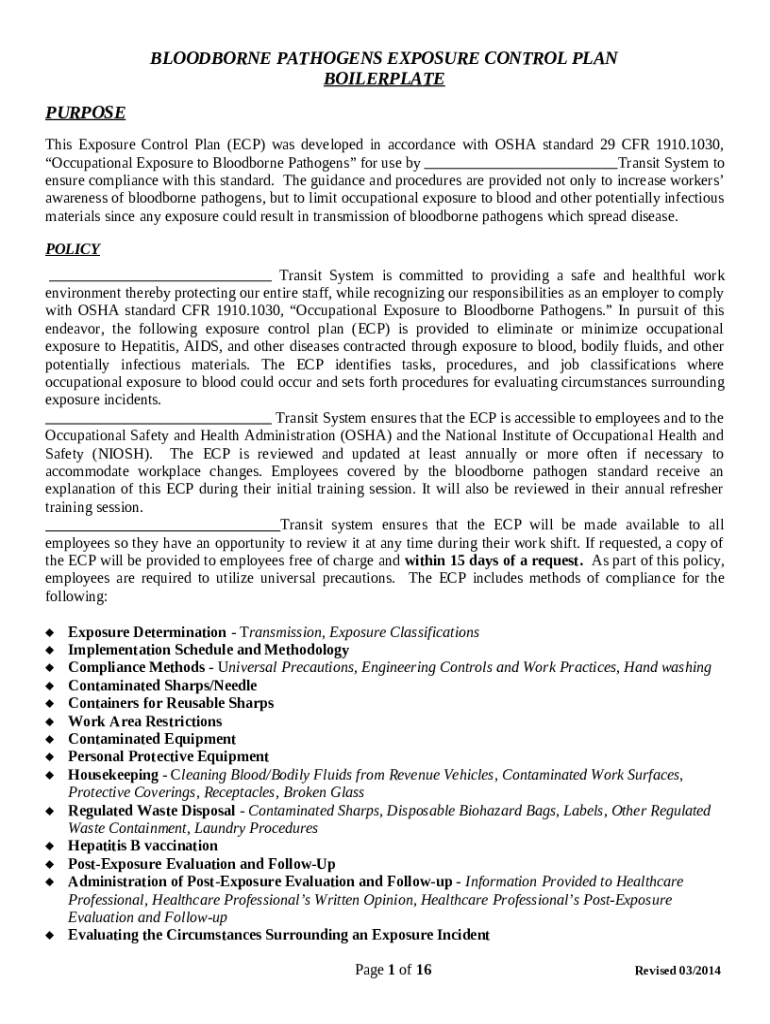
The OSHA Exposure Control Plan Template serves as a structured framework designed to help organizations comply with Occupational Safety and Health Administration (OSHA) standards, specifically focusing on minimizing occupational exposure to bloodborne pathogens. This template outlines the necessary procedures, policies, and protections that need to be in place to safeguard employees from potential infections such as Hepatitis and HIV in the workplace.
Core Components
- Exposure Determination: Identifies the job roles and tasks where there is potential exposure to bloodborne pathogens.
- Engineering and Work Practice Controls: Describes the proper tools and procedures employees should use to reduce exposure risks.
- Personal Protective Equipment (PPE): Lists the appropriate protective equipment that employees must employ during exposure-prone tasks.
- Hepatitis B Vaccination: Details the policy for offering Hepatitis B vaccinations to employees at risk.
Key Elements of the OSHA Exposure Control Plan Template
Exposure Assessment
The exposure control plan begins with a comprehensive assessment of workplace environments. This involves identifying tasks and procedures where employees might come into contact with blood or other potentially infectious materials (OPIM).
Implementation of Controls
- Engineering Controls: These are devices or methods that isolate or remove bloodborne pathogen hazards from the workplace. Examples include sharps disposal containers and self-sheathing needles.
- Work Practice Controls: Strategies that alter the way a task is performed to minimize exposure. This can include procedures such as hand-washing, safely handling contaminated laundry, and using sharps disposal units correctly.
- Administrative Controls: Implementing training programs and offering medical follow-ups to potentially exposed employees.
Recordkeeping
OSHA requires detailed recordkeeping as part of the exposure control plan. This includes maintaining logs of exposure incidents and records of employee training sessions.
How to Use the OSHA Exposure Control Plan Template
Step-by-Step Instructions
- Assess your workplace risks: Begin by identifying all potential risks for bloodborne pathogen exposure.
- Develop and document policies: Use the template to draft policies that outline exposure prevention and response procedures.
- Employee training and education: Ensure that all employees are trained on the specifics of the exposure control plan and compliance essentials.
- Monitor and update the plan: Regular revisions of the plan are necessary to incorporate changes in workplace practices or guidance from OSHA.
Application in Various Industries
The template applies across multiple sectors but is critical in healthcare settings, laboratories, maintenance services, and any business where employees might encounter blood or OPIM.
Who Typically Uses the OSHA Exposure Control Plan Template


Common User Profiles
- Healthcare Professionals: Including hospitals and clinics where direct patient care takes place.
- First Responders: Such as police, fire personnel, and paramedics who are often first on the scene of accidents.
- Cleaning and Maintenance Workers: Engaged in tasks that may involve coming in contact with contaminated supplies or surfaces.
Administrative Personnel
Facility managers and occupational health and safety officers are often responsible for implementing and maintaining the exposure control plan. Their role is to ensure all relevant staff members are aware of, and adhere to, the guidelines outlined within the document.
Legal Use of the OSHA Exposure Control Plan Template
Compliance with Federal Regulations
Compliance with OSHA standards is not merely a workplace best practice—it is a legal requirement. The exposure control plan helps institutions adhere to the Bloodborne Pathogens Standard under 29 CFR 1910.1030.
Importance of Legal Compliance
- Prevents Legal Action: Following the template helps protect organizations from potential legal actions due to non-compliance.
- Ensures Worker Safety: Complying with the template demonstrates an organization's commitment to ensuring workplace safety and health standards.
- Mitigates Risks: Non-compliance may lead to OSHA citations, fines, and increased risk for employee health issues.
Steps to Complete the OSHA Exposure Control Plan Template
Procedure Overview
- Initial Planning: Organize a team to gather information and resources for completing the plan.
- Complete Each Section: Methodically fill out each part of the template, ensuring comprehensive coverage of all exposure scenarios.
- Review by Stakeholders: Involve key stakeholders, such as department heads, to review and provide input on the draft.
- Finalize and Implement: Once reviewed, formalize the plan and implement it across the organization.
Documentation and Review
- Annual Review: Regularly revise the plan to ensure it reflects current OSHA regulations and workplace conditions.
- Incident Documentation: Maintain a log of any incidents and review these occurrences to adjust the exposure control plan as necessary.
Why Should You Use the OSHA Exposure Control Plan Template
Advantages of Using the Template
- Ensures Comprehensive Coverage: Guides organizations in covering all necessary aspects of exposure risks and controls.
- Standardizes Procedures: Promotes consistency in how exposure issues are managed across different departments.
- Facilitates Training: Provides a basis for employee training programs, ensuring staff understand the risks and protocols.
Risk Reduction
Utilizing the exposure control plan template effectively reduces the incidence of workplace-related illnesses, contributing to a safer and legally compliant work environment.
Form Variants and Alternatives
Other Available Formats
- Digital vs. Paper Versions: Digital versions are often preferred for ease of updating and sharing across multiple users or sites.
Non-Standard Variants
Some industries may require specialized templates that include additional safety measures or sector-specific exposure concerns.
Compatibility with Document Software
Given the prevalence of digital documentation, consider using document software compatible with the template like DocHub and others that ensure secure file handling and easy distribution within your organization for collaborative editing and updating.
This extensive coverage on the OSHA Exposure Control Plan Template offers a foundation for organizations to develop robust plans that safeguard employee health and company compliance with federal standards.




