







Definition & Meaning
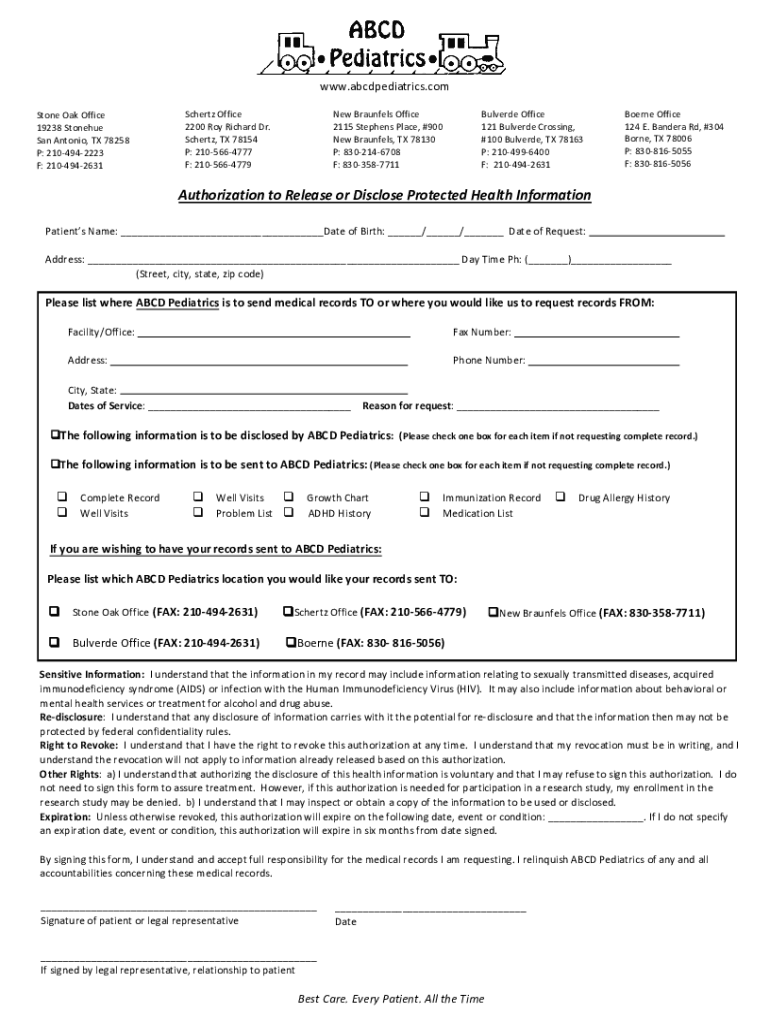
The "Authorization to Release or Disclose Protected Health Information" (PHI) is a formal document that gives healthcare providers or entities permission to share an individual's health information with designated third parties. This authorization is essential for maintaining privacy and protecting the sensitive health data of individuals under HIPAA (Health Insurance Portability and Accountability Act). By granting this authorization, patients can specify exactly what information can be disclosed and to whom, providing both control and flexibility over their personal health data.
- HIPAA Compliance: Ensures that any release of PHI adheres to federal privacy standards.
- Patient Rights: Emphasizes the rights of individuals to control their health information.
- Specificity: Includes details about what information is shared, how it is used, and the purpose.
How to Use the Authorization to Release or Disclose Protected Health Information
To use the authorization form effectively, individuals must first understand its purpose and requirements. The form is typically utilized to grant permission for the sharing of health records for various purposes, such as treatment, billing, or legal inquiries.
- Identify the Need: Determine the specific reason for needing to share PHI.
- Select the Right Record: Choose which parts of the health record to release, ensuring relevance and necessity.
- Designate Recipients: Specify entities or individuals who are authorized to receive the information.
- Specify Duration: Clarify how long the authorization is valid.
The above steps ensure that all pertinent details are considered to prevent unauthorized access or misuse.
Steps to Complete the Authorization to Release or Disclose Protected Health Information
Completing the authorization form correctly is crucial for its validity and legal compliance. Follow the step-by-step process to ensure proper execution:
- Patient Information: Fill out personal details including full name, address, and date of birth.
- Description of Information to be Disclosed: Clearly define which health records are included, such as lab results or billing records.
- Purpose of Disclosure: Specify why the PHI is being shared, such as for legal proceedings or insurance claims.
- Recipient Details: Indicate the name and contact information of the recipients authorized to receive the information.
- Authorization's Expiry Date: State when this authorization expires or its conditions for revocation.
- Signatures: Obtain the patient's (or legal guardian's) signature and date, ensuring full compliance.
Key Elements of the Authorization to Release or Disclose Protected Health Information
A comprehensive authorization form includes various sections that guide the collection and distribution of PHI:
- Patient's Rights Acknowledgement: Information on the right to revoke authorization at any time.
- Details on the Information Exchange: Explicit information regarding what constitutes PHI and how it will be used.
- Revocation Clause: Explanation of how and when a patient can cancel the authorization.
These elements ensure transparency and empower patients to manage their health data confidently.
Legal Use of the Authorization to Release or Disclose Protected Health Information
The legal implications of using this authorization form must not be underestimated. It ensures that the distribution of PHI is conducted in compliance with federal regulations.
- Compliance Assurance: Legal safeguard for healthcare providers sharing information.
- Consent Requirements: Ensures that patient consent is obtained before disclosure.
- Documentation: Serves as a formal record that supports the legality of sharing PHI.
Being informed about these legal boundaries helps avoid potential litigation risks or misuse of information.
Who Typically Uses the Authorization to Release or Disclose Protected Health Information
Various entities and individuals utilize PHI authorization forms, each requiring access for legitimate purposes:
- Healthcare Providers: To facilitate coordinated patient care.
- Insurance Companies: For processing claims and policy administration.
- Legal Professionals: As evidence in personal injury or malpractice cases.
Understanding the common users helps identify scenarios where PHI might be shared, ultimately guiding patients on whether to authorize or restrict access.


State-Specific Rules for the Authorization to Release or Disclose Protected Health Information
While HIPAA provides a federal framework, state laws can introduce variations to PHI authorization forms. Patients and providers must consider these differences:
- Texas: Includes additional privacy protections for mental health records.
- California: Implements stricter rules regarding consent for electronic sharing of PHI.
- New York: Requires specific language related to the handling of sensitive health conditions.
Awareness of such state-specific regulations is vital for remaining compliant with local laws while sharing health information.
Important Terms Related to Authorization to Release or Disclose Protected Health Information
Understanding related terminology ensures clarity and compliance when working with PHI:
- Consent: Voluntary agreement by a patient to authorize data sharing.
- De-Identification: Process of removing personal identifiers from health data.
- Subpoena: Legal order that may compel the release of PHI.
Knowledge of these terms aids individuals and organizations in navigating the complexities of health information management.
Examples of Using the Authorization to Release or Disclose Protected Health Information
Different scenarios illustrate how authorization forms facilitate the sharing of PHI:
- College Student Health Insurance Claims: A student allows a university health center to share medical records with an insurance provider.
- Worker Compensation Cases: An employee consents to release medical evaluations to support claims.
- Transfer of Care: A patient authorizes the sharing of their health history when moving to a new primary care provider.
Such examples highlight the diversity of situations where an authorization form is necessary, emphasizing its role in bridging gaps between privacy and information accessibility.




