Automated Teller Machine (ATM) Malware Analysis Briefing 2026

Get Form
Automated Teller Machine (ATM) Malware Analysis Briefing Preview on Page 1

Here's how it works

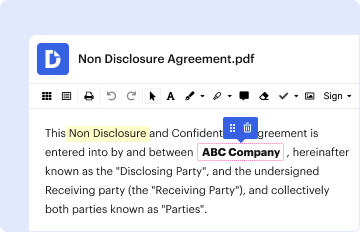
01. Edit your form online
Type text, add images, blackout confidential details, add comments, highlights and more.
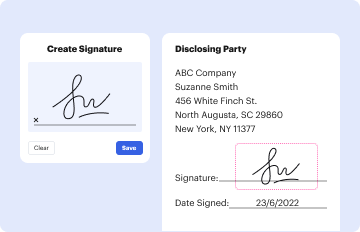
02. Sign it in a few clicks
Draw your signature, type it, upload its image, or use your mobile device as a signature pad.
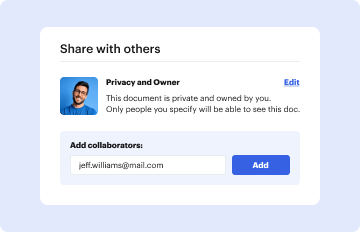
03. Share your form with others
Send it via email, link, or fax. You can also download it, export it or print it out.

How to use or fill out Automated Teller Machine (ATM) Malware Analysis Briefing with DocHub

Form edit decoration
9.5
Ease of Setup
DocHub User Ratings on G2
9.0
Ease of Use
DocHub User Ratings on G2
  1. Click ‘Get Form’ to open the Automated Teller Machine Malware Analysis Briefing in our editor.
  2. Begin by filling out the 'Malware Sample Properties' section. Enter the malware sample name, file size, and type. Ensure you check the boxes for properties like 'Compressed' and 'Obfuscated' as applicable.
  3. In the 'Method of Infection of the ATM' section, provide details about how the malware is activated. Include specifics about the dropper file and its functionality.
  4. Proceed to fill in the 'Targeting Track Data' section. Describe how the malware interacts with ATM transactions and what data it collects.
  5. Complete the 'Primary Command Options and Functionality' section by detailing each command option available to users when a trigger card is detected.
  6. Finally, review your entries for accuracy before saving or sharing your completed briefing using our platform's export features.

Start editing your Automated Teller Machine Malware Analysis Briefing today for free!

be ready to get more

Complete this form in 5 minutes or less

Get form

Got questions?

We have answers to the most popular questions from our customers. If you can't find an answer to your question, please contact us.
Contact us
Modern ATMs are implemented with high-security protection measures. They work under complex systems and networks to perform transactions. The data processed by ATMs are usually encrypted, but hackers can employ discreet hacking devices to hack accounts and withdraw the accounts balance.
An automated teller machine (ATM) is an electronic banking outlet that allows customers to complete basic transactions without the aid of a branch representative or teller. Anyone with a credit card or debit card can access cash at most ATMs, either in the U.S. or other countries.
Always block the view of the ATM keypad with your hand while entering the PIN. Never disclose your PIN to anyone, unless you trust them explicitly. Remember, banks will never ask for your PIN, so do not be lured by anyone who asks for it.
Automated malware analysis allows threat hunters to extract IoCs from a diverse range of sources, including endpoint telemetry and historical logs. By doing so, your SOC and security teams can stay one step ahead of threat actors.
ATM malware is malicious software designed to compromise automated teller machines (ATMs) by exploiting vulnerabilities in the machines hardware or software. ATM malware is used to commit a crime known as jackpotting in which attackers malware that forces ATMs to dispense large amounts of cash on command.
be ready to get more

Complete this form in 5 minutes or less

Get form

People also ask

An ATM Surveillance Security System enables remote monitoring, real-time detection, and deterrence using advanced cameras and monitoring systems.
What is asynchronous transfer mode (ATM)? ATM is a high-speed networking standard that transmits data in fixed-size cells, typically 53 bytes. Unlike traditional packet-switched networks, ATM uses a connection-oriented approach, ensuring reliable data delivery.

Related links