






Definition and Meaning of the Incident Register
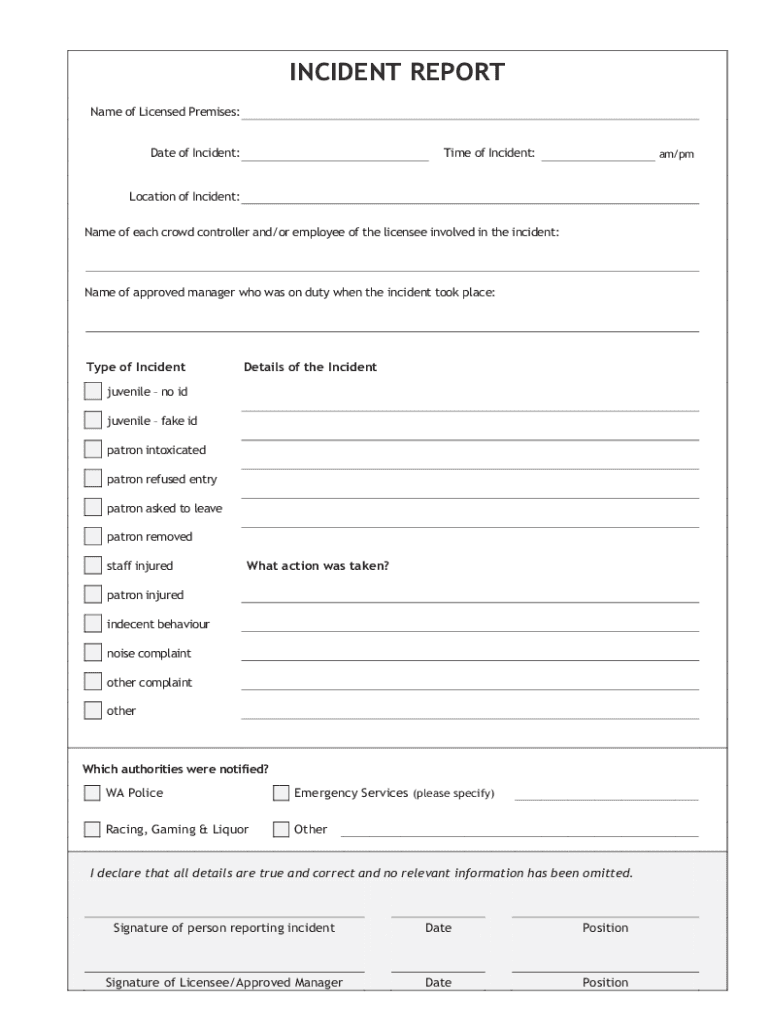
The Incident Register, commonly referred to in official documentation, is a structured form required by licensed premises to log any incidents that occur on their property. This form is essential in ensuring compliance with regulations set forth by the Director of Liquor Licensing. The IncidentsRegister captures critical details such as the date, time, location, individuals involved, and specifics about the incident. It is designed to ensure that all events are recorded accurately and systematically, which aids in legal compliance and enhances the accountability of licensed venues.
Key Elements of the Incident Register
A comprehensive Incident Register includes several critical components, each of which plays a role in capturing a complete account of an incident:
- Date and Time: Essential to establish when the incident took place.
- Location: Specifies where on the premises the event occurred.
- Individuals Involved: Names and contact information of those directly involved or those who witnessed the incident.
- Type of Incident: Categorizes the nature of the event, such as altercations, thefts, or accidents.
- Actions Taken: Details the immediate steps taken to address the incident, providing accountability.
- Authorities Notified: Information on whether local authorities were contacted and any follow-up actions they may have taken.
- Signatures: Acquired from the person reporting the incident and the licensee or approved manager, affirming the information's accuracy.
How to Use the Incident Register
Using the Incident Register involves a methodical process to ensure that all relevant information is captured clearly and efficiently:
- Gather Details: Immediately after an incident occurs, gather all pertinent information and witness accounts.
- Record Information: Enter details into the register, ensuring accuracy and completeness.
- Review: Check the document for any discrepancies or omissions.
- Signatures: Obtain the necessary signatures to authorize the document.
- File for Reference: Keep the register organized and accessible for future reference or audits.
Steps to Complete the Incident Register
Completing the form requires careful attention to detail and adherence to the sequence:
- Enter Date and Time: Log the exact moment when the incident was noticed.
- Document Location: Specify the precise area within the premises where it occurred.
- List Individuals: Record names, roles, and contact details of involved parties and witnesses.
- Describe Incident Type: Provide an accurate description and categorize the incident.
- Detail Actions Taken: List all immediate responses and preventive measures.
- Note Authorities Notified: Indicate if police or emergency services were informed.
- Confirm Details: Ensure all information is correct, and the form is signed appropriately.
Legal Use of the Incident Register
The legal significance of the Incident Register lies in its role as a compliance tool:
- Regulatory Compliance: Meets requirements outlined by liquor licensing authorities.
- Evidence in Legal Proceedings: Serves as documented evidence in case of disputes or investigations.
- Risk Management: Helps identify patterns and mitigate risks in operational protocols.
State-Specific Rules for the Incident Register
While federal guidelines provide a baseline, state-specific rules can influence how the Incident Register is maintained:
- Varying Compliance Requirements: Each state may have distinct rules governing what must be recorded and how long records should be retained.
- Differing Penalties: Non-compliance can result in diverse penalties based on state regulations.
Examples of Using the Incident Register
Practical examples demonstrate the utility and necessity of maintaining an Incident Register:
- Altercation Records: Recording a fight at a bar and detailing security measures taken.
- Accident Logs: Documenting slips or falls, including immediate first-aid responses.
- Robbery Documentation: Capturing all interactions and actions taken during and after a theft incident.
Penalties for Non-Compliance
Failing to maintain an adequate Incident Register can lead to significant consequences:
- Fines and Penalties: Financial penalties can be imposed for non-compliance.
- Suspension of Liquor License: Repeated violations may result in suspension or revocation of the establishment’s liquor license.
- Legal Action: Non-compliance might lead to adverse legal actions impacting business operations.