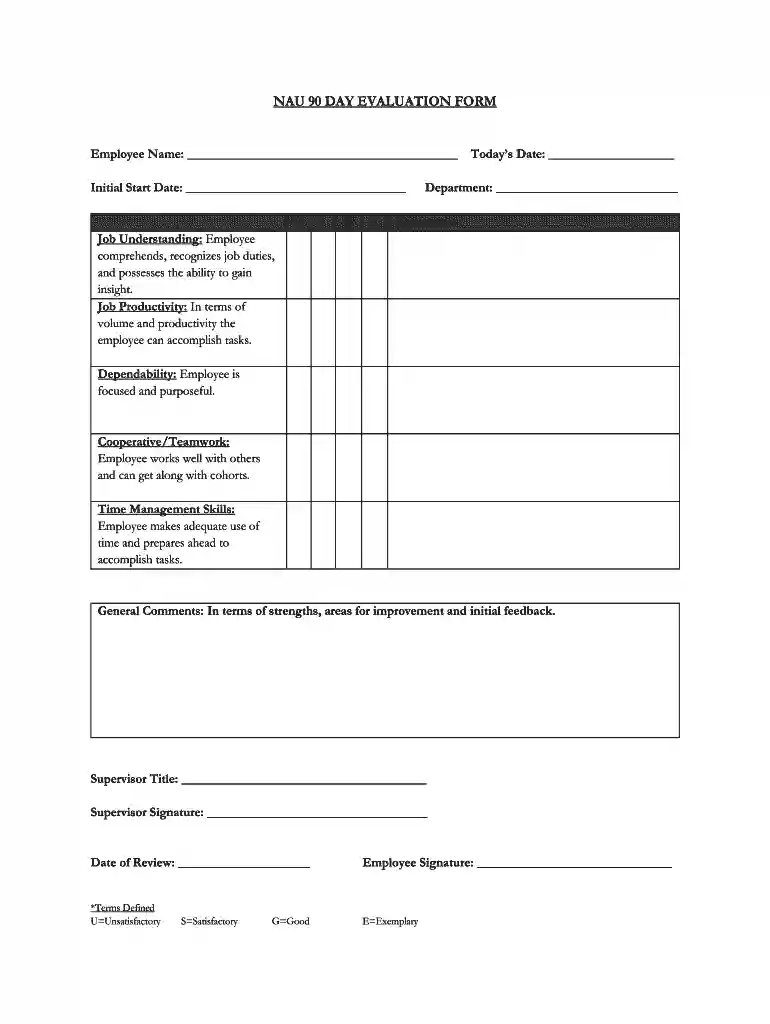
Definition & Meaning
A 90-day evaluation form is an assessment tool used by organizations to evaluate the performance and integration of new employees after their first three months on the job. This period is crucial as it allows both the employee and the employer to review the initial experience and make any necessary adjustments. The form typically examines various performance indicators, such as understanding of duties, productivity, teamwork, dependability, and time management skills. It serves the dual purpose of providing feedback to employees and gathering data for organizational development.
Key Elements of the 90 Day Evaluation Form
The 90-day evaluation form includes several key components designed to capture a comprehensive view of an employee's performance and integration into the company culture. These elements include:
- Performance Metrics: Measures the employee's ability to meet job expectations and productivity goals.
- Teamwork and Collaboration: Assesses how well the employee interacts with colleagues and contributes to team objectives.
- Dependability: Evaluates the reliability of the employee in terms of attendance and adherence to company policies.
- Comments Section: Offers space for both the employee and supervisor to provide insights, feedback, and share any concerns.
- Rating System: Uses a standardized scale to quantify performance in critical areas for a more objective evaluation.
How to Use the 90 Day Evaluation Form
The 90-day evaluation form is primarily used by supervisors and human resources personnel during performance review discussions. Here’s a breakdown of how it typically functions within a company:
- Preparation: Supervisors gather performance data and relevant feedback from colleagues.
- Evaluation Meeting: Conduct a meeting with the employee to discuss the form in detail.
- Feedback: Encourage an open dialogue about achievements and areas for improvement.
- Goal Setting: Establish future goals and development plans based on the evaluation results.
- Documentation: File the completed form in the employee's records for future reference.
Steps to Complete the 90 Day Evaluation Form
Completing the 90-day evaluation form requires careful consideration and a structured approach to ensure accurate and fair assessment:
- Review the Employee's Role and Responsibilities: Familiarize yourself with the employee's job description and expected deliverables.
- Gather Performance Data: Collect input from other team members and review any documented performance evidence.
- Rate Performance Elements: Use the form’s rating system to evaluate specific categories such as productivity, communication skills, and attendance.
- Provide Constructive Feedback: Include both positive remarks and areas for improvement in the comments section.
- Discuss and Finalize: Meet with the employee to go over the form and agree on next steps.
Why Should You Use the 90 Day Evaluation Form
Using a 90-day evaluation form offers several benefits that extend to both employees and organizations:
- Improved Performance Recognition: Provides a structured opportunity for feedback that can enhance employee performance.
- Identifying Training Needs: Helps pinpoint areas where employees may require additional training or support.
- Employee Retention: Strengthens employee commitment by showing a genuine interest in their growth and satisfaction.
- Organizational Development: Offers insights into organizational processes and team dynamics, helping to drive strategic improvements.
Legal Use of the 90 Day Evaluation Form
The 90-day evaluation must adhere to applicable labor laws and company policies to ensure fair and non-discriminatory practices. Here are a few legal considerations:
- Confidentiality: Ensure that the evaluation form and meeting outcomes remain confidential, shared only with relevant parties.
- Non-Discrimination: Ensure that evaluations are conducted without bias, adhering to equal opportunity employment standards.
- Record Keeping: Maintain accurate records in compliance with company policy and legal requirements, allowing for continuity in performance tracking.
Examples of Using the 90 Day Evaluation Form
In practice, various scenarios illustrate the effective use of 90-day evaluation forms:
- Onboarding New Employees: Used during the onboarding process to track and support the adjustment of new staff members.
- Performance Improvement Plans: Serves as a framework for employees who need to meet certain performance criteria within the first 90 days.
- Cultural Fit Evaluation: Assesses how well the employee aligns with company values and workplace culture.