
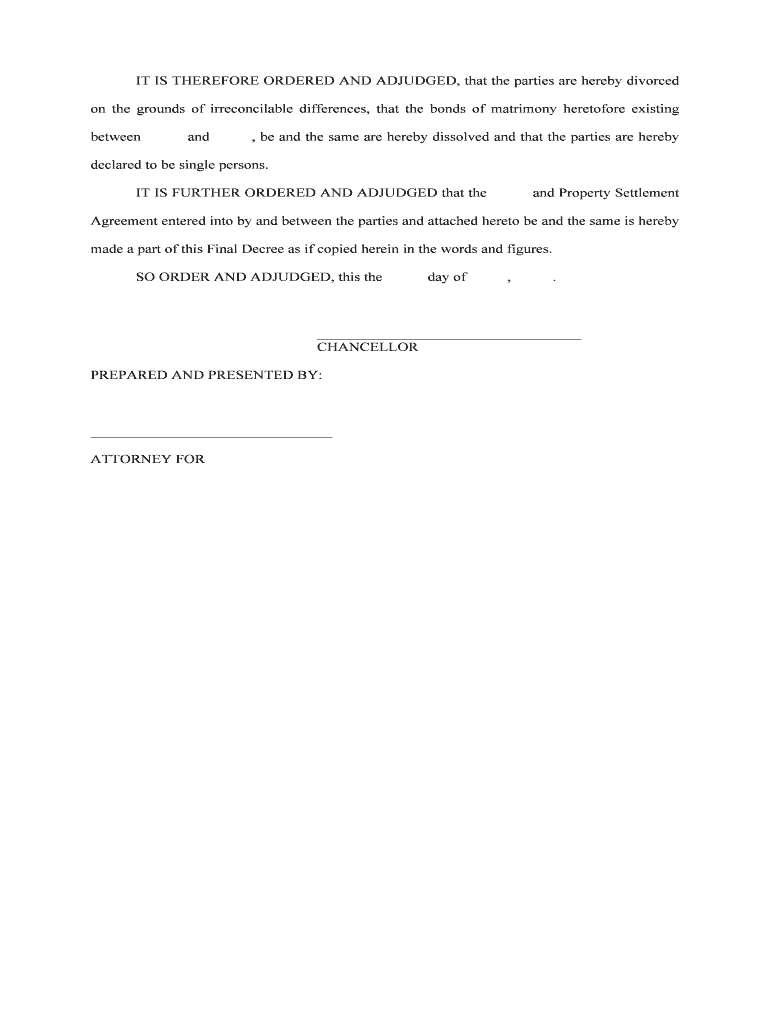







Definition and Meaning of Mississippi Divorce
A Mississippi divorce refers to the legal process of dissolving a marriage within the state of Mississippi. This process involves a formal judgment rendered by the Chancery Court of Mississippi, where the court recognizes the dissolution of the marriage based on specific grounds – often irreconcilable differences. The divorce process includes the establishment of separate legal identities for both parties and the division of shared property according to agreements such as a Property Settlement Agreement. This legal process ensures that all aspects of the dissolution are handled in a fair and systematic manner, adhering to state laws.
Steps to Complete the Mississippi Divorce Process
Completing a divorce in Mississippi involves several critical steps to ensure that the process is legally recognized and all involved parties have addressed key considerations:
- Filing the Complaint: Initiate the divorce process by filing a complaint for divorce in the Chancery Court. This document outlines the basis for the divorce and any specific requests regarding property division or child custody.
- Serving the Papers: Serve divorce papers to the other party and await their response, ensuring complete transparency in the divorce proceedings.
- Negotiation and Agreement: Engage in discussions to negotiate terms of property settlement and child custody, if applicable. The parties often draft a Property Settlement Agreement to resolve financial and custodial matters.
- Court Hearing: Attend a court hearing where a judge reviews your case to ensure compliance with legal standards and the validity of all agreements.
- Final Judgment: Receive a final judgment from the court, officially recognizing the divorce and confirming both parties’ rights and responsibilities.
Importance of Legal Representation
- Understanding Legal Rights: A lawyer can help ensure that both parties understand their legal rights regarding property division, child custody, and support.
- Drafting Agreements: Legal professionals aid in drafting agreements that are comprehensive and legally binding to prevent future disputes.
How to Obtain a Mississippi Divorce
Obtaining a Mississippi divorce requires fulfilling specific legal criteria and submitting the necessary documentation:
- Residency Requirement: At least one party must have been a resident of Mississippi for a minimum of six months prior to filing.
- Grounds for Divorce: Present valid grounds such as irreconcilable differences or fault-based reasons like adultery or desertion.
- Completing Forms: Submit all required forms, including a Complaint for Divorce, financial disclosures, and any agreements reached between parties.
Practical Scenarios
- No-Fault Divorce: When both parties agree on divorce terms, they can file for a no-fault divorce citing irreconcilable differences, simplifying the process.
- Contested Divorce: When disputes exist, the process may involve more court hearings and negotiations to reach a settlement.
Required Documents for Mississippi Divorce
Filing for divorce in Mississippi requires several critical documents:
- Complaint for Divorce: Initiates the legal process and specifies the grounds for filing.
- Property Settlement Agreement: Details the division of assets and property reached between the parties.
- Child Custody Agreement: When children are involved, a custody agreement outlines custody and visitation arrangements.
- Financial Disclosures: Both parties must disclose their financial situations to ensure fair distribution of assets.
Importance of Accurate Documentation
- Ensures Legal Compliance: Accurate and complete documents help avoid legal delays and ensure compliance with court requirements.
- Protects Legal Rights: Proper documentation is pivotal in safeguarding each party's rights and interests post-divorce.
Legal Use and Framework of Mississippi Divorce
Mississippi divorce is governed by state-specific legal frameworks aimed at ensuring fair and just outcomes for divorcing parties:
- Grounds for Divorce: Mississippi law permits divorces on both fault and no-fault grounds, providing flexibility according to the situation.
- Chancery Court Authority: The Chancery Court holds jurisdiction over divorce matters, and its rulings are binding and legally enforceable.
Legal Considerations
- Navigating Complex Laws: Legal professionals guide parties through Mississippi's specific divorce laws, helping them understand their implications.
- Child and Spousal Support: Determinations regarding support consider several factors, including parties' financial standings and custody arrangements.
State-Specific Rules for Mississippi Divorce
Mississippi has unique rules that govern the divorce process:
- Residency Requirement: One spouse must reside in Mississippi for a minimum of six months before filing for divorce.
- Mandatory Waiting Period: A waiting period of 60 days from filing is required before a no-fault divorce can be finalized, allowing for reconsideration.
Practical Application
- Address Changes: When a couple with children divorces, they must update each other on address changes as per court orders while their child is a minor.
Key Elements in a Mississippi Divorce
Critical elements of a Mississippi divorce include:
- Child Custody: Determining custodial arrangements that prioritize the best interests of the child.
- Division of Property: Ensuring equitable distribution of marital assets as stipulated in a Property Settlement Agreement.
- Legal Fees and Costs: Defining responsibility for legal fees and associated divorce costs.
Addressing Key Elements
- Mediation: Mediation can be a helpful tool to resolve disputes over key elements amicably.
- Adjustments: Post-divorce adjustments can be made to custody or support arrangements based on significant life changes.
Examples and Case Studies of Mississippi Divorce
Examining real-world cases provides valuable insights into the divorce process:
- Amicable Settlement: A couple filed for a no-fault divorce and successfully negotiated terms without lengthy court proceedings.
- Contested Proceedings: A divorce involving significant property led to court intervention and a judge rendering a decision on asset division.
- Custody Dispute: Parents resolved a contentious custody battle by agreeing to shared custody, incorporating terms that served the child's best interest.
Learning from Cases
- Adaptability: Each divorce case may require unique approaches depending on circumstances.
- Outcome Awareness: Understanding potential outcomes can prepare parties for different scenarios in divorce proceedings.




