







Definition & Meaning of the As Is Residential Contract For Sale in Florida
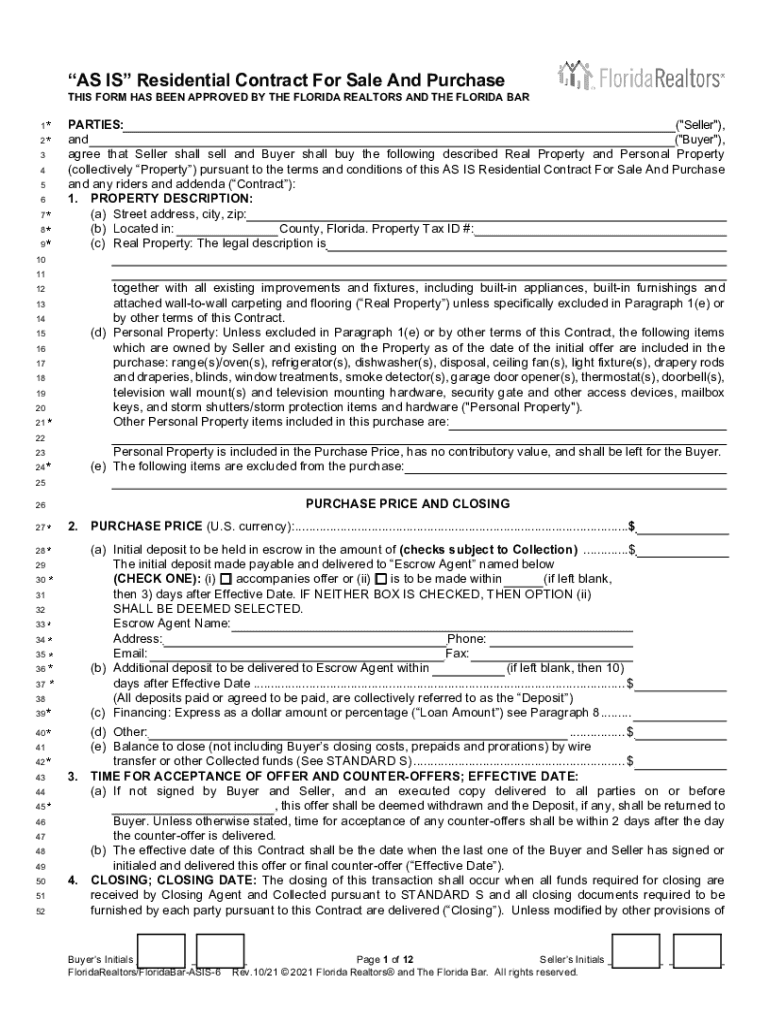
The 'As Is' Residential Contract for Sale and Purchase is a legally binding document used in real estate transactions in Florida. This contract is recognized and approved by the Florida Realtors and the Florida Bar, facilitating agreements between sellers and buyers for the sale of residential properties. The term "as is" signifies that the property is sold in its current condition, with no warranties or repairs guaranteed by the seller. Common aspects outlined in this contract include property descriptions, purchase prices, closing procedures, and financing options. Furthermore, it addresses essential disclosures regarding the condition of the property, such as the presence of mold or radon gas, maintenance responsibilities, and buyer rights concerning inspections and disputes.
Key Elements of the As Is Residential Contract
The 'As Is' Residential Contract encompasses a variety of crucial components that define the terms of the real estate transaction. These elements include:
- Property Description: Clearly outlines the physical address and legal description of the property being sold to avoid confusion.
- Purchase Price: States the agreed-upon price that the buyer will pay for the property.
- Deposit Information: Specifies the amount of earnest money the buyer will deposit, ensuring a commitment to the purchase.
- Closing Procedures: Details the process and timeline for finalizing the transaction, including the transfer of ownership and any relevant timelines.
- Disclosures: Obligates the seller to provide information regarding the property's condition, including any known defects or issues.
- Inspection Rights: Grants the buyer the right to inspect the property within a specified timeframe and outlines the procedure for addressing discovered issues.
- Maintenance Responsibilities: Clarifies which party is responsible for maintenance and repair of the property before the closing date.
- Dispute Resolution Provisions: Offers methods for resolving potential disputes related to the contract, such as mediation or arbitration.
Steps to Complete the As Is Residential Contract
Completing the 'As Is' Residential Contract involves several structured steps, ensuring clarity and legal compliance:
- Obtain the Contract: Access the latest version of the 'As Is' Residential Contract from reputable sources, such as real estate offices or legal websites.
- Fill in Buyer and Seller Information: Include the full legal names and contact information of both the buyer and the seller.
- Detail Property Information: Clearly specify the property address and legal description to avoid ambiguity.
- Negotiate Terms: Discuss and agree on the purchase price, deposit, and contingencies with the seller.
- Disclosures and Acknowledgments: Ensure the seller provides all required disclosures and that the buyer acknowledges them.
- Signatures: Both parties need to sign the contract, indicating their agreement to the terms outlined.
- Review and Submit: Review the completed document for accuracy before submitting it to relevant parties, such as a title company or attorney.
- Finalize Transactions: Follow through with inspections, appraisals, and the closing process as prescribed in the contract.
How to Use the As Is Residential Contract for Sale
Using the 'As Is' Residential Contract effectively necessitates a systematic approach. Initially, the buyer and seller should agree on the contract terms, particularly the purchase price and disclosure information. Once both parties consent, they can complete the contract, ensuring all key elements are addressed. It is critical to review the inspection and disclosure sections carefully, as these will impact negotiations and future responsibilities. Moreover, both parties should preserve copies of the signed contract for their records and future reference, facilitating a smooth transaction process.
Important Terms Related to the As Is Residential Contract
Familiarity with key terms associated with the 'As Is' Residential Contract is essential for all parties involved in the transaction. These terms include:
- Contingencies: Specific conditions that must be met for the contract to remain valid, such as satisfactory home inspections or financing approvals.
- Escrow: A neutral third party that holds funds or documents until contractual obligations are fulfilled.
- Closing Costs: Fees associated with finalizing the sale, which can include taxes, title insurance, and attorney fees.
- Addenda: Additional documents that modify or clarify aspects of the main contract.
- Release of Liability: Clauses protecting the seller from future claims or liability related to the property's condition post-sale.
Understanding these terms will empower both buyers and sellers in negotiating and fulfilling their obligations under the contract, ensuring a transparent and efficient real estate transaction.




