




01. Edit your form online
Type text, add images, blackout confidential details, add comments, highlights and more.

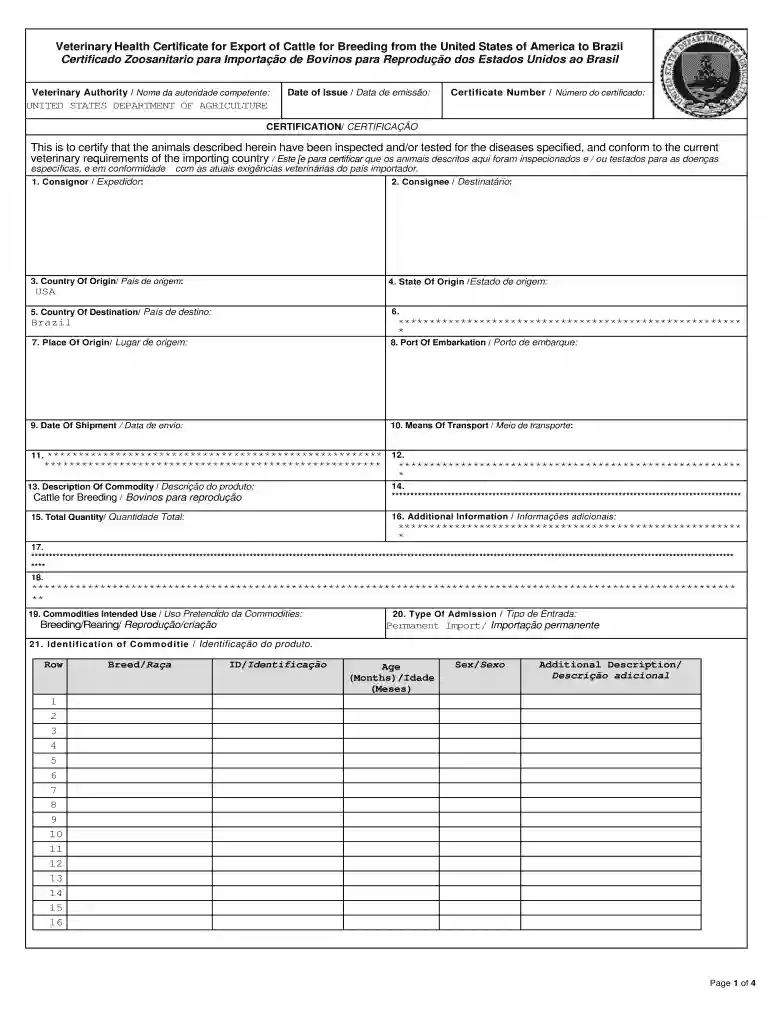
Type text, add images, blackout confidential details, add comments, highlights and more.

Draw your signature, type it, upload its image, or use your mobile device as a signature pad.

Send it via email, link, or fax. You can also download it, export it or print it out.
The Veterinary Health Certificate for Export of Cattle for Breeding is a crucial document required for the international shipment of cattle from the United States to countries such as Brazil. It certifies that the cattle meet specific health standards and have been tested for various diseases, including Foot and Mouth Disease and Brucellosis. This certificate ensures compliance with veterinary requirements set by the importing country, thereby facilitating the legal and health-oriented aspects of cattle export.
To utilize the Veterinary Health Certificate effectively, cattle exporters need to present it to the authorities both in the United States and in the importing country, such as Brazil. The certificate serves as proof that the exported cattle have undergone necessary health checks, vaccinations, and meet all the stipulated requirements. This document is typically reviewed by veterinary officials to validate the health status of the cattle before they are cleared for international transport.
This certificate is primarily used by cattle exporters, veterinarians, and regulatory officials. Exporters need it to ensure their livestock meets international export standards. Veterinarians are involved in conducting health inspections and endorsing the certificate. Regulatory and customs officials use it to validate compliance with import health requirements before allowing the cattle into the destination country.


Legally, the Veterinary Health Certificate is used to ensure that cattle exports adhere to health regulations of the importing country. It serves as an official document indicating the cattle are disease-free and fit for transport. Without this certificate, exporting cattle can lead to legal repercussions, including fines and revocation of export licenses.
While the federal guidelines form the basis of the Veterinary Health Certificate, certain states might have additional rules regarding the health and export of livestock. It's essential for exporters to verify specific state requirements, which might include more comprehensive health inspections or additional certifications, to ensure compliance with both state and federal laws.
We've got more versions of the Veterinary Health Certificate for Export of Cattle for Breeding form. Select the right Veterinary Health Certificate for Export of Cattle for Breeding version from the list and start editing it straight away!
| Versions | Form popularity | Fillable & printable |
|---|---|---|
| 2024 | 4.6 Satisfied (56 Votes) | |
| 2021 | 4.6 Satisfied (51 Votes) | |
| 2021 | 4.8 Satisfied (37 Votes) | |
| 2020 | 4.3 Satisfied (58 Votes) | |
| 2020 | 4.6 Satisfied (39 Votes) | |
| 2018 | 4.1 Satisfied (45 Votes) | |
| 2018 | 4.8 Satisfied (111 Votes) | |
| 2018 | 4.1 Satisfied (52 Votes) | |
| 2017 | 4.8 Satisfied (231 Votes) | |
| 2016 | 4 Satisfied (37 Votes) | |
| 2015 | 4.9 Satisfied (31 Votes) | |
| 2015 | 4.4 Satisfied (25 Votes) | |
| 2015 | 4 Satisfied (56 Votes) | |
| 2014 | 4.5 Satisfied (47 Votes) | |
| 2014 | 4.3 Satisfied (29 Votes) |
At DocHub, your data security is our priority. We follow HIPAA, SOC2, GDPR, and other standards, so you can work on your documents with confidence.


