
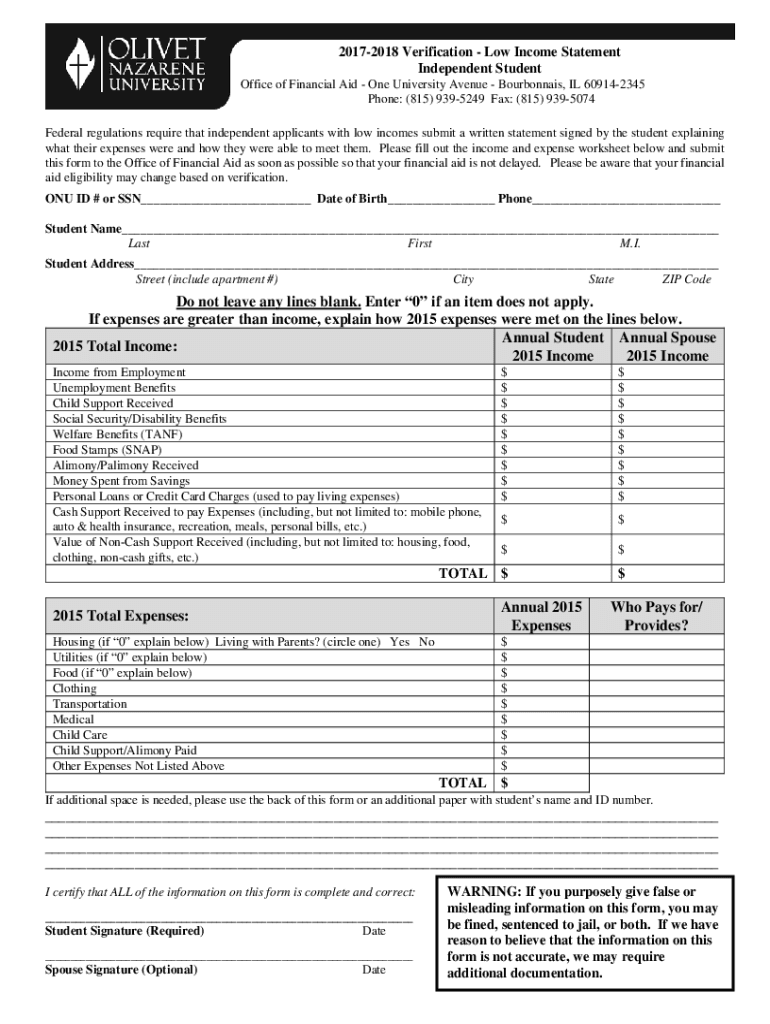





Eligibility Criteria for FAFSA Independent Student
To qualify as an independent student for the Free Application for Federal Student Aid (FAFSA), certain criteria must be met. The determination is based on the U.S. Department of Education's guidelines. Examples of these criteria include:
- Age: Generally, students who are 24 years of age or older are considered independent.
- Marital Status: Students who are married by the time they file the FAFSA qualify as independent.
- Military Veterans and Active Duty: Individuals who are veterans of the U.S. Armed Forces or are currently serving on active duty for other than training purposes are classified as independent.
- Emancipated Minor or In Legal Guardianship: Students who have been emancipated by a court or are under legal guardianship can apply as independent.
- Grad Students: Those pursuing a master's or doctorate degree automatically qualify as independent.
- Orphans, Wards of the Court, or Foster Care: Individuals who have been in foster care since the age of 13, or who are wards of the court, are independent.
- Supporting Dependents: Students who provide more than half the support for dependents, such as children or other family members, are considered independent.

Required Documents for FAFSA Independent Student
When applying as an independent student, several documents are crucial for completing the FAFSA accurately:
- Social Security Number: Essential for identity verification and connecting financial records.
- Driver’s License: While not mandatory, it can serve as an additional means of identification.
- Tax Records: Independent students need to provide their federal tax return forms. For instance, IRS Form 1040 from the previous tax year.
- Records of Untaxed Income: This includes any untaxed income sources, like child support received, interest income, and veterans’ noneducation benefits.
- Bank Statements and Investments: Current bank account balances and details about investments, excluding retirement accounts, are required.
- Asset Records: Documentation regarding the value of assets such as real estate, excluding the family home.
- Proof of Legal Dependents: Any documentation that can support claims of providing more than half support to dependents.
Application Process & Approval Time for FAFSA
Completing the FAFSA as an independent student involves multiple steps, and understanding the timeline is critical:
- Create an FSA ID: Start by creating a Federal Student Aid ID. This electronic legal signature is necessary for signing the FAFSA and accessing federal education resources.
- Gather Necessary Documentation: Assemble all required documents including those mentioned above.
- Complete the FAFSA Online: Visit the official FAFSA website to fill out and submit the form. The process can take anywhere from 45 minutes to an hour if all documents are prepared.
- Approval Time: Once submitted, processing takes about three to five days if done online. Paper applications can take up to 10 days.
- Receive Student Aid Report (SAR): Review your SAR to ensure all information is correct and make necessary corrections promptly.
- Verification Process: Some applications may be selected for verification to confirm the accuracy of financial information submitted.
Steps to Complete the FAFSA for Independent Students
Completing the FAFSA effectively requires a strategic approach, particularly for independent students:
- Review Eligibility Criteria: Double-check all the conditions that classify a student as independent.
- Understand Financial Situations: Fully grasp personal and family financial status, including tax return information and any relevant financial changes.
- Prepare Financial Documentation: Collect all tax documents, income records, and other financial assets details.
- Login and Input Personal Information: Use your FSA ID to start the application process on the FAFSA website. Input accurate personal and dependency information.
- Fill Out Financial Sections: Carefully complete financial information based on tax returns and other income documentation.
- List College and Housing Plan: Specify at least one college where the FAFSA should be sent and indicate your intended housing situation.
- Review and Submit: Thoroughly review the application to check for errors or misses, then submit.
Important Terms Related to FAFSA Independent Status
Understanding specific jargon and terms related to FAFSA can significantly help in navigating the process:
- EFC (Expected Family Contribution): The measure of a student’s family’s financial strength, critical in determining federal aid eligibility.
- SAR (Student Aid Report): The document that summarizes the FAFSA data and indicates the student’s eligibility for federal student aid.
- ISIR (Institutional Student Information Record): Similar to the SAR, but sent to schools to start financial aid processing.
- Cost of Attendance (COA): The total amount it will cost a student to go to school, including tuition, fees, and living expenses.
Legal Use of FAFSA Information
The data provided in the FAFSA is subject to privacy and limited use, as dictated by federal law:
- Privacy Guarantee: The U.S. Department of Education ensures all personal and financial information is secure.
- Disclosure Limitations: FAFSA data is only shared with specific entities such as colleges listed on the application and state agencies for scholarship eligibility.
- Use in Financial Aid Decisions: Schools utilize the FAFSA results to determine eligibility for institutional and federal aid.
Filing Deadlines and Important Dates
Being aware of important deadlines ensures timely submission:
- Federal Deadlines: The FAFSA opens on October 1 for the following academic year and the federal deadline is June 30 of the academic year.
- State Deadlines: Each state has its own deadlines for state-specific financial aid, often earlier than federal deadlines. It's crucial to check with individual state education departments.
- Priority Deadlines: Schools often have priority deadlines to maximize financial aid packages. Early application can result in better aid opportunities.
Real-world Examples of FAFSA Independent Application
Considering practical examples can guide others through similar situations:
- Returning Adult Learners: An adult returning for higher education after several years in the workforce often qualifies as independent.
- Married Undergraduates: Students who marry during their college course can apply for FAFSA as independent, affecting their aid eligibility.
- Military Service Members: Active service members who return to education leverage their independent status for better financial assistance.
Digital vs. Paper Application Versions
There are advantages to each application method for the FAFSA:
- Online Application: Provides speed, built-in errors checks, automatic calculations, and quick access to SAR.
- Paper Application: Used when internet access is limited. Takes longer for processing and lacks real-time data checks.
- FAFSA Mobile App: Offers convenience with a user-friendly interface and flexibility in multiple language options.
Each block above provides an informative, in-depth exploration of specific aspects of applying as an independent student through FAFSA, following the stipulated structure and guidelines.