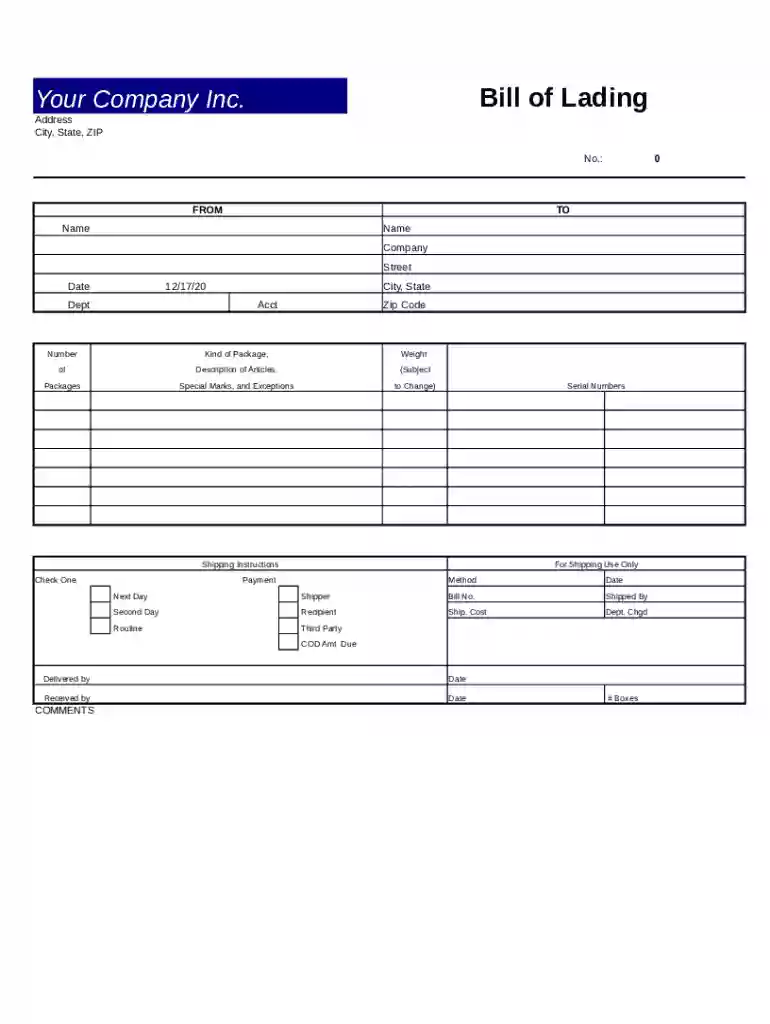
Definition and Meaning of the Bill of Lading Form
A Bill of Lading (BOL) form is a critical document in the shipping and logistics industry, serving as both a receipt for the shipment of goods and a contract between the shipper and the carrier. It details essential information such as the type and quantity of goods being transported, the origin and destination points, and the terms under which the freight is being moved. This document is crucial for ensuring that goods are shipped according to the agreed parameters and serves as proof of ownership, thereby facilitating legal and financial transactions related to the shipping.
How to Use the Bill of Lading Form
Utilizing a Bill of Lading form correctly ensures smooth logistics operations and helps avoid misunderstandings between parties involved in the shipping process. To use the form:
- Fill in the Shipper and Consignee Details: Include the addresses and contacts of the shipper and the recipient.
- Describe the Goods: Clearly specify the type, quantity, and condition of the goods being shipped.
- Indicate Transportation Instructions: Provide detailed instructions on handling, routes, and shipping methods.
- Specify Payment Terms: Include details regarding the payment method and terms agreed upon for the shipment.
- Signatures: Ensure that once the form is completed, it is signed by both the shipper and the carrier, validating the contract.
How to Obtain the Bill of Lading Form
Acquiring a Bill of Lading form is typically done through the following methods:
- Shipping Company or Carrier: These forms are usually provided by the shipping company or carrier as part of the service when goods are being sent.
- Online Templates: Many carrier firms offer downloadable templates on their websites. Online tools also allow users to customize and print their forms.
- Logistics Software: Businesses that engage regularly in shipping can use logistics management software that includes a BOL template feature that automates form generation.
Steps to Complete the Bill of Lading Form
Completing a Bill of Lading form involves several critical steps:
- Shipper and Carrier Information: Provide accurate information about the shipper's and carrier’s identities.
- Consignee’s Details: Enter the accurate name and delivery address of the consignee.
- Detailed Goods Description: An accurate description of the goods, including the type, weight, dimensions, and quantity.
- Transportation Instructions: Specify the mode of transportation, handling requirements, and delivery date.
- Payment Instructions: Clarify who is responsible for freight charges and how they will be paid.
- Signatures for Validation: Acquire signatures from the appropriate parties to validate the agreement.
Key Elements of the Bill of Lading Form
The Bill of Lading form contains several critical elements that ensure its function as both a receipt and a contract:
- Shipper's Information: Including full name and address.
- Consignee’s Details: Intended recipient of the shipment.
- Carrier Information: The party responsible for transporting the goods.
- Description of Goods: Detailed information about what is being shipped.
- Freight Payment Information: Clarification of who pays for the shipment.
- Special Instructions: Any additional handling or routing guidelines.
- Date and Signature Section: For both shipper and carrier to legalize the transaction.
Legal Use of the Bill of Lading Form
The Bill of Lading functions as a legally binding contract in logistics, outlining the terms and conditions under which goods are transported. It is imperative for:
- Proof of Contract: Establishing a legal agreement between the shipper and carrier.
- Ownership Evidence: Serving as proof of ownership once goods are transferred.
- Claim and Liability Handling: Essential in cases of loss or damage during transit, outlining the responsibilities and liabilities of each party involved.
Digital vs. Paper Version of the Bill of Lading Form
In today’s digital age, both electronic and paper versions of the Bill of Lading are used:
- Electronic Bill of Lading (eBOL): Offers easier storage and retrieval, is environmentally friendly, and typically allows for faster processing and delivery.
- Paper Bill of Lading: Still widely used, it is preferred in some sectors for legal reasons or by businesses without digital infrastructure. It provides tangible records but involves more manual processing.
Choosing between the electronic and paper versions depends on the specific needs, technological capacity, and regulatory requirements of the stakeholders involved.