
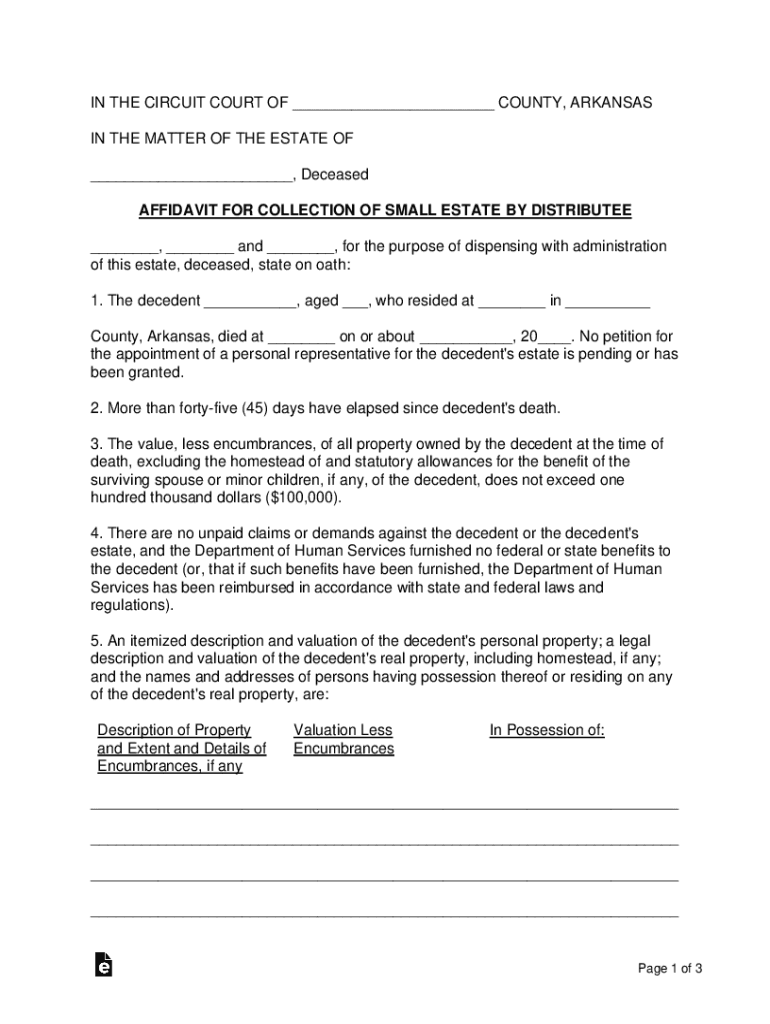







Definition and Meaning of Arkansas Small Estate Affidavit (Form 23)
The Arkansas Small Estate Affidavit, also known as Form 23, is a legal document used to facilitate the collection and distribution of a deceased person's estate without formal probate proceedings. This affidavit is essential when the total value of the estate does not exceed the state-specified limit, allowing heirs to claim the decedent's assets directly. The form typically includes critical details such as the decedent's name, date of death, list of assets, and a declaration that no claims exist against the estate. This process simplifies the transfer of property, saving time and legal expenses typically associated with probate court.
How to Use the Arkansas Small Estate Affidavit (Form 23)
To use Form 23 effectively, beneficiaries must first ensure that the total estate value falls under the maximum limit set by Arkansas law, which is periodically adjusted. Beneficiaries must wait at least 45 days after the decedent's death to file the affidavit. The affidavit must include signatures from all heirs who have a legal claim to the estate. Once completed, the document is presented to the respective financial institutions or parties holding the assets to facilitate the transfer. This simplicity and efficiency make it a preferred choice for small estates, minimizing legal hurdles while ensuring rightful distribution.
Steps to Complete the Arkansas Small Estate Affidavit (Form 23)
-
Calculate the Estate Value: Begin by calculating the total value of the decedent's assets. Ensure the value does not exceed the state's small estate limit.
-
Gather Necessary Information: Collect all pertinent information, including the decedent’s death certificate, a comprehensive list of assets, and potential heirs.
-
Wait for Appropriate Timeframe: Arkansas requires a waiting period of at least 45 days after the decedent's death before filing.
-
Complete the Form: Include details such as the decedent's full name, date of death, and list of assets. All heirs who stand to gain from the estate must sign the form.
-
Submit to Asset Holders: Present the completed affidavit to banks or any entity managing the deceased's assets to facilitate the transfer of ownership to heirs.
-
Follow-Up: Ensure all parties comply with the asset transfer as documented in the affidavit, keeping a copy for personal records.
Eligibility Criteria for the Arkansas Small Estate Affidavit (Form 23)
To be eligible to use the Arkansas Small Estate Affidavit, several conditions must be met:
- The total estate value must not exceed the state's designated limit, which is currently $100,000.
- There should be no pending claims against the estate from creditors.
- The affidavit must be filed at least 45 days after the decedent's passing.
- All heirs must be identified, and there must be unanimous agreement among them regarding the distribution of property.
- The decedent should have left no will, or if a will exists, it must clearly nominate the heirs.


Key Elements of the Arkansas Small Estate Affidavit (Form 23)
- Decedent's Information: Full legal name, date of death, and last known address.
- Asset Details: A comprehensive list of assets including bank accounts, personal property, and any other tangible property.
- Heirs’ Identification: Names, relationships, and contact information of all legal heirs.
- Affidavit Statement: A declaration by the heirs asserting the authenticity of the information provided and the absence of creditors’ claims.
- Notarization: Though not always required, notarization may provide additional validity.
State-Specific Rules for the Arkansas Small Estate Affidavit (Form 23)
Arkansas has specific regulations dictating how the small estate process should be managed. The state sets a monetary cap on what qualifies for a small estate, limiting it to $100,000. Beneficiaries are obliged to follow a waiting period and ensure all potential claims are settled. Furthermore, the affidavit helps bypass formal probate, but comprehensive and accurate completion of the document is required to ensure legal compliance and successful asset distribution.
Filing Deadlines and Important Dates
In Arkansas, beneficiaries must adhere to a 45-day waiting period from the decedent's date of death before filing the Small Estate Affidavit. This period is essential to allow any claims against the estate to surface. There are no specific deadline filings post this waiting period; however, timely submission is encouraged to expedite asset distribution. Keeping track of these timeframes is vital for ensuring compliance with state laws and preventing legal complications.
Legal Use of the Arkansas Small Estate Affidavit (Form 23)
Legally, the Arkansas Small Estate Affidavit serves as an efficient tool to transfer assets without involving the probate court, providing a speedy resolution when handling estates with a modest value. Its use is permitted only when all conditions are met: the estate is below the monetary threshold, there are no outstanding debts, and the waiting period is observed. By avoiding probate, heirs reduce the administrative burden, minimize legal costs, and streamline the transfer of assets while maintaining compliance with Arkansas statutes.




