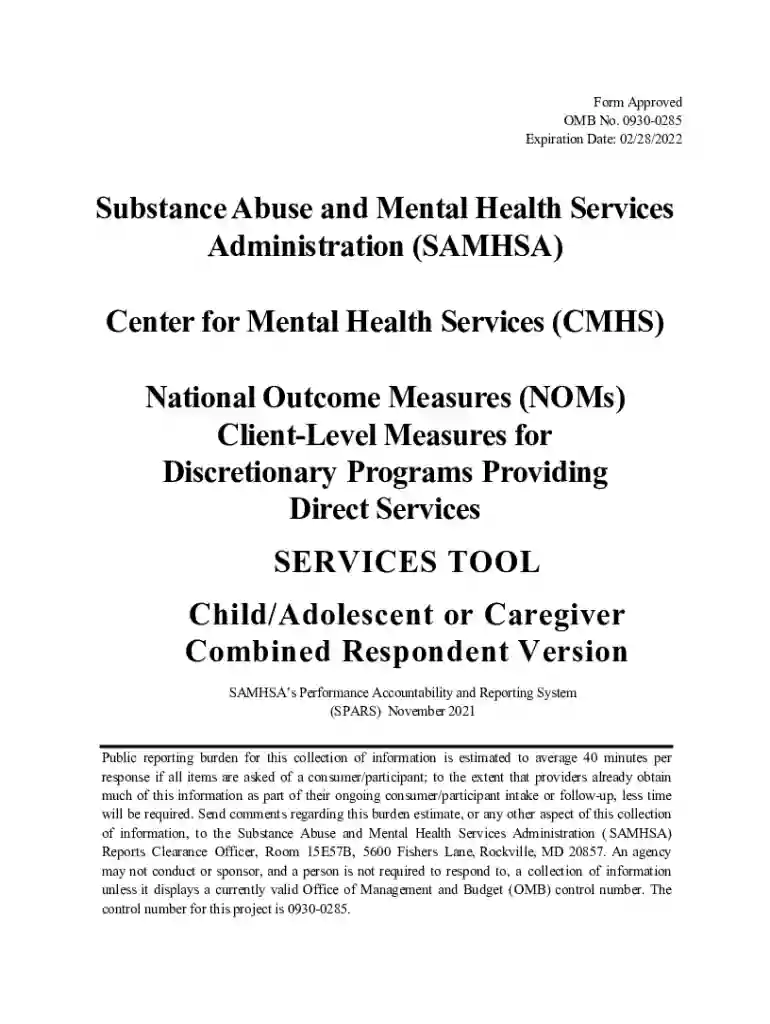
Definition & Meaning
The "Get CMHS NOMs Client-Level Services Tool For Adults - Spars" is a comprehensive measurement instrument used for collecting data on client-level services provided to adults within mental health and substance abuse programs. It fulfills a critical role in understanding the outcomes of services delivered through the Substance Abuse and Mental Health Services Administration (SAMHSA) initiatives. This tool forms a part of the National Outcome Measures (NOMs), facilitating the evaluation of various components such as demographics, behavioral health diagnoses, and service effectiveness.
Key Elements of the Tool
This measurement tool encompasses several vital sections, each designed to capture different types of information. Key elements include:
- Demographics: Collects basic personal information, including age, gender, race, and ethnicity, crucial for tracking service reach and equity.
- Behavioral Health Diagnoses: Documents the specific mental health conditions diagnosed in the client, helping to tailor treatment plans.
- Functioning and Well-being: Measures aspects like the client’s ability to perform day-to-day activities and overall life satisfaction.
- Housing and Stability: Inquires about the client's living situation to identify housing stability issues that might affect treatment outcomes.
How to Use the Tool
To effectively use the Get CMHS NOMs Client-Level Services Tool for Adults, follow a structured approach.
- Review Each Section Thoroughly: Familiarize yourself with all the categories within the form to ensure comprehensive data collection.
- Ensure Accurate Data Entry: Enter data meticulously, particularly in sensitive sections like client diagnoses or functioning levels.
- Consult with the Client: Engage with the client to fill out sections requiring their input or feedback, ensuring the information is as complete and accurate as possible.
Steps to Complete the Tool
Completing the Get CMHS NOMs Client-Level Services Tool involves several steps to attain accuracy and comprehensiveness:
- Gather Required Information: Collect preliminary data about the client, which requires accessing health records and previous assessments.
- Conduct Client Interviews: Use structured interviews to gather subjective data directly from the client regarding their perception of care and social connectedness.
- Verify and Cross-reference Information: Ensure all entered data is consistent with existing health records to maintain integrity.
Who Typically Uses the Tool
The primary users of the Get CMHS NOMs Client-Level Services Tool include:

- Mental Health Professionals: Psychiatrists, psychologists, and case managers utilize this tool to assess client outcomes.
- Program Evaluators: Researchers and analysts involved in evaluating the effectiveness of SAMHSA-funded programs find this tool indispensable.
- Policy Makers: Use the tool's aggregated data to inform policy decisions and funding allocations for mental health services.
Why Should You Use the Tool
Using this tool provides multiple benefits:
- Enhanced Service Delivery: It aids in customizing treatment plans to better meet the specific needs of each client.
- Program Accountability: Offers a framework for programs to demonstrate efficacy and need for continued or adjusted funding.
- Informed Decision Making: Facilitates a deeper understanding of demographic and service trends within specific populations.
Important Terms Related to the Tool
Several terms are essential for understanding and properly utilizing the Get CMHS NOMs Client-Level Services Tool:
- NOMs (National Outcome Measures): Standardized measures used to evaluate service impact across various health domains.
- SAMHSA (Substance Abuse and Mental Health Services Administration): The agency providing oversight and support for services aimed at mental health and substance abuse treatment.
- Client-Level Data: Specific information about individuals receiving services, which helps in tailoring personalized interventions.
Examples of Using the Tool
Real-world scenarios illustrate the importance of this measurement tool:
- Case Study 1: A mental health clinic uses the tool to track improvements in client functionality over a six-month therapy period, tailoring interventions based on collected outcomes.
- Case Study 2: A state health department analyzes data from multiple clinics to determine effective practices in addressing homelessness among clients with mental health issues.
Legal Use of the Tool
The tool is governed by legal frameworks to ensure client information is handled responsibly:
- Data Privacy: Adherence to HIPAA regulations is crucial in safeguarding sensitive client information.
- Informed Consent: Clients must provide consent for their data to be used, ensuring ethical transparency in data collection.