




01. Edit your form online
Type text, add images, blackout confidential details, add comments, highlights and more.

Type text, add images, blackout confidential details, add comments, highlights and more.

Draw your signature, type it, upload its image, or use your mobile device as a signature pad.

Send it via email, link, or fax. You can also download it, export it or print it out.
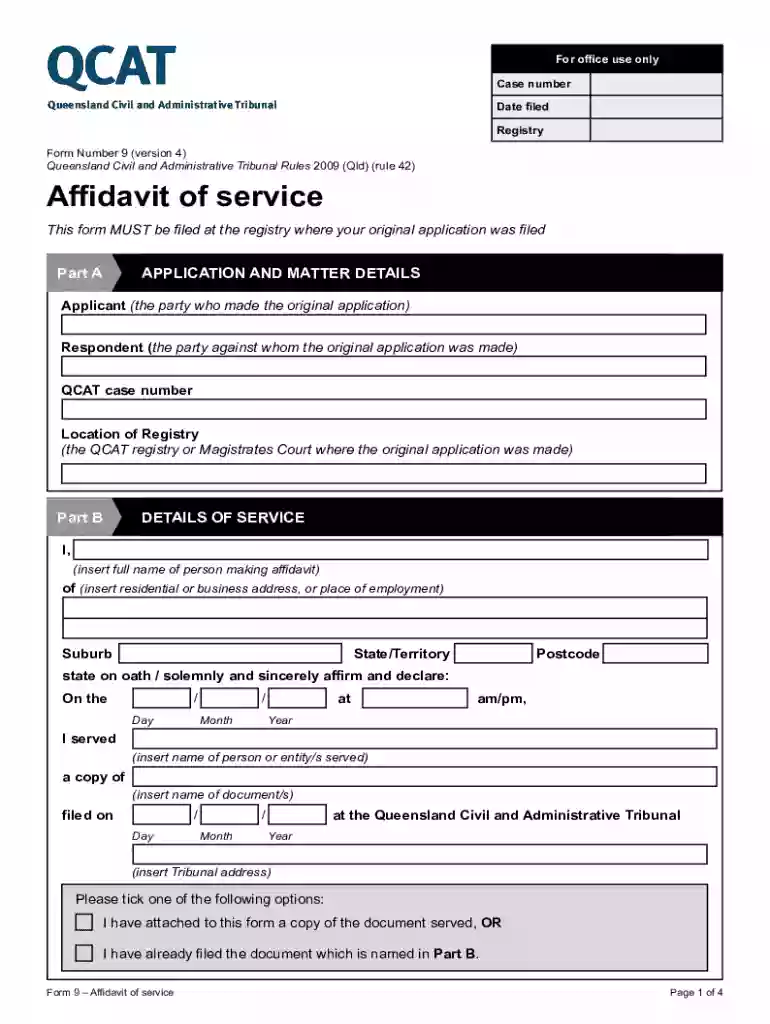
The "REG 42 Affidavit Proving Document Was Given" is a legal affidavit used primarily in formal procedures to confirm that a specific document has been served to the relevant parties. The primary purpose of this affidavit is to serve as evidence in legal proceedings by documenting the service of documents within the required time frame and through the appropriate methods. This form is critical for ensuring due process, by providing a documented trail that verifies compliance with legal service requirements.
Using the REG 42 Affidavit involves adhering to specific procedures to ensure its validity and effectiveness. The first step is to accurately fill out the form, which requires complete and precise details about the document being served, the recipient, and the method of service. After completing the form, it must be signed and notarized to authenticate the affidavit. It should then be filed with the appropriate court or authority as evidence of document service. In some cases, you may need to include supporting documents highlighting the transmission method used, such as postal receipts or email delivery confirmations.
The affidavit must include the following key elements:
The REG 42 Affidavit holds substantial legal significance as it acts as sworn testimony in legal proceedings. It is used to affirm that a document has been correctly served, which is a crucial step in upholding the rights to due process. Failure to properly serve documents as proven by the affidavit can lead to delays or dismissals in legal cases. It is a vital tool for attorneys, courts, and parties involved in civil litigation to demonstrate the adherence to required legal processes.
This form is often utilized by:


Failure to complete the REG 42 Affidavit correctly or neglecting to file it as required can have serious repercussions. Legal proceedings can be delayed, dismissed, or ruled against the non-compliant party due to improper service of documents. In some jurisdictions, there may be financial penalties or sanctions against legal representatives who consistently fail to follow mandated service procedures. It emphasizes the necessity of adherence to procedural requirements in legal contexts.
The REG 42 Affidavit can be completed in both digital and paper formats, providing flexibility depending on the requirements of the jurisdiction. Digital versions allow for efficient storage and transmission; however, it's crucial to ensure electronic signatures are legally recognized in the relevant jurisdiction. Paper versions may be necessary where digital submissions are not accepted. Regardless of the format, the affidavit must maintain its integrity with accurate information and proper notarization.
We've got more versions of the REG 42 Affidavit proving document was given form. Select the right REG 42 Affidavit proving document was given version from the list and start editing it straight away!
At DocHub, your data security is our priority. We follow HIPAA, SOC2, GDPR, and other standards, so you can work on your documents with confidence.
May 14, 1992 (7) all forms of proof of financial responsibility must be in effect before operations begin; an approval will not be given on pending coverage.Read more
(i) There must be at least two affidavits by two individuals who have personal knowledge of the event(s) establishing the applicants or beneficiarys claim ofRead more
Date of mailing may be established by a certificate from the party or representative or by proof that the document was sent by certified or registered mail.


