
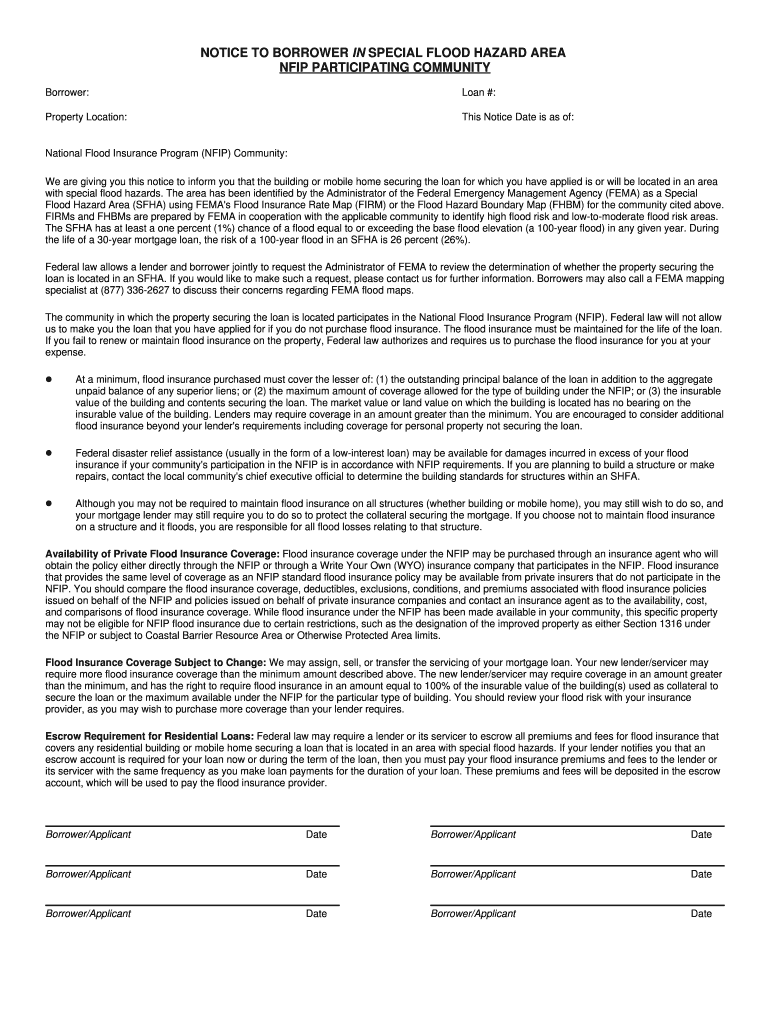







Definition and Meaning
Flood disclosure is a form that informs property owners or buyers about the flood risk associated with a property. It is a crucial document mandated for properties located in Special Flood Hazard Areas (SFHAs) as designated by FEMA. This disclosure notifies individuals whether a property is in a high-risk area, requiring flood insurance as part of the National Flood Insurance Program (NFIP).
- Clearly identifies flood-related risks to property owners or buyers.
- Required under specific conditions, particularly for properties in SFHAs.
- Advises on the necessity of flood insurance and maintenance during the loan duration.
How to Use the Flood Disclosure
Property buyers and owners must carefully review the flood disclosure to understand the flood risks associated with a property. This document helps in making informed decisions about the purchase and management of properties in flood-prone areas.
- Review the flood risk: Understand the specific flood hazard rating of the property.
- Insurance requirements: Check if flood insurance is mandatory and arrange for coverage.
- Property assessment: Use the information to assess additional risk mitigation measures necessary for the property.
How to Obtain the Flood Disclosure
Flood disclosures are typically provided by the seller or the lender during the property transaction process. In some states, obtaining this form might also involve consulting local government or FEMA resources.
- Real estate agents: Provide disclosures during property transactions in high-risk areas.
- Lenders: Issue the form when financing properties in SFHAs.
- FEMA resources: Access additional flood risk data and maps for further details.
Key Elements of the Flood Disclosure
Flood disclosures contain several critical components designed to inform and protect property owners:
- SFHA designation: Indicates whether the property is in an SFHA.
- Insurance requirements: Specifies the obligation to secure flood insurance.
- Flood history: May include any previous flood events affecting the property.
Legal Use of the Flood Disclosure
The legal framework surrounding the flood disclosure ensures that property transactions transparently convey flood risk, allowing buyers to make informed decisions.
- Compliance with NFIP: Mandatory for properties in designated flood zones.
- State regulations: Different states might impose additional requirements on sellers or buyers.
- Binding agreements: Ensures legally binding knowledge and actions to protect both parties in transactions.
Steps to Complete the Flood Disclosure
Completing a flood disclosure involves several steps to ensure that all relevant parties have accurate and complete information.
- Gather property data: Obtain the property's flood zone classification and historical data.
- Document flood risks: Clearly state all potential flood risks in the disclosure.
- Confirm insurance needs: Verify the need for flood insurance based on the flood zone status.
Important Terms Related to Flood Disclosure
Understanding key terms related to flood disclosure is essential for comprehending the document fully:
- SFHA (Special Flood Hazard Area): Areas with a high risk of flooding, where flood insurance is mandatory.
- NFIP (National Flood Insurance Program): A federal program designed to reduce flood damage and facilitate insurance.
- FEMA: The Federal Emergency Management Agency responsible for mapping flood zones.
State-Specific Rules for the Flood Disclosure
Rules and regulations regarding flood disclosures can vary significantly by state, affecting how they are completed and enforced.
- Enhanced state requirements: Some states have stricter guidelines and disclosure formats.
- Customary practices: Differences in local real estate laws and practices can influence flood disclosure procedures.
- Enforcement mechanisms: Varying penalties and enforcement strategies depending on state laws.
Examples of Using the Flood Disclosure
Real-world scenarios illustrate the necessity and application of flood disclosure during property transactions:
- Selling property in an SFHA: Sellers must provide this disclosure to potential buyers indicating flood risks.
- Purchasing a new home: Buyers receive and review the form to decide on necessary insurance and risk mitigation measures.
- Refinancing a mortgage: Lenders often issue updates to ensure continued compliance if flood risks have changed.




