




01. Edit your 1850 form online
Type text, add images, blackout confidential details, add comments, highlights and more.

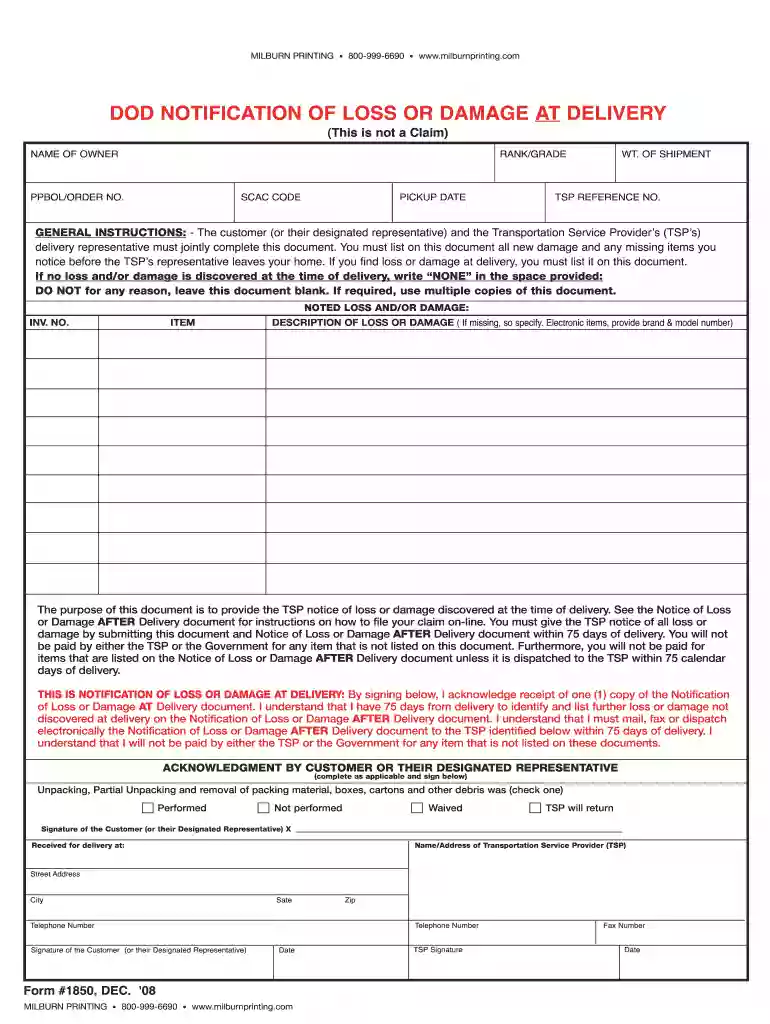
Type text, add images, blackout confidential details, add comments, highlights and more.

Draw your signature, type it, upload its image, or use your mobile device as a signature pad.

Send 2008 defense printing loss damage delivery word via email, link, or fax. You can also download it, export it or print it out.
The "Notification of Loss" form is a critical document utilized in various industries to officially report instances of loss or damage of items during delivery. This form is essential for initiating claims processes, allowing both the customer and the Transportation Service Provider (TSP) to document any discrepancies observed upon receipt of goods. The notification serves as a formal acknowledgment that the delivered items do not match the initial shipment specifications. It outlines the nature and extent of the loss or damage, paving the way for potential compensation through insurance or other means.
A well-completed Notification of Loss form includes several key elements to ensure all necessary information is captured:
The Notification of Loss form typically needs to be filed within a specified period after delivery to ensure eligibility for compensation. Common timelines include:
Failing to submit the form in a timely manner could result in the forfeiture of your right to claim compensation. Understanding and adhering to the deadlines set by the carrier is crucial.
Completing the Notification of Loss form can serve as a binding agreement that confirms the existence of a loss incident between parties. This form may also be admissible in court proceedings as evidence of the reported incident, making it a legally significant document. Proper execution and documentation can aid in potential disputes, serving as a record that supports your position in legal negotiations or litigation.
While the basic premise of a Notification of Loss is consistent, specific regulations can vary by state:
Understanding the regional nuances of these requirements can help streamline the filing process and enhance compliance, minimizing the risk of claim denial.
We've got more versions of the 1850 form form. Select the right 1850 form version from the list and start editing it straight away!
| Versions | Form popularity | Fillable & printable |
|---|---|---|
| 2008 | 4.2 Satisfied (25 Votes) |
At DocHub, your data security is our priority. We follow HIPAA, SOC2, GDPR, and other standards, so you can work on your documents with confidence.
Will I recognize a gain or loss if I sell or exchange property (other than U.S. dollars) for virtual currency?Read more
Federal regulations require that registrants notify the Field Division Office of the Administration in his area, in writing, of the theft or DocHub loss
Address or location of loss: (please specify building, floor, department, and room number) Description of loss: (explain what happened)* Please describe any


