
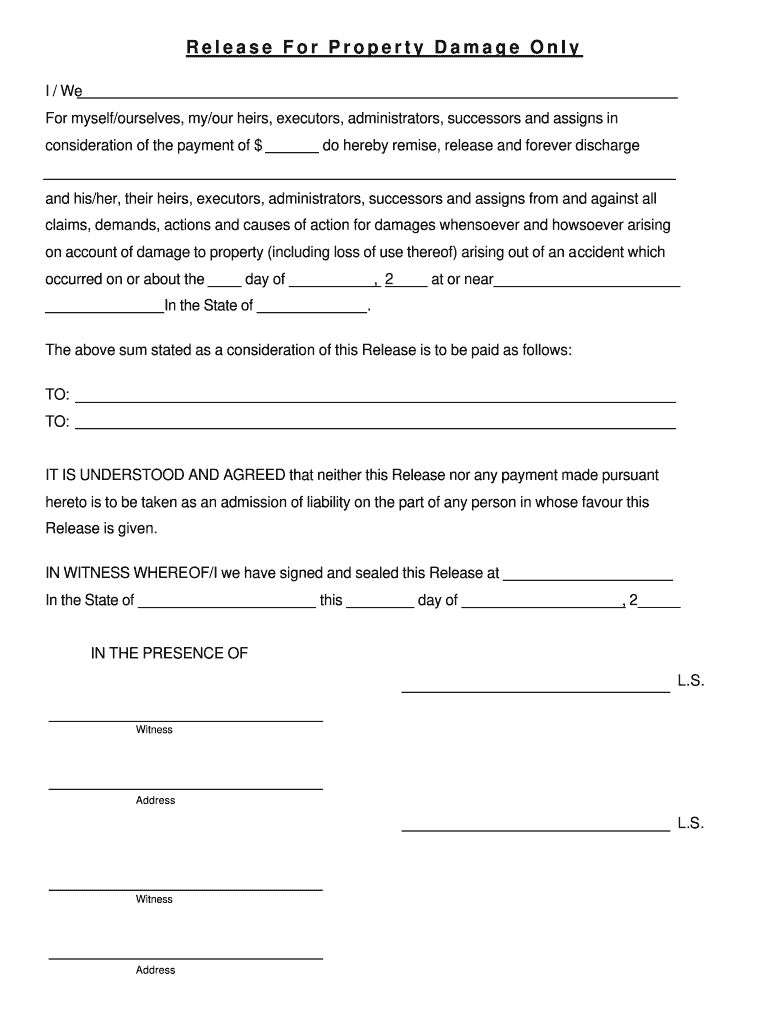







Definition and Meaning of Release Property Damage Only
A "release property damage only" is a legal document designed to release one party from liability for property damage resulting from an incident, typically an accident. This release serves as a formal agreement where the injured party (or the party experiencing property damage) discharges another party from any future claims related to that specific damage. The wording of the document is crucial; it usually includes a statement clarifying that the release does not imply any admission of fault or liability on the part of the other party.
This document is often used in various situations, such as car accidents, property disputes, or cases where someone else's actions have led to damage to a person's property. By signing this release, individuals agree not to pursue any legal actions or claims against the other party regarding the property damage.
- Types of Cases: Examples include auto accidents, rental property damage, or personal property disputes.
- Purpose: Protects the party being released from future claims while providing settlement clarity.
- Consideration: Often involves compensation that motivates the property owner to sign the release.
How to Use the Release Property Damage Only
Using a "release property damage only" involves several key steps that ensure the document serves its intended legal purpose. The first step is to identify the parties involved—this includes the party granting the release and the party being released from liability. Once the parties are established, the document should outline the specifics regarding the incident, including date, time, and nature of the damage.
Next, it’s crucial to ensure that the document contains a clear statement of release, specifying that the damaged party relinquishes any future claims related to the incident. Additionally, the signed document should include:
- Signatures: Both parties must sign the document to validate the agreement.
- Witnesses: Consider having one or more witnesses sign to further authenticate the release, depending on state requirements.
- Compensation Details: If applicable, document any compensation or settlement that has been provided for the property damage.
Key Elements of the Release Property Damage Only
Several critical elements must be present in a "release property damage only" to ensure its effectiveness and enforceability. The following components are essential:
- Identifying Information: Full names and contact details of all parties involved.
- Description of Damage: A detailed account of the property damage, including photographs or other evidence if available.
- Release Clause: A specific clause stating that the party who suffered damage releases the other party from any and all claims related to the incident.
- Consideration Statement: Any compensation provided in exchange for the release should be explicitly mentioned.
- Date and Signatures: The date of the agreement and signatures from all involved parties validate the document.
Inclusion of these elements minimizes the risk of future disputes over the release's terms.
Examples of Using the Release Property Damage Only
Practical scenarios exist where a release property damage only is typically utilized. Here are a few examples:
- Motor Vehicle Accidents: After a minor collision where one driver's vehicle is damaged, the other may agree to pay for repairs in exchange for a release form, thus preventing any future liability claims related to that incident.
- Rental Property Damage: If a tenant accidentally causes damage to a rental unit, the landlord might ask them to sign a release property damage only upon receiving payment for repairs, preventing them from seeking further claims related to the damages.
- Event Venue Damage: Organizers of an event who accidentally damage property at a venue may sign a release ensuring that the venue owner cannot make claims beyond the agreed repair costs.
In each case, it’s evident how the release works as a protective measure for the parties involved by documenting agreed terms in a legally recognized format.
Important Terms Related to Release Property Damage Only
Familiarity with some key terms surrounding the "release property damage only" can enhance understanding and ensure proper usage. Here are several important terms that are frequently referenced:
- Liability: Legal responsibility for damage or injury caused by one's actions.
- Indemnification: Compensation for harm or loss, often included in release agreements to clarify financial responsibilities.
- Consideration: Anything of value provided in exchange for a release, such as monetary payment or service.
- Waiver: The voluntary relinquishment of a known right or privilege, often overlapping with release agreements.
- Notarization: The act of having a notary public verify signatures on the release, which may enhance the document's legal standing in certain states.
Understanding these terms ensures that all parties involved are clearly aware of their rights and responsibilities under the release.


