




01. Edit your mv2300 online
Type text, add images, blackout confidential details, add comments, highlights and more.

Type text, add images, blackout confidential details, add comments, highlights and more.

Draw your signature, type it, upload its image, or use your mobile device as a signature pad.

Send wi dmv mv2300 via email, link, or fax. You can also download it, export it or print it out.
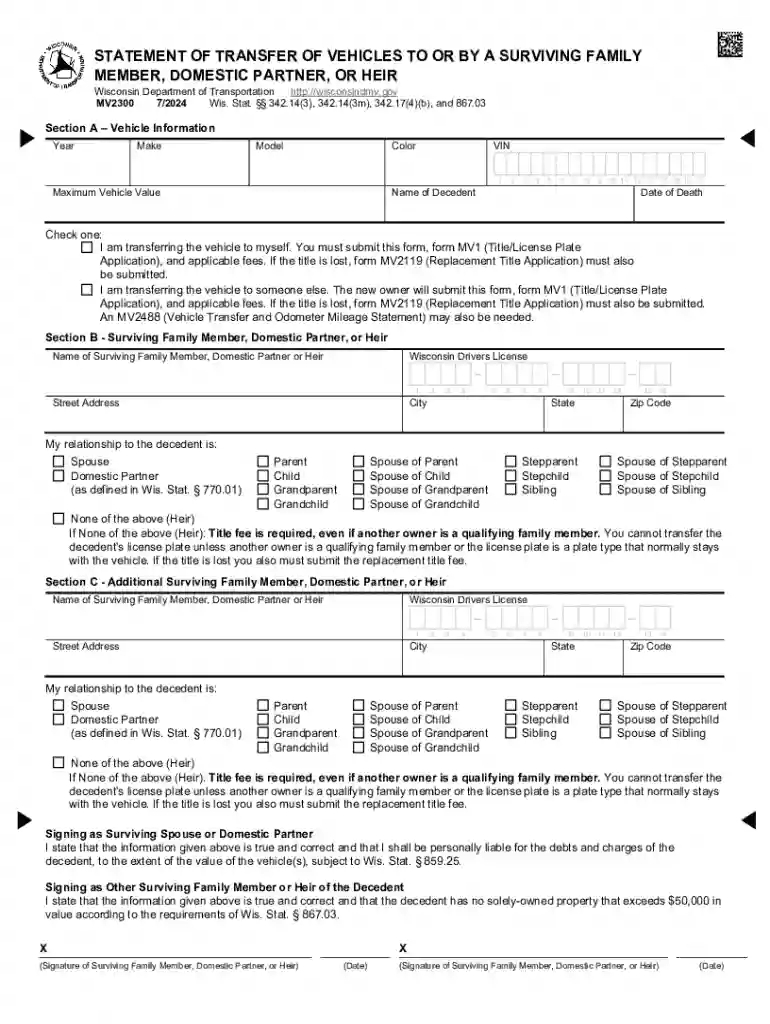
The "Statement of Transfer of Vehicles to a Surviving Spouse" is a legal document used to transfer vehicle ownership to a surviving spouse after the death of the original owner. This form carries vital details about the vehicle, the decedent, and the surviving spouse. It serves as an official recognition of the transfer, facilitating the legal transfer of title and registration. This form is crucial because, without it, a surviving spouse would face significant hurdles when attempting to retitle and register the vehicle in their name.
The statement comprises several key elements that must be completed accurately to ensure a smooth transfer process. These elements include:
Completing the "Statement of Transfer of Vehicles to a Surviving Spouse" involves several methodical steps:
The eligibility to use the "Statement of Transfer of Vehicles to a Surviving Spouse" generally includes:
State laws can vary, so checking specific criteria with the relevant local authority is advised.


Different states may have specific regulations governing the transfer of vehicle ownership to a surviving spouse. In some states, like Wisconsin, the transfer might waive title transfer fees if certain conditions are met. Always verify with state-specific guidelines to ensure compliance with local laws and to avoid potential issues during the transfer process.
Using the "Statement of Transfer of Vehicles to a Surviving Spouse" helps establish the surviving spouse as the lawful owner of the vehicle. This legal recognition is essential for performing actions like registering, insuring, or selling the vehicle. Failure to properly complete this statement can result in legal complications, delays, and additional fees.
Alongside the statement form, several documents are typically required:
Ensuring all required documents are submitted helps preclude any unnecessary delays in processing the transfer.
Consider these scenarios where the statement is indispensable:
These examples illustrate the necessity of the statement in varying circumstances where legal ownership transfer is pivotal.
We've got more versions of the mv2300 form. Select the right mv2300 version from the list and start editing it straight away!
At DocHub, your data security is our priority. We follow HIPAA, SOC2, GDPR, and other standards, so you can work on your documents with confidence.
Form MV2300 Statement of Transfer of Vehicles to or by a Surviving Family Member, Domestic Partner or Heir; The Certificate of Title. If the title is lost, aRead more
If you transfer virtual currency from a wallet, the transfer is a non-taxable event, even if you receive an information return from an exchange or platform as
The surviving spouse shall file with the application a DocHubd affidavit stating the name of the deceased, stating the date of death, and stating either thatRead more


