
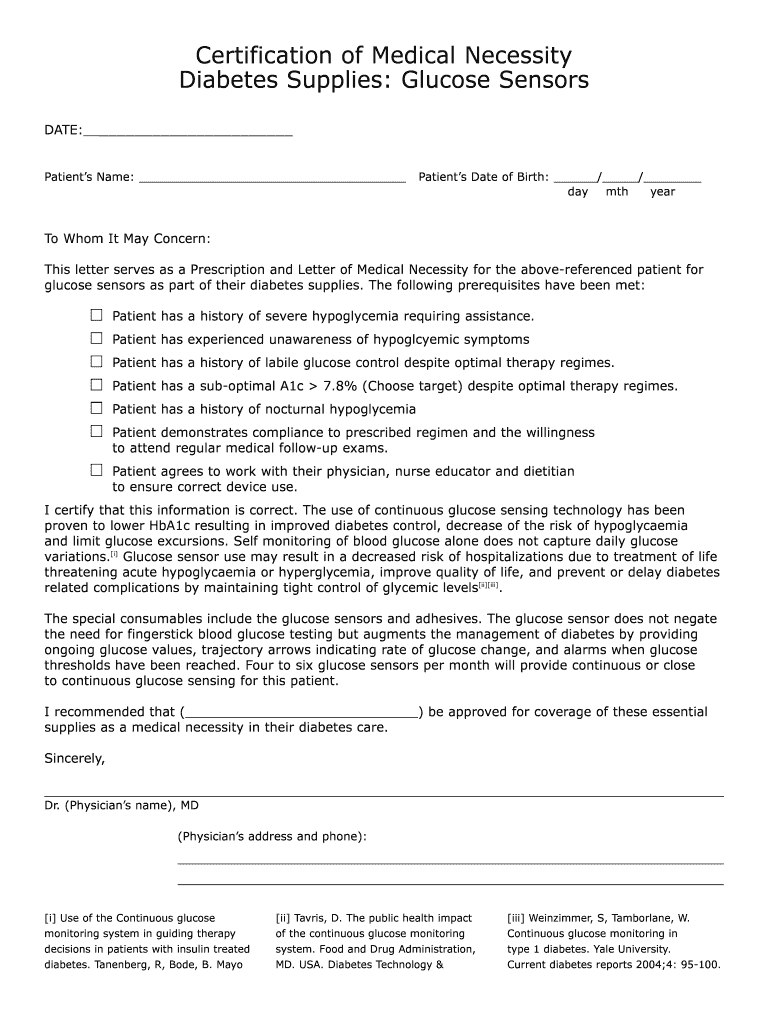







Definition and Meaning
The "Certification of Medical Necessity for Diabetes Supplies" is a crucial document in the healthcare sector. It is primarily used to verify the medical need for diabetes-related equipment and supplies, such as glucose sensors, which are essential for individuals managing severe hypoglycemia and labile glucose control. This certification helps insurance providers determine coverage eligibility by detailing the patient's medical history and compliance. By outlining the necessity for specific supplies, the document supports continuous glucose monitoring, ensuring better diabetes management and reducing associated health risks.
How to Use the Certification of Medical Necessity
Using the certification effectively requires collaboration between the patient, healthcare providers, and insurance companies. The primary steps include:
-
Consultation with Healthcare Provider: Discuss your medical needs and history with your endocrinologist or primary care physician. They will assess your requirement for diabetes supplies.
-
Document Preparation: The physician completes the certification, detailing your medical condition, history, and the necessity for prescribed supplies.
-
Submission: Once completed, this document can be submitted to your insurance provider to approve coverage for the supplies. Ensure that any supporting medical records are included to strengthen the case for necessity.
How to Obtain the Certification
Acquiring the certification involves several steps:
-
Schedule a Medical Evaluation: Begin with a comprehensive assessment by your healthcare provider who specializes in diabetes management.
-
Request the Certification: Ask your physician to prepare the "Certification of Medical Necessity" form based on your diagnosis and treatment plan.
-
Provide Necessary Documentation: Ensure that your medical history, test results, and any previous records indicating the need for diabetes supplies are available to support the certification request.
Steps to Complete the Certification
Completing the certification involves detailed input from both the patient and the doctor:
-
Patient Information: Fill in personal details, including name, date of birth, and contact information.
-
Medical Details: Your physician will document your specific diabetes condition, the need for glucose monitoring technology, and the expected health benefits.
-
Signature and Date: The certification must be dated and signed by both the patient and the healthcare provider to be considered valid.
Importance of the Certification
The certification holds significant importance for several reasons:
- Insurance Coverage: It's critical for securing insurance coverage for essential diabetes supplies.
- Medical Validation: Provides a formal declaration of necessity from a qualified healthcare provider.
- Risk Reduction: Helps in obtaining supplies imperative for preventing complications associated with diabetes.
Key Elements of the Certification
Several key components make up this certification:
- Patient's Medical History: Includes a detailed record of past and current medical conditions.
- Treatment Plan: Specifies the diabetes management plan, highlighting the need for continuous glucose monitoring.
- Healthcare Provider’s Recommendation: A professional endorsement of the necessity for prescribed supplies.
Examples of Use
Different scenarios where this certification is used include:
- A middle-aged adult managing advanced diabetes stages may need upgraded glucose monitoring tools.
- A pediatric case where continuous monitoring helps children better manage their diabetes under supervision.
Legal Use of the Certification
The certification is a legally binding document once signed by a healthcare professional. It permits insurance companies to process claims for diabetes-related supplies, provided all necessary documentation and signatures are included. Compliance with medical guidelines ensures that the certification meets legal standards required for insurance claims.
Required Documents
To support the certification process, several documents are typically necessary:
- Medical Records: Comprehensive details of your diabetes management history and any recent test results.
- Insurance Information: Details about the patient's insurance coverage to facilitate processing.
- Physician’s Notes: Additional documentation from your healthcare provider that may further justify the need for specific supplies.
This structured approach outlines the vital components and procedures associated with the "Certification of Medical Necessity Diabetes Supplies," ensuring all parties involved understand both the process and the importance of accurate documentation for insurance approval and effective diabetes management.


