Key Elements of the Kindergarten Intake Form
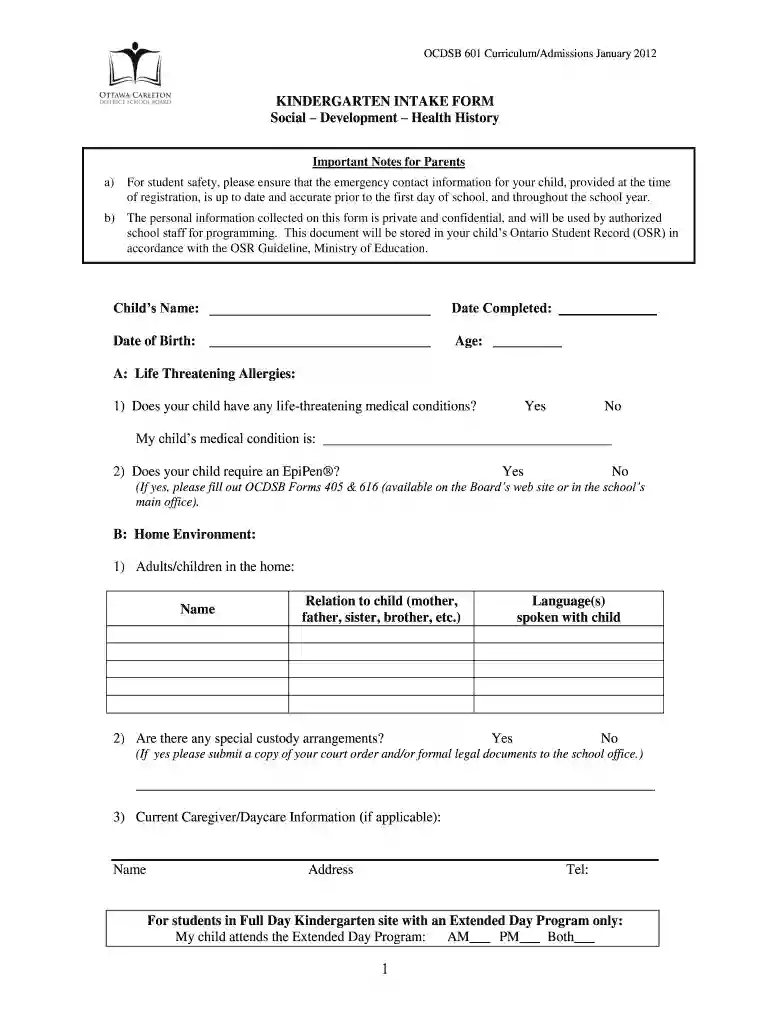
The kindergarten intake form is a comprehensive document that collects vital information about incoming students. It covers multiple sections, each designed to gather specific data that facilitates a smooth transition into the school environment. Key elements of the form typically include:
- Child's Personal Information: This section captures the full name, date of birth, and address of the child. It is crucial for school records and helps in identifying the student accurately.
- Parental/Guardian Details: Important for establishing primary and secondary contacts. The form asks for names, phone numbers, and email addresses of the parents or guardians.
- Health Information: This part is essential for recording any allergies, medical conditions, or special needs the child might have. It may also require details of the child's primary healthcare provider.
- Emergency Contacts: Lists individuals who can be contacted if parents are unavailable. Accurate contact information ensures quick communication in emergencies.
- Developmental History: Parents provide insights into the child's developmental milestones, such as language skills and social interactions, giving educators a better understanding of the child's needs.
- Immunization Records: Often a legal requirement, this section seeks to confirm that the child meets state immunization guidelines, ensuring the safety of all children.
- Custody Arrangements: If applicable, this section details any legal arrangements affecting who is authorized to pick up the child or make decisions on their behalf.
Steps to Complete the Kindergarten Intake Form
Completing the kindergarten intake form involves several critical steps to ensure all necessary data is provided accurately:
- Gather Required Documents: Before starting, parents should collect documents like birth certificates, immunization records, and any relevant medical reports.
- Fill Out Basic Information Sections: Begin with straightforward details about the child and their guardians, ensuring accuracy to avoid future complications.
- Provide Detailed Health Information: Include all known allergies, medical conditions, and contact information for the child's healthcare provider.
- List Emergency Contacts: Ensure that contact details are current and that listed individuals are aware they may be contacted in an emergency.
- Complete Developmental History: Honestly describe the child's developmental progress to help educators address specific needs.
- Verify Information: Double-check all entries for accuracy and completeness. Incorrect information can lead to misunderstandings later on.
- Submit the Form: Depending on school policy, this may involve submitting online, mailing it, or delivering it in person.
How to Use the Kindergarten Intake Form
The kindergarten intake form serves as a pivotal tool for educators and school administrators:
- Setting Up School Records: It helps in creating accurate and comprehensive student profiles in school databases.
- Facilitating Classroom Preparation: Teachers use the information to tailor educational strategies that suit each child's developmental stage and learning preferences.
- Ensuring Health and Safety: School nurses and staff rely on the detailed health data to prepare for and prevent possible medical emergencies.
- Enhancing Parent-Teacher Communication: By providing clear contact information, it encourages a proactive approach to discussing the child's progress and any concerns.
Who Typically Uses the Kindergarten Intake Form
The form is a critical document utilized by various stakeholders within the education system:

- School Administrators: Primarily responsible for maintaining student records and managing administrative tasks.
- Teachers and Educational Aides: Use the data to understand each student's background, strengths, and areas for support.
- School Nurses and Health Staff: Access health information to deliver appropriate care and manage emergencies.
- Parents and Guardians: Use the form as a way to communicate important details about their child's needs and expectations.
Legal Use of the Kindergarten Intake Form
Understanding the legal aspects of the kindergarten intake form is important for compliance:
- Confidentiality and Privacy: Information gathered via the form is protected under privacy laws, such as the Family Educational Rights and Privacy Act (FERPA), ensuring that sensitive data is kept secure.
- Mandatory Fields: Certain sections of the form, like immunization records, are legally required and must be accurately completed to meet state education mandates.
- Parental Consent: Parents typically need to sign the form to authorize the sharing of health and personal information with school personnel.
State-Specific Rules for the Kindergarten Intake Form
Each state may have unique requirements that can alter the form's content:
- Immunization Requirements: Diverge across states, so confirming compliance with local health authorities is crucial.
- Cut-Off Dates for Enrollment: These dates vary, affecting eligibility based on a child’s age as of a specified date.
- Additional Documentation: Certain states may request supplementary documents, like residency verification, alongside the intake form.
Software Compatibility for Completing the Form
Many schools allow for digital completion and submission of the intake form:
- Online Platforms: Schools may use systems that integrate with cloud services, facilitating easy upload and secure storage of completed forms.
- Accessible Formats: The form might be available as a fillable PDF to ensure compatibility with editing software like DocHub, making it easier for parents to complete without paper.
- Integration with School Databases: Streamlined processes often allow direct importation of data from the form into school administrative software.
Examples of Using the Kindergarten Intake Form
Real-world scenarios highlight the form's utility:
- Scenario One: A child with severe allergies is easily accommodated due to the detailed health information provided, allowing staff to prevent exposure and immediacy in response.
- Scenario Two: Developmental milestones shared by parents help teachers design a curriculum that encourages a child’s strengths and addresses developmental gaps.
- Scenario Three: Accurate emergency contacts ensure parents are promptly reached during an unexpected school closure, illustrating the form's role in effective communication.