







Definition and Meaning
Crucial Dates for the UK Tax Year refer to the key deadlines and important time frames that individuals and businesses in the UK must be aware of to ensure compliance with the tax regulations. These dates outline when various tax-related activities should be completed, such as filing tax returns, making payments, and submitting necessary documents. Understanding these dates is essential for both individuals and businesses to avoid penalties and ensure smooth financial operations.
Importance of Understanding Tax Year Dates
- Staying informed about these dates helps avoid fines and penalties.
- Allows for better financial planning for individuals and businesses.
- Ensures legal compliance with HM Revenue and Customs (HMRC) requirements.
Range of Dates to Consider
- The UK tax year runs from April 6 to April 5 the following year.
- Critical deadlines include filing dates for Self Assessment tax returns and payment deadlines for income tax.
Filing Deadlines / Important Dates
Key deadlines in the UK tax year are crucial for timely compliance. Missing these deadlines can result in penalties and interest charges from HMRC.
Major Deadlines to Remember
- Self Assessment Tax Returns:
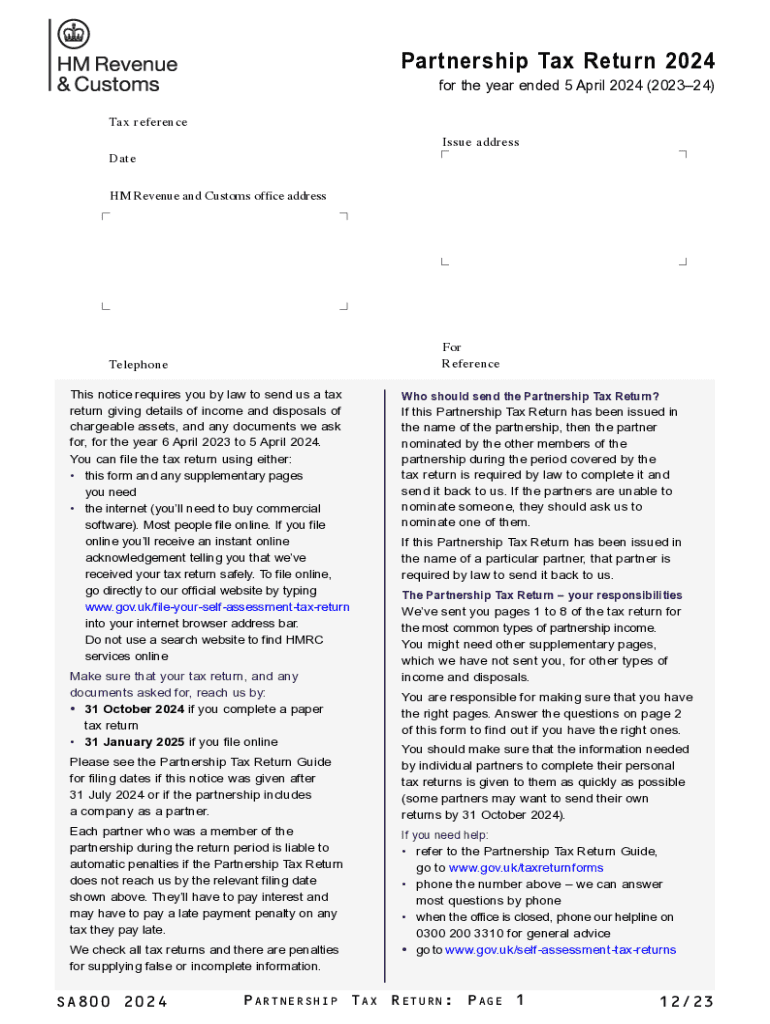
- Paper Return Deadline: October 31
- Online Return Deadline: January 31
- Payment on Account: January 31 and July 31
- P11D forms (Expenses and Benefits): July 6
Example of Consequences for Missing Deadlines
- Late filing of a Self Assessment tax return results in an immediate penalty of £100, with additional charges accruing over time.
Strategies to Avoid Missing Deadlines
- Set reminders on digital calendars.
- Utilize accounting software with deadline alerts.
Key Elements of the Crucial Dates Guide
The guide provides a roadmap for understanding key tax year dates. This detailed information aids both individuals and entities in managing their tax obligations effectively.
Components of the Guide
- Detailed Timeline: Lists all key dates throughout the tax year.
- Explanation of Each Date: Context about why each deadline is important.
- Guidance on Compliance: Steps for ensuring deadlines are met.
Utilization in Tax Preparation
- Helps in the preparation of timely tax filings.
- Assists in budgeting for upcoming tax payments.
Steps to Complete Tax Obligations
Achieving compliance with the UK tax year requirements involves several procedural steps. Adherence ensures all duties are fulfilled in a timely manner.
Step-by-Step Process
- Collect Necessary Documents: Before deadlines, ensure all income and expense records are organized.
- Calculate Your Tax Obligation: Use provided guides or software to estimate taxes owed.
- Submit Required Forms: Complete submissions via paper or electronic means according to the method chosen.
- Make Payments: Adhere to specified payment deadlines to avoid penalties.
Tools to Assist in the Process
- Online tax calculators.
- Professional tax preparation services.
Penalties for Non-Compliance
Failing to comply with UK tax obligations can result in financial penalties. Understanding these repercussions is crucial for proper financial management.
Types of Penalties
- Late Filing Penalties: Initially £100, with additional penalties after three months.
- Late Payment Penalties: Interest charges and penalties escalate over time.
Calculating the Cost of Non-Compliance
- Based on the number of days late and the amount of tax owed.
- Additional penalties after six and twelve months of non-compliance.
Examples of Using the Guide Effectively
Utilizing the guidance for the UK tax year can be beneficial for different financial scenarios, ensuring prepared and accurate tax filings.
Real-World Scenarios
- Self-Employed Individuals: Understanding payment on account requirements.
- Businesses with Employees: Meeting deadlines for employer returns, such as P11D.
Success Stories
- Business individuals avoiding penalties by setting up an automatic payment schedule based on the guide's timeline.
Taxpayer Scenarios
Different types of taxpayers must follow tailored approaches to meet their specific tax obligations according to the UK's tax year.


Categories of Taxpayers
- Self-Employed Individuals: Deal with quarterly payment expectations.
- Limited Companies: Required to adhere to different rules for corporate tax filing.
Variations in Requirements
- Self-employed individuals have different obligations compared to salaried workers.
- Corporations and businesses face additional filing requirements.
Required Documents
Gathering all necessary documents is a critical aspect of preparing for tax deadlines. This involves a systematic approach to documentation and filing.
Essential Documents to Collect
- Income statements, expense receipts, and past return copies.
- Forms such as the P60 or P45 where applicable.
Tips for Document Organization
- Utilize digital tools for storing and managing receipts.
- Maintain a checklist to ensure nothing is overlooked.
Form Submission Methods
There are various ways to submit tax-related forms in the UK, each accommodating different preferences and capabilities.
Available Methods
- Electronic Submission: Fast and efficient, recommended for most forms.
- Paper Submission: Suitable for those preferring traditional methods.
- Assistance through Tax Advisors: For complex scenarios requiring professional handling.
Advantages of Electronic Submission
- Immediate confirmation of receipt.
- Reduced risk of errors through automated validation.
Software Compatibility
Modern tax preparation often involves using software to simplify and enhance the accuracy of tax filings.
Compatible Software
- Popular options include programs like QuickBooks and Xero.
- HMRC provides online tools designed for direct submission.
Benefits of Using Software
- Streamlined process for calculating taxes.
- Provides reminders for critical deadlines.
Who Typically Uses This Guide
An array of individuals and business entities rely on the Crucial Dates for the UK Tax Year guide to manage their financial obligations.
Primary Users
- Individual Taxpayers: Self-employed, freelance workers, and property owners.
- Businesses: Especially small and medium enterprises juggling multiple tax deadlines.
Reasons for Using the Guide
- Simplification of tax obligations.
- Enhances understanding of complex tax procedures.
Digital vs. Paper Version
Deciding between using a digital or physical version of the tax guide involves considering convenience and preference.
Considerations for Choosing
- Digital Version: Offers easy access and updates.
- Paper Version: Beneficial for those preferring physical reference materials.
Environmental Impact
- Digital copies are more environmentally friendly and support quick referencing.




