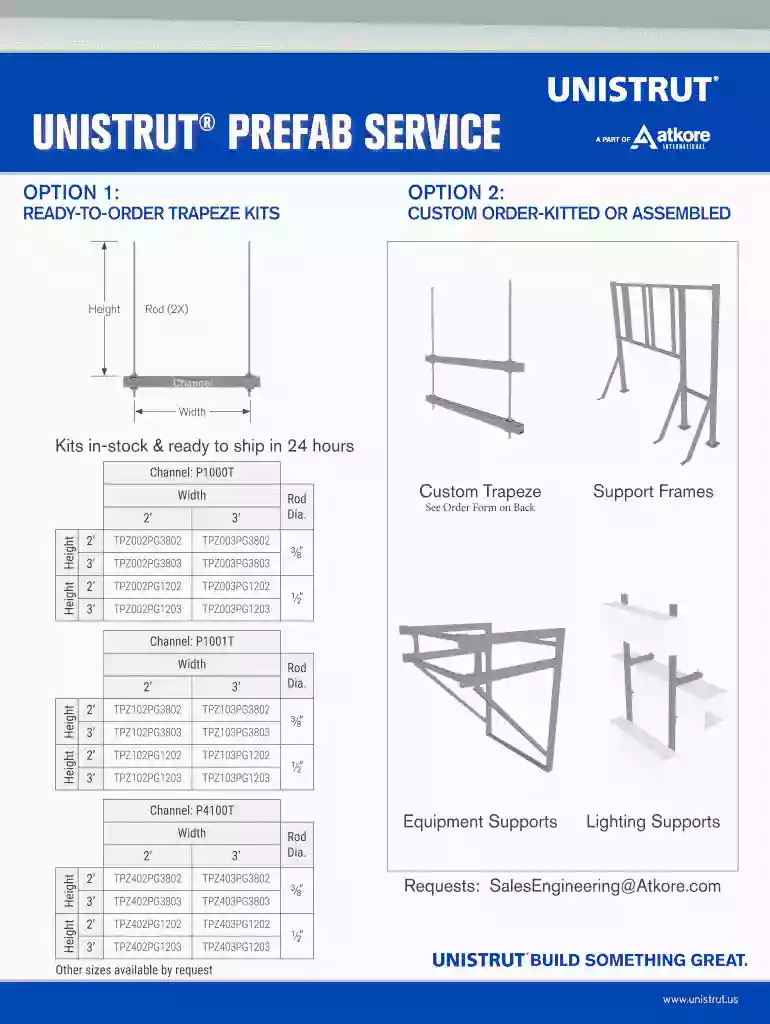
Definition and Meaning of Unistrut Trapeze
A unistrut trapeze is a pre-fabricated support system commonly used in construction and engineering projects to suspend electrical conduits, piping, and other utilities from structural steel beams or ceilings. It generally consists of a horizontal support made from channel sections and vertical rods or all thread rods that provide the required distance from the support base. The design of a unistrut trapeze allows for easy installation and adjustment, ensuring that utilities are securely held in place while facilitating future maintenance and reconfiguration.
Components of Unistrut Trapeze
- Channel Sections: These are the primary load-bearing elements of the trapeze, available in different sizes and profiles depending on the load requirements.
- Rods or Threaded Rods: Used to suspend the channel sections from the structure. They allow for fine-tuning of height and leveling adjustment.
- Fasteners and Brackets: Essential for securing the trapeze components together, ensuring the stability and safety of the entire system.
How to Use the Unistrut Trapeze
Implementing a unistrut trapeze involves a series of straightforward steps designed for compatibility and ease of use across various projects. Key instructions include:
- Determine Load Requirements: Calculate the total load that the trapeze will support to select the appropriate channel and rod sizes.
- Layout Planning: Measure the space where the trapeze will be installed to ensure optimal placement and function.
- Cutting and Adjusting Components: Cut the unistrut channels and rods to the required lengths and make necessary adjustments for a custom fit.
- Assembly: Use the appropriate brackets and fasteners to assemble the channels and rods, setting them to the desired level.
- Installation: Suspend the assembled trapeze from the structural supports and secure it firmly using bolts and safety clips.
Adjustment and Maintenance
- Regularly check the trapeze for any looseness or misalignment.
- Adjust the rods to ensure that the trapeze is level and securely holding the utilities.
- Inspect the fasteners and brackets to prevent wear and tear over time.
Beneficiaries
- Construction Companies: For large infrastructure projects where efficiency and rapid installation are critical.
- Facility Managers: In retrofitting and maintenance of building services, providing an adaptable solution for structural changes.
Legal Use of the Unistrut Trapeze
Compliance with building codes and safety standards is paramount when installing unistrut trapezes. The following are legal considerations to note:
- Building Codes: Adhere to local and national building codes that govern installations of support systems for electrical and mechanical services.
- Safety Regulations: Ensure that installations meet OSHA standards for the load-bearing capacity and safety of supports.
- Professional Inspection: Periodically have installations reviewed by qualified professionals to ensure they remain compliant with updated safety guidelines.
Key Elements of the Unistrut Trapeze
Understanding the primary components and terms associated with unistrut systems is critical for effective use:
- Load Rating: The maximum weight the trapeze can support without compromising structural integrity.
- Span Length: Distance between suspension points, affecting the number and size of components needed.
- Deflection: Measure of how much the trapeze might bend under load, critical for load distribution evaluation.
Technical Aspects
- Consider the weight distribution and ensure even spacing between suspension points.
- Evaluate the environmental factors such as humidity and temperature, which might affect material performance.
Steps to Complete the Unistrut Trapeze
Implementing the unistrut trapeze requires careful planning and execution:
- Material Selection: Choose aluminum, stainless steel, or galvanized steel based on environmental and load requirements.
- Field Measurements: Conduct precise field measurements to custom cut and fit the trapeze components.
- Drill and Assemble: Mark drilling points, attach the unistrut channels and secure using nuts and bolts.
- Final Adjustments: Fine-tune the setup to ensure everything is plumb and level, securing all fasteners once verified.
Examples of Using the Unistrut Trapeze
Real-life applications illustrate the versatility and efficiency of the unistrut trapeze:
- Commercial Shopping Centers: Used extensively to conceal and organize wiring and piping above drop ceilings.
- Industrial Factories: Provides a robust solution for suspending heavy machinery components from roof trusses.
- Healthcare Facilities: Adapted in cleanrooms and labs to support critical medical gas lines and data cables.
Software Compatibility for Design and Planning
While the physical components are crucial, digital planning can enhance installation efficiency:
- CAD Software Integration: Use computer-aided design (CAD) tools to lay out and simulate the unistrut trapeze configuration.
- BIM Software Utilization: Building Information Modeling (BIM) helps in visualizing the integration of the trapeze into existing building infrastructure.
- Project Management Tools: Track installation progress, deadlines, and compliance through dedicated PM software ensuring project stays on target.
Digital Design Benefits
- Accurate simulations lead to reduced material waste and cost savings.
- Facilitates collaboration between architects, engineers, and installers by providing a clear blueprint for installation.