
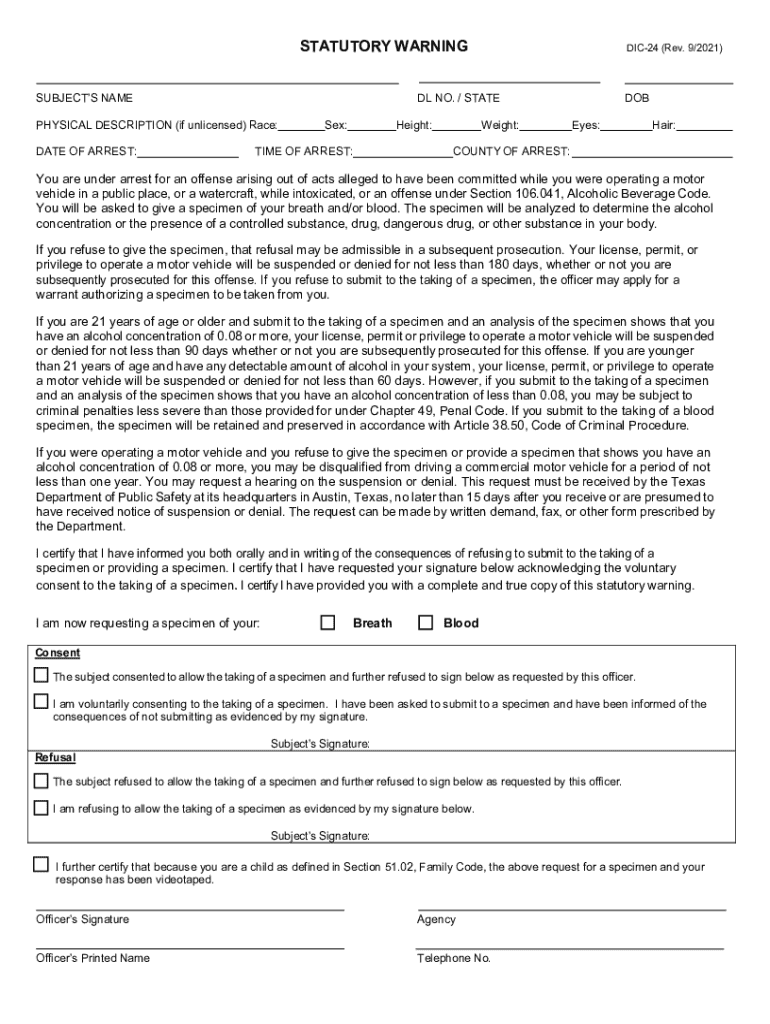







Definition and Meaning of DIC-24 - Peace Officer DWI Statutory Warning
The DIC-24 - Peace Officer DWI Statutory Warning is a formal document delivered to individuals under arrest for driving while intoxicated (DWI). This warning is an integral part of the legal process, informing the accused of the implications of refusing a breath or blood test. The document clearly outlines the potential for driver's license suspension and other legal consequences. It serves as a statutory notice detailing an individual's rights and the procedures should they choose to consent to or decline the specimen request. Understanding this form is vital for anyone who is implicated in a DWI charge.
Legal Use of the DIC-24 - Peace Officer DWI Statutory Warning
The DIC-24 form carries significant legal weight, primarily serving as a procedural safeguard during DWI incidents. It is used by law enforcement to ensure the individual is aware of their rights and the repercussions of non-compliance. By legally requiring officers to inform detainees through this document, the form helps in avoiding potential disputes about whether rights were communicated, thus maintaining procedural integrity in the legal process. Understanding its legal implications can aid in the navigation of subsequent legal challenges.
Steps to Complete the DIC-24 - Peace Officer DWI Statutory Warning
- Issuance by Officer: The form is provided to the individual upon arrest.
- Explanation of Implications: The officer reads the statutory warning aloud, ensuring the person understands the consequences of refusing a specimen test.
- Consent or Refusal: The individual makes an informed choice to comply with or refuse the test request.
- Documentation of Decision: The decision is recorded on the DIC-24 form, which the officer retains as part of the arrest documentation.
By understanding these steps, individuals accused of DWI can better comprehend the process and prepare for potential legal proceedings.
Key Elements of the DIC-24 - Peace Officer DWI Statutory Warning
- Consequences of Refusal: Explicitly details the suspension of driving privileges upon refusal.
- Right to Hearing: Outlines the process for the individual to request a hearing to contest the suspension.
- Information on Consent: Clearly explains the legal implications of consenting to a breath or blood test.
- Duration of Suspension: Details the potential length of time for which a license may be suspended if consent is not given.
These elements are critical, as they ensure that the individual is fully informed of their rights and obligations under law.
Who Typically Uses the DIC-24 - Peace Officer DWI Statutory Warning
Primarily, law enforcement officers utilize this form during DWI arrests to ensure a standardized procedure is followed. Legal professionals, such as defense attorneys, may also refer to this form when building a defense, as it provides critical information about what the individual was told at the time of their arrest. Moreover, magistrates may review the form details during proceedings related to the arrest.


Important Terms Related to DIC-24 - Peace Officer DWI Statutory Warning
- Specimen: Refers to the breath or blood sample requested by officers to determine blood alcohol content.
- Refusal: The choice an individual makes not to provide a specimen when requested.
- Suspension: The temporary removal of a person's driving privileges as a penalty for refusing a test.
Understanding these terms is vital for clear comprehension of the DIC-24 process and the consequences associated with it.
State-Specific Rules for the DIC-24 - Peace Officer DWI Statutory Warning
While the DIC-24 form is generally uniform, variations in state regulations may affect its use. Some states have different implied consent laws or specific procedures for handling refusals, which may impact the suspension duration or adjudication process. Legal counsel can provide guidance on these nuances to ensure proper understanding and handling of the warning in various jurisdictions.
Examples of Using the DIC-24 - Peace Officer DWI Statutory Warning
- Real-world Scenario: A driver arrested for DWI in Texas might receive the DIC-24, where the officer will explain the refusal's consequences, potentially leading to an automatic 180-day license suspension.
- Legal Defense Context: An attorney might challenge the validity of the arrest by examining whether the DIC-24 was properly issued and explained at the time of detention.
These examples demonstrate the practical application of the DIC-24 in different legal contexts, highlighting its significance in the DWI process.
Penalties for Non-Compliance with the DIC-24 - Peace Officer DWI Statutory Warning
Non-compliance with the requirements set forth in the DIC-24 can result in significant penalties, primarily focusing on administrative repercussions, such as license suspension. If the warning is disregarded or improperly administered, it can also impact legal outcomes, which legal representatives might exploit during defense strategies. Understanding these penalties helps in comprehending the gravity of the DIC-24 issuance during DWI incidents.




