




Definition and Meaning of Form Online
"Form online" refers to digital documents that can be completed, submitted, and processed over the internet. These forms replicate the functionalities of traditional paper forms but are enhanced with digital capabilities, such as electronic signatures, automated data entry, and cloud storage. This transformation allows users to access, fill out, and manage forms efficiently from any location with internet access. The flexibility and efficiency of using forms online have made them increasingly popular across various sectors, such as government, healthcare, education, and business, providing a seamless user experience while minimizing errors and delays often associated with manual paperwork.
How to Use the Form Online
Using a form online involves several straightforward steps that streamline the completion and submission processes. Typically, accessing the form online requires visiting a specific website or platform, such as DocHub. Users can start by:
-
Accessing the Form: Navigate to the hosting website where the form is available. Search for the specific form required, either through a search bar or by browsing relevant categories.
-
Filling Out the Form: Utilize provided fields to enter necessary information. Online forms often include dropdown menus, checkboxes, and text fields to facilitate accurate data entry.
-
Attaching Necessary Documents: Some online forms may require you to attach supporting documents. These can be uploaded directly from your computer or imported from connected cloud storage services.
-
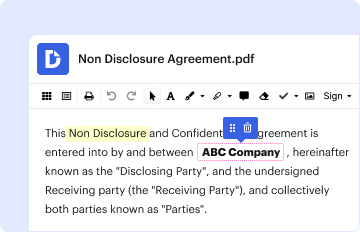
Reviewing and Editing: Before submission, review all entered data for accuracy. Platforms like DocHub offer tools to annotate and edit the form if adjustments are needed.
-
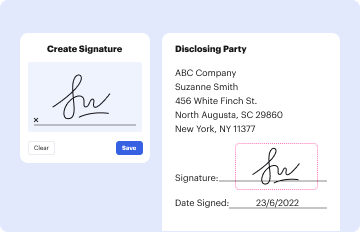
Signing Electronically: Many forms require a signature to be valid. Use built-in tools to apply an electronic signature, ensuring that it complies with legal standards like the ESIGN Act.
-
Submitting the Form: Once completed and reviewed, submit the form using the platform's submission feature. Confirmation of receipt is commonly provided via email.
How to Obtain the Form Online
Obtaining a form online usually involves accessing a designated platform or government website. The process is often straightforward:
-
Official Websites: Visit the official website of the organization issuing the form. Navigate through the sections dedicated to forms or services, and locate the needed form based on its type or purpose.
-
Document Management Platforms: Utilize platforms like DocHub, which allows direct access to a wide range of forms, including those used for business, education, or legal purposes.
-
Form Libraries: Some platforms maintain a comprehensive library of commonly used online forms. Users can search these libraries using keywords or specific criteria related to their needs.
Steps to Complete the Form Online
Completing an online form involves a clear, structured process, making it efficient and user-friendly:
-
Gather Information: Before starting, have all necessary information and documents on hand to streamline the completion process.
-
Filling Out Basic Details: Start by entering fundamental details such as name, address, and contact information in the designated fields.
-
Inputting Specific Data: Continue by filling out sections that require precise details related to the form's purpose, which may include financial figures, employment history, or medical records.
-
Utilizing Interactive Features: Make use of interactive elements like dropdown lists and radio buttons to simplify data entry and ensure accuracy.
-
Verifying Information: Carefully review the entire form to verify that all information is correct and complete before advancing to the submission stage.
-
Saving and Printing Options: Some forms may allow for a draft to be saved or printed before submission, providing an opportunity for final reviews or consultations.
Key Elements of the Form Online
Online forms typically comprise several key components designed to maximize efficiency and user interaction:
-
Form Fields: Essential for data entry, including text boxes, checkboxes, and dropdown menus, to accommodate various types of information.
-
Instructions and Guidelines: Clear instructions often accompany online forms, ensuring users understand each section and what is required.
-
Validation Checks: Built-in validation ensures that mandatory fields are filled and that entries match specified formats, reducing errors.
-
Electronic Signature Capability: Allows users to sign digitally, ensuring the form’s validity and compliance with legal requirements.
-
Submission Confirmation: Acknowledgment of receipt is provided, typically via email, confirming submission success and sometimes offering a reference number for tracking.
Legal Use of the Form Online
The legal use of forms online is underpinned by stringent compliance with digital transaction laws and regulations, especially in the United States. Forms that require user authentication or signatures are subject to:
-
ESIGN and UETA Compliance: Online forms need to comply with the Electronic Signatures in Global and National Commerce Act (ESIGN Act) and the Uniform Electronic Transactions Act (UETA), ensuring that digital signatures are legally binding.
-
Data Protection Laws: Platforms must adhere to data protection regulations, such as the General Data Protection Regulation (GDPR) or the California Consumer Privacy Act (CCPA), to protect users’ personal information.
-
Secure Storage and Transmission: The use of encryption and secure access protocols safeguard the integrity and confidentiality of submitted forms.
Software Compatibility for Forms Online
Compatibility is essential for form users, and online platforms strive to ensure seamless interaction:
-
Cloud Integration: Platforms like DocHub offer integration with cloud services like Google Drive and Dropbox, facilitating easy access and storage.
-
Third-Party Software: Compatibility with software such as Microsoft Office, QuickBooks, and TurboTax allows users to import/export forms without hiccups.
-
Cross-Platform Functionality: Modern platforms allow forms to be accessed and completed on various devices, including desktops, tablets, and smartphones, enhancing flexibility for users in diverse environments.