





Definition and Meaning of a Full Repairing and Insuring Lease
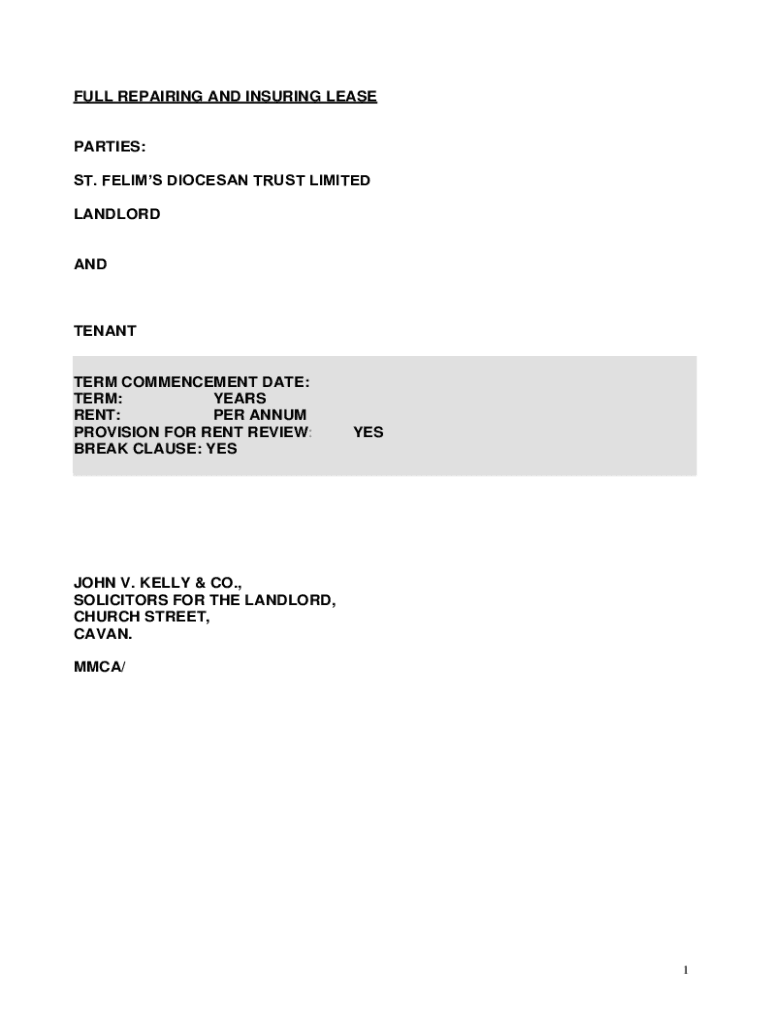
A full repairing and insuring lease (FRI lease) entails a contractual arrangement between a landlord and tenant, where the tenant assumes responsibility for all maintenance and insurance costs related to the leased premises. This lease type stipulates that the tenant must cover expenses for repairs, upkeep, and insurance during the lease term, thus relieving the landlord of these duties. Unlike other lease types, an FRI lease imposes extensive obligations on the tenant to maintain the property's condition and ensure it is fully insured. The specifics of these responsibilities are detailed within the lease agreement, which outlines the areas of the property the tenant must maintain, as well as the extent of insurance coverage required.
How to Use the FULL REPAIRING AND INSURING LEASE PARTIES - Law
Using an FRI lease involves several steps to ensure that the terms are clear and legally enforceable. Initially, both parties, the landlord and the tenant, must clarify their expectations regarding property maintenance and insurance obligations. Before signing, parties should review the lease provisions with legal counsel to confirm that all clauses align with applicable laws. The lease should clearly detail the tenant's responsibility for repairs, specifying any structural or non-structural aspects of the property that may fall under exceptional circumstances. Additionally, it should define the insurance types and coverage limits required, including public liability and buildings insurance.
- Draft and Review: A preliminary draft should be prepared by legal professionals to incorporate all necessary clauses.
- Legal Counsel: Both parties should seek independent legal advice before finalizing the agreement.
- Clarify Responsibilities: Confirm all duties related to repair, maintenance, and insurance are detailed in the lease.
Steps to Complete the FULL REPAIRING AND INSURING LEASE PARTIES - Law
- Initial Negotiation: Both parties must negotiate terms that reflect their expectations regarding property maintenance and insurance.
- Draft Preparation: Prepare an initial lease draft, ensuring all vital clauses concerning repairs and insurance are included.
- Legal Examination: Engage legal professionals to review the lease for compliance with local and federal laws.
- Amendments and Agreement: Make necessary amendments based on feedback and reach a consensus on the terms.
- Formal Signing: Once mutually agreed, both parties should officially sign the lease, witnessed by legal representatives if necessary.
- Documentation: Record the signed lease with the appropriate governmental or legal body, if required, to formalize the arrangement.
Who Typically Uses the FULL REPAIRING AND INSURING LEASE PARTIES - Law
The full repairing and insuring lease is commonly utilized in commercial property agreements. These leases are particularly prevalent within the retail, industrial, and office space sectors where tenants are businesses that benefit from maintaining their operating environments. They are favored by both landlords who wish to minimize involvement in the upkeep of the property and tenants who desire greater control over the premises and its conditions. Typically, larger companies or entities with specific operational needs are best suited for FRI leases.
- Office Spaces: Tenants seeking prolonged control over office layouts and conditions.
- Retail Outlets: Businesses preferring maintenance oversight to align with brand standards.
- Industrial Facilities: Enterprises requiring facility-specific adjustments and maintenance.

Important Terms Related to FULL REPAIRING AND INSURING LEASE PARTIES - Law
In FRI leases, certain terms frequently arise and are crucial for both parties to understand. This includes:
- Dilapidations: Refers to the breach of obligations to keep the property in good repair as outlined in the lease.
- Permitted Use: Specifies the activities tenant can conduct on the leased property.
- Yield Up: The condition in which the property should be returned to the landlord at the end of the lease term.
- Rent Review: A clause that allows the periodic adjustment of rent, based on market conditions or predetermined criteria.
Understanding these terms can help both parties navigate their rights and obligations effectively.
Legal Use of the FULL REPAIRING AND INSURING LEASE PARTIES - Law
Legally, an FRI lease is a binding contract, enforceable by the courts in case of dispute or non-compliance. The lease should align with property law regulations, which vary depending on jurisdiction, ensuring that it is recognized validly. Tenants should maintain comprehensive records of all repair and maintenance work undertaken, including any insurance claims filed, as evidence of compliance with their lease obligations. Landlords, in turn, must provide a property that meets any agreed-upon condition standards at the lease's inception.
Key Elements of the FULL REPAIRING AND INSURING LEASE PARTIES - Law
Key elements in an FRI lease include clauses detailing repair obligations, insurance requirements, rent adjustments, and longer-term liabilities. It is important for the lease to define:
- Repair Obligations: Clear articulation of which party is responsible for specific areas of the property.
- Insurance Provisions: Specifics regarding the types and extents of insurance cover the tenant must maintain.
- Rent Review Mechanism: Details on how and when rent will be reviewed during the lease term.
- Termination Conditions: Circumstances under which the lease may be terminated by either party.
State-Specific Rules for the FULL REPAIRING AND INSURING LEASE PARTIES - Law
The enforcement and specifics of FRI leases may vary significantly across different states in the U.S. States have unique statutory requirements and precedents affecting property leases. Key distinctions often arise in levels of tenant protection, disclosure obligations, and the treatment of lease breaches. Parties must verify state-specific legislation to ensure lease compliance, particularly in matters addressing tenant rights, repair obligations, and insurance mandates.
By paying careful attention to legal obligations and practical requirements, a full repairing and insuring lease can effectively benefit both the landlord and tenant, providing clear guidelines for maintenance and liability throughout the lease term.