




01. Edit your repair addendum example online
Type text, add images, blackout confidential details, add comments, highlights and more.

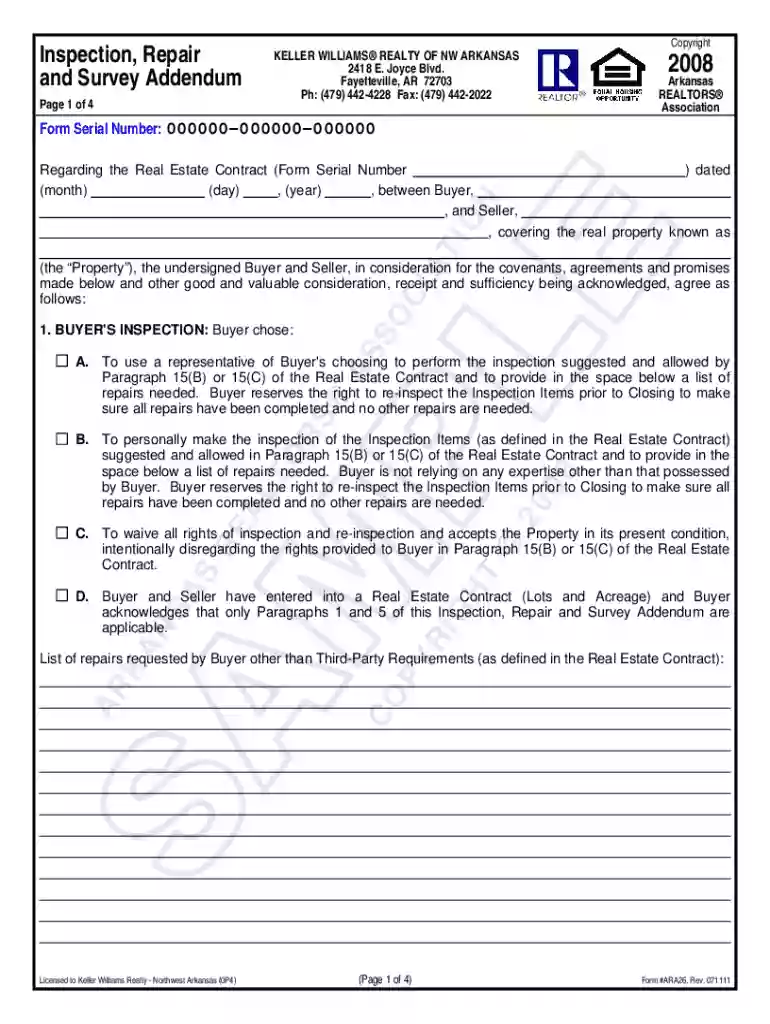
Type text, add images, blackout confidential details, add comments, highlights and more.

Draw your signature, type it, upload its image, or use your mobile device as a signature pad.

Send it via email, link, or fax. You can also download it, export it or print it out.
A repair addendum is a vital document in real estate transactions, providing a formal structure for addressing anticipated repairs on a property. Crafted as part of the transactional paperwork between buyers and sellers, this addendum specifies the property's inspection process and delineates the repair requests subsequent to the inspection. Here, we delve into understanding this document to fully leverage its utility.
Definition: This document is a supplement to a real estate contract, allowing the buyer to list repair requests after a property inspection. It hence facilitates communication between buyers and sellers about necessary improvements before closing the transaction.
Variations: Different versions may exist based on state regulations and specific real estate agency requirements, but they all serve the same fundamental purpose of negotiating post-inspection repairs.
For a repair addendum to be effective, it must encompass several core elements that ensure clarity and enforceability.
Property Inspection Rights: Clearly outlines the buyer's right to inspect the property and list any defects that require repair.
Repair Requests: Specifically lists items the buyer wants the seller to address before closing. This section must be precise, detailing the nature of the repairs and any associated costs.
Seller’s Response: Provides a framework for the seller's obligation to respond to the repair requests. Sellers typically have to agree to the repairs, reject them, or offer alternatives.
Completion Timeline: Establishes deadlines for completing the agreed-upon repairs, essential for keeping the transaction on track.
Acknowledgment Clauses: Includes acknowledgment of both parties for the final agreement on repairs, thus avoiding disputes over what has been agreed upon.
Leveraging a repair addendum effectively involves understanding its structure and executing it according to established practices in real estate transactions.
Inspection Phase: Conduct a thorough property inspection with a certified professional to identify necessary repairs.
Completion of Addendum: Using a repair addendum example, fill out the relevant sections with detailed descriptions of repairs needed.
Submission to Seller: Submit the filled addendum to the seller for review, ensuring that the buyer has accurately articulated the repair needs.
Negotiation and Agreement: Engage in a negotiation phase where the seller can either agree to all requests, propose alternatives, or reject some requests.
Finalization: Once both parties agree, ensure all changes are documented, and the addendum is signed and dated to make it legally binding.
Completing a repair addendum correctly is crucial to preserving buyer rights while ensuring seller obligations are met, facilitating smooth transaction processes.
Identify Repairs: Use a professional inspection to make a comprehensive list of necessary repairs.
Detailed Descriptions: On the addendum, include clear, concise descriptions for each repair request to prevent ambiguity.
Quotation and Costs: Attach estimated costs for repairs, compiled during or after the inspection, for negotiation purposes.
Set Deadlines: Clearly outline the timeline for repairs to be completed, factoring in potential delays.
Review with Legal Counsel: Before finalizing, review the addendum with real estate professionals or legal advisors to ensure legal compliance and clarity.
Signatures: Secure signatures from both buyer and seller, certifying agreement and commitment to the listed terms.
The legal standing of a repair addendum in real estate is pivotal. It is not merely a courtesy but a formal, enforceable document within property contracts.
Binding Agreement: Once signed, the repair addendum binds both parties to its terms, underlining the importance of mutual agreement on all repair requests.
State Laws: State-specific laws can influence the usage and validity of the addendum, requiring careful alignment with regional legal requirements.
Enforceability: Failure to uphold the agreed repairs as outlined in the addendum can result in legal ramifications, including potential cancellation of the sale or financial penalties.
Each state in the U.S. has unique regulations affecting the preparation and implementation of repair addenda.
Variation Across States: States may have different forms or additional disclosures required, influencing both the content and formalities.
Local Real Estate Requirements: Awareness of local practices and requirements is essential, as real estate boards might have specific templates or procedural guidelines to follow.
Professional Guidance: Work with local real estate agents familiar with state and municipal regulations to ensure that your repair addendum is both comprehensive and compliant.
Real-world application of repair addenda showcases how it standardizes transaction resolutions and enhances buyer and seller communications.
Scenario 1: A buyer discovers water damage during inspection. They detail the issue in the addendum and request professional repairs as a condition of sale completion.
Scenario 2: A seller agrees to repair a failing HVAC system as noted in the addendum. After repairs, documentation is provided to the buyer, ensuring transparency and trust.
Scenario 3: In a competitive market, a buyer might choose only to request essential safety repairs to keep their offer attractive, noting these limited demands in the addendum.
Timing and execution of the repair addendum are critical, predominantly during the due diligence phase following property inspection and before sale finalization.
Pre-Offer: In competitive sales scenarios, establishing a repair addendum pre-offer can increase negotiation power by demonstrating thorough due diligence.
Post-Inspection: Post-inspection is the most common time to draft a repair addendum, equipping buyers with factual data to back their repair requests.
Pre-Closing: Ensuring repair agreements are documented in the addendum prior to closing mitigates risk, aiming for a smooth property handover.
These sections are designed to provide a comprehensive and practical guide for understanding and utilizing a repair addendum effectively in real estate transactions.
At DocHub, your data security is our priority. We follow HIPAA, SOC2, GDPR, and other standards, so you can work on your documents with confidence.


