
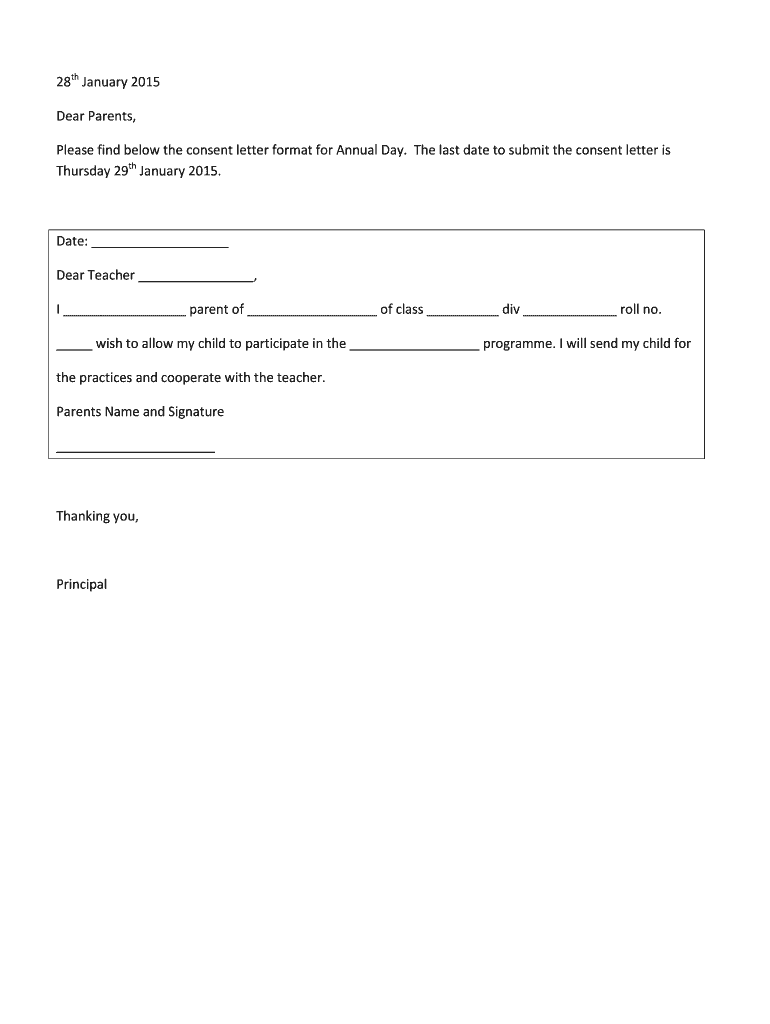







Overview of the School Consent Form
A consent form for school is a crucial document used by educational institutions to obtain permission from parents or guardians for various activities involving their children. These activities can range from local field trips to participation in events, such as the annual school function. Understanding the framework of these forms helps ensure that parents are informed and that schools comply with legal requirements.
Purpose and Importance of a School Consent Form
The primary aim of a consent form is to secure parental approval. This form serves several critical functions:
- Legal Protection: Schools are obligated to protect minors, and having a signed consent form helps to establish that parents have been informed of the activities and risks involved.
- Enhanced Communication: It allows for formal communication between the school and parents, reinforcing the partnership in the educational experience.
- Clarity of Expectations: The form outlines the specific details of the event or activity, including dates, times, and required attire, ensuring that parents understand their children's participation.
Key Elements of a School Consent Form
A well-structured consent form includes several essential components:
- Parent/Guardian Information: Spaces for the names, contact information, and addresses of parents or guardians.
- Child's Information: A section for the child's name, grade, and any relevant medical information the school needs to be aware of, such as allergies.
- Event Details: Clear details about the event—including the name, date, location, and the nature of the activity—are crucial.
- Risks and Responsibilities: Schools should outline any potential risks involved in the activity, ensuring parents are fully informed.
- Signature Line: A designated area for the parent or guardian to sign, indicating their consent and understanding of the information provided.
Types of Activities Requiring a School Consent Form
Several activities typically require a school consent form, including but not limited to:
- Field Trips: Any off-campus instruction or event where students engage in learning outside the classroom.
- Annual Functions: Participation in yearly events, where students might perform or showcase their work.
- Health Screenings: Activities such as vaccinations or health assessments that involve direct care of students.
- Extracurricular Activities: Sports, clubs, and any additional programs outside the core curriculum.
How to Effectively Utilize a School Consent Form
To maximize the benefits of a consent form, schools should adopt the following practices:
- Distribute in Advance: Ensure that consent forms reach parents ahead of time, allowing adequate opportunity for review and questions.
- Clear Instructions for Completion: Provide specific directions regarding how to fill out the form, including where and how to submit it.
- Collecting Forms: Establish a designated process for collecting returned consent forms, ensuring all are logged for accountability.
- Follow-up Communications: Send reminders to parents as the event approaches, confirming that consent forms have been received and clarifying any last-minute details.
Common Scenarios and Variations of Consent Forms
Consent forms can vary based on the event and age of the child. For example:
- Field Trip Variations: A consent form for a local museum visit may differ from one required for an overnight trip, necessitating additional details regarding accommodations and safety measures.
- Participation in Sports: Forms designed for athletic participation often include specific language related to health screenings and physical fitness requirements.
- Emergency Contact Information: Some forms may request emergency contact details, ensuring that in case of an incident, quick communication can be established.
Legal Considerations Regarding School Consent Forms
Legal requirements for consent forms can vary by state, but several common principles generally apply:
- Informed Consent: Parents must be fully informed of the risks and nature of the activities prior to providing consent.
- Record Retention: Schools are typically required to retain records of consent forms for certain durations, especially for regulatory compliance.
- Privacy Concerns: Student information must be managed following regulations like FERPA (Family Educational Rights and Privacy Act) to protect student privacy.
Final Thoughts on the Importance of School Consent Forms
A consent form for school events acts as a vital link between educational institutions and families. By ensuring clear communication, legal compliance, and informed consent, schools can facilitate enriching experiences while maintaining parental trust and protecting students. Ultimately, well-crafted consent forms create a foundation for positive student participation in school-related activities.




