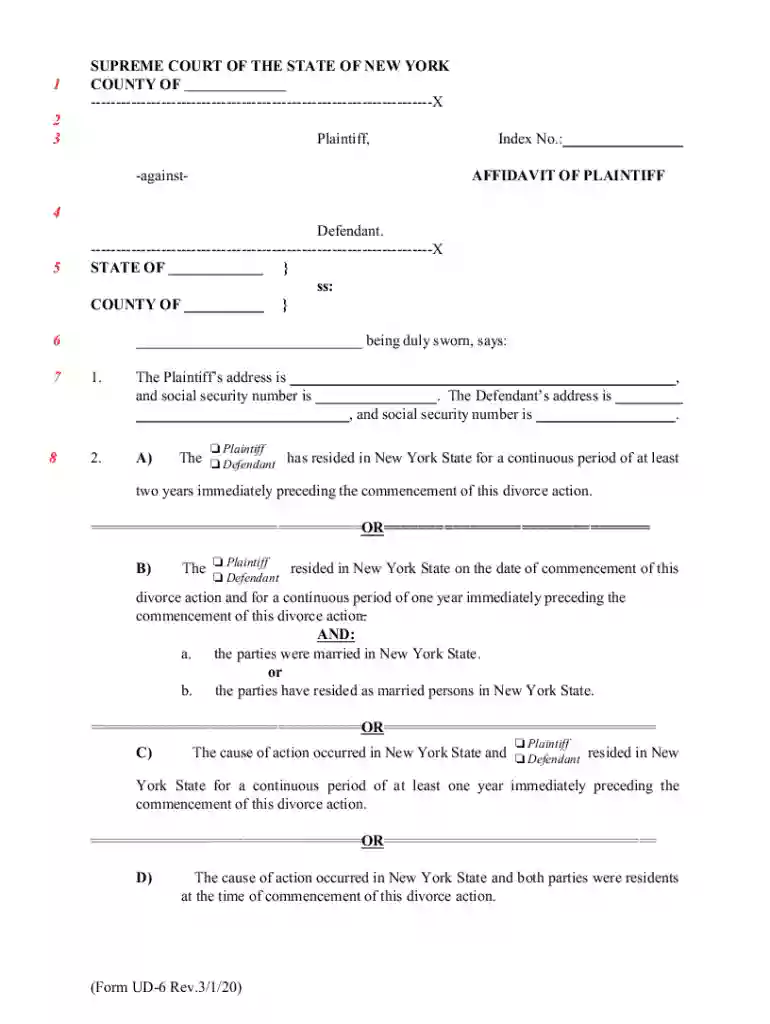
Definition and Meaning of a New York Supreme Court Affidavit
A New York Supreme Court affidavit is a sworn written statement of facts, voluntarily made by an affiant under an oath or affirmation administered by a person legally authorized to do so. In the context of the New York Supreme Court, affidavits are frequently utilized to present written evidence in various legal proceedings, such as divorce actions. These documents often include critical details about the involved parties, such as personal information, residency status, and the specific legal issues at hand.
Key Features of the Affidavit
- Sworn Statement: Must be affirmed or sworn under oath.
- Evidence Presentation: Used to submit evidence pertinent to the court case.
- Specific Details: Includes information on involved parties and case facts.
Practical Example
Imagine a divorce proceeding where one party needs to present evidence of residency to establish jurisdiction. A New York Supreme Court affidavit would show the affiant's address, duration of residence, and intention to remain, thereby supporting the legal requirements for filing the case in New York.
How to Use the New York Supreme Court Affidavit
Using the New York Supreme Court affidavit effectively requires an understanding of its format and content requirements. Here's a structured approach:
- Identify Information Needed: Determine what facts need to be presented.
- Draft the Affidavit: Use clear, concise language to outline relevant details.
- Affirmation or Swearing: Ensure the document is sworn or affirmed in front of a notary or authorized official.
- Submit to Court: File the affidavit as part of the legal proceedings, following proper protocols.
Important Considerations
- Accurate and factual representation is crucial since it is a legal document.
- The format should meet the court's specified guidelines.
Steps to Complete the New York Supreme Court Affidavit
Completing the affidavit requires attention to detail and adherence to legal standards:
- Obtain the Form: Download or request from relevant court resources.
- Fill in Identification Details: Enter personal information, case numbers, and parties involved.
- Detail the Statement of Facts: Clearly list the pertinent facts related to the case.
- Oath or Affirmation: Conduct this step before a notary or an authorized official.
- Review and Edit: Ensure there are no inaccuracies or omissions.
- Filing: Submit the completed affidavit to the court as a part of your documentation.
Legal Use of the New York Supreme Court Affidavit
The affidavit serves multiple legal purposes:
- Evidence Submission: Effective for presenting written testimony that might otherwise require oral presentation in court.
- Verification of Claims: Used to verify factual assertions within legal proceedings.
- Support for Motions: Often used in support of legal motions, such as summary judgments or motions to dismiss.
Key Elements of the New York Supreme Court Affidavit
Several elements are critical for the affidavit's validity:
- Affiant's Information: Full name, address, and relationship to the case.
- Comprehensive Statement: Detailed description of facts or claims.
- Date and Location: Specification of when and where the affidavit is sworn.
- Notarization: Signature from a notary public or legal authority confirming the oath.
State-Specific Rules for the New York Supreme Court Affidavit
New York requires specific formats and language for affidavits:
- Language Requirement: Must be in English unless an interpreter's affidavit is submitted.
- Jurisdictional Information: Affidavits must affirm jurisdictional facts, especially in cases of divorce or custody.
- Format Compliance: Must adhere to standardized document formats as required by New York courts.
Examples of Using the New York Supreme Court Affidavit
Affidavits can be used in various legal contexts:
- Divorce Proceedings: To outline grounds for divorce and residency requirements.
- Custody Cases: Presenting evidence of a child's best interests.
- Contract Disputes: Offering testimony on contractual agreements or breaches.
Form Submission Methods (Online, Mail, In-Person)
Submitting the affidavit can be done in several ways:
- In-Person: Hand-delivery to the court clerk's office.
- Mail Submission: Utilize certified mail for proof of delivery.
- Online Filing: If available, through New York's electronic filing system.
Considerations for Each Method
- In-Person: Immediate confirmation of receipt.
- Mail: Requires tracking for confirmation.
- Online: Quick and efficient if systems are accessible.
In conclusion, the new york supreme court affidavit plays a fundamental role in legal proceedings by providing a structured and sworn account of facts. Proper understanding and utilization of the affidavit can significantly enhance the clarity and effectiveness of legal documentation.