







Definition & Meaning
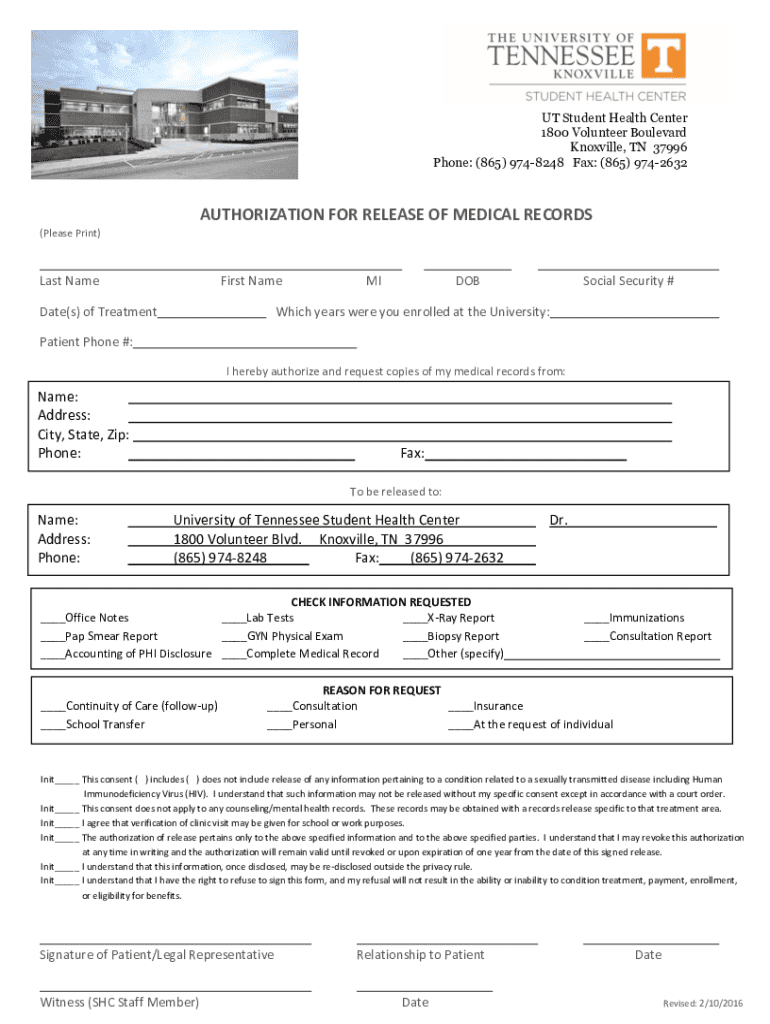
The "authorization for release of medical records - Student Health Center" is a legal document used for permitting the transfer of medical records from a student health center to another entity such as another healthcare provider, legal representative, or insurance company. It provides a structured way for students to consent to the sharing of their medical information. This form typically includes fields for personal identification, the specific medical records to be shared, and the reason for the release.
Purpose and Scope
- Consent: Allows students to grant permission for their medical records to be shared.
- Specified Use: Limits the scope of shared information to what is necessary for the specified purpose.
- Revocability: Often includes a clause that allows the student to withdraw consent at any time.
How to Use the Form
Engaging with the authorization form correctly ensures that your medical records are shared in a controlled manner. Here’s how you can use it effectively:
- Identify the Recipient: Determine who will receive your medical records and for what purpose.
- Specify Information: Clearly state which medical records are to be released. This might include treatment history, test results, or prescriptions.
- Consent & Signature: The form must be signed to be valid, indicating your consent to the specified release.
Practical Scenarios
- Transferring Care: If transitioning to a new healthcare provider, use the form to transfer your medical history.
- Educational Needs: When specific health information is required for educational programs or accommodations.
Steps to Complete the Authorization
To ensure completeness and accuracy, follow these detailed steps:
- Personal Details: Start by filling out your full name, student ID, and contact information.
- Recipient Information: Provide details of the individual or organization that is to receive the records.
- Records Specification: Indicate precisely which records you’re authorizing for release.
- Reason for Release: Explain why these records are being shared.
- Sign and Date: Conclude with your signature and the date to validate the authorization.
Key Elements of the Authorization Form
Understanding the essential components of the form prepares you for filling it out properly:
- Identification Section: Captures personal and recipient information.
- Scope of Release: Defines which records are to be released.
- Purpose Clause: States why the release is necessary.
- Revocation Clause: Details how an individual can withdraw consent.
Legal Use of the Authorization Form
This form must adhere to specific legal standards, ensuring that the privacy of medical information is maintained and HIPAA regulations are met:
- HIPAA Compliance: Ensures that medical records are handled according to federal privacy laws.
- Authorization Validity: Describes the timeframe within which the authorization is valid, often up to one year unless revoked.
Compliance Examples
- Legal Proceedings: Used by legal professionals to gather medical records for cases, observing legal standards for data protection.
- Insurance Claims: Allows insurance companies to access necessary health information to process claims.
State-Specific Rules
Certain states have unique stipulations regarding the release of medical records:
- California: Requires additional disclosures when handling mental health information.
- Texas: Mandates specific language in the consent form relating to health privacy rights.
Important Terms Related to Medical Record Release
Familiarity with these terms ensures a clear understanding of the form’s language and intent:
- PHI (Protected Health Information): This stands for any information in a medical record that can be used to identify an individual.
- Covered Entity: Any healthcare provider, health plan, or entity that handles PHI under HIPAA.
Examples of Using the Authorization Form
Understanding real-life applications of the form can guide appropriate usage:
- Transferring Records for Graduate Study: A student applies for a graduate program that requires health records for verification or special accommodations.
- Summer Camp Health Requirement: A summer program for undergraduates necessitates immunization records before accepting applicants.
Utilization in Healthcare
Ensures continuity of care when moving across different healthcare systems or utilizing specialist services outside the primary student health facility.
These sections provide detailed yet precise content that covers all facets of using the "authorization for release of medical records - Student Health Center" effectively and legally.




