
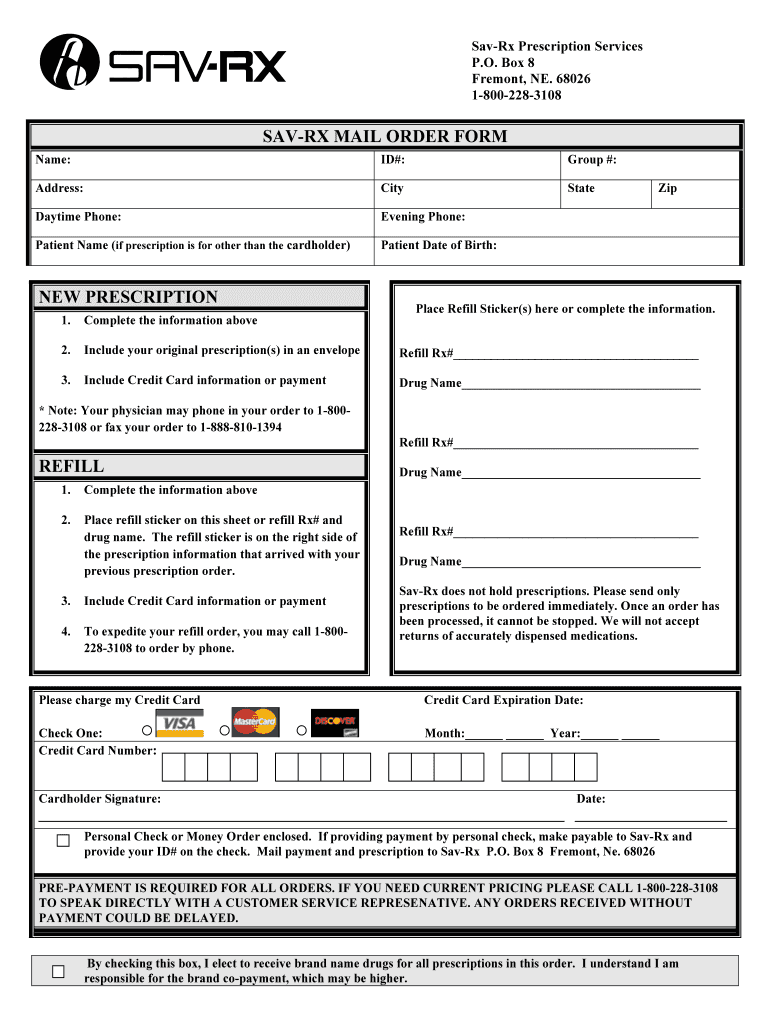







Overview of the Sav Rx Prior Authorization Form
The Sav Rx prior authorization form is a critical document used in the healthcare industry, specifically for prescription services. This form is essential for patients who need their medications approved by their insurance providers before they can access them. A thorough understanding of this form is crucial for both patients and healthcare providers, as it ensures that medications are authorized efficiently and in compliance with all necessary guidelines.
Key Elements of the Sav Rx Prior Authorization Form
The Sav Rx prior authorization form includes several important sections that need to be filled out accurately to facilitate the approval process.
-
Patient Information: This section collects essential details about the patient, such as name, date of birth, and insurance information. Providing accurate information is vital for preventing delays in processing.
-
Medication Details: Here, the specific medication requiring authorization is listed, along with its dosage and frequency of use. This precise identification helps in determining the medical necessity of the medication.
-
Healthcare Provider Information: Information about the prescribing physician, including their name, contact details, and National Provider Identifier (NPI), is included. This allows for quick verification and communication regarding the authorization request.
-
Clinical Information: This part of the form requires relevant medical history or diagnosis codes that support the necessity of the prescribed medication. Providing strong clinical justification is often a key factor in obtaining approval from insurance companies.
Steps to Complete the Sav Rx Prior Authorization Form
Completing the Sav Rx prior authorization form involves several steps to ensure that all necessary information is included for timely processing.
-
Gather Required Information: Collect all necessary patient and provider details, medication specifics, and any supporting clinical documentation. This preparation helps streamline the filling process.
-
Fill Out Patient and Provider Sections: Enter the patient's personal information and the healthcare provider's details accurately. Double-check for any spelling or numerical errors that could cause confusion during processing.
-
Specify Medication Information: Clearly indicate the medication name, dosage, and prescribing frequency. Attach any accompanying prescriptions if necessary.
-
Provide Clinical Justification: Include detailed clinical information that explains why the medication is needed. This could involve a summary of the patient’s medical condition and previous treatments that have been tried.
-
Review and Submit: Carefully review the completed form for accuracy and completeness. Depending on instructions, submit the form electronically or via fax, ensuring it reaches the appropriate health insurance provider.
Submission Methods for the Sav Rx Prior Authorization Form
The submission of the Sav Rx prior authorization form can be performed in various ways, providing flexibility for healthcare providers and patients.
-
Online Submission: Some insurance providers offer an online portal where forms can be filled out and submitted electronically. This method often accelerates the approval process.
-
Fax Submission: Many healthcare providers still use fax machines to send the form directly to the insurance company. The form must be faxed to the designated fax number provided by the insurer, ensuring that it is sent to the correct department.
-
Mail Submission: In cases where electronic methods cannot be used, the form can be printed and mailed to the insurance provider. This option may take longer, so it is generally less preferred.
Eligibility Criteria for Prior Authorization
Understanding the eligibility criteria for prior authorization is essential to determine whether a medication might require this process.
-
Insurance Specifications: Each insurance plan has its own list of medications that require prior authorization. Patients should check with their insurance company to confirm whether their prescribed medication falls under this category.
-
Medication Classifications: Certain high-cost drugs or medications prescribed for specific conditions often require prior authorization. Providers need to be aware of which medications typically need this additional step.


Importance of Compliance with the Sav Rx Prior Authorization Process
Compliance with the Sav Rx prior authorization form process is crucial for both patients and providers.
-
Timely Access to Medications: Following the correct prior authorization process helps ensure that patients can receive their required medications without unnecessary delays.
-
Insurance Coverage: Completing the form properly is essential to ensure that the medication is covered under the patient's insurance plan, avoiding potential out-of-pocket costs for the patient.
-
Documentation for Future Reference: A well-completed prior authorization form serves as a documented request that can be referenced in future interactions with insurance providers. This can make subsequent requests smoother and more efficient.
Handling Denials and Appeals for Prior Authorization
Cases where the prior authorization request is denied can occur, and knowing how to respond is vital.
-
Review Denial Reasons: Understand the specific reasons for the denial provided by the insurance carrier. Common reasons include insufficient medical justification or errors in the submitted information.
-
Collect Additional Documentation: If necessary, gather more supporting documents that address the points raised by the insurer. This could involve additional clinical notes or peer-reviewed studies supporting the medication's necessity.
-
File an Appeal: If the denial seems unjustified, patients or their healthcare providers can file an appeal. This process usually involves submitting a written request along with the additional documentation to the insurance company for reconsideration.
By understanding these critical elements associated with the Sav Rx prior authorization form, patients and providers can navigate the process more effectively and ensure timely access to necessary medications.




