







Definition and Meaning
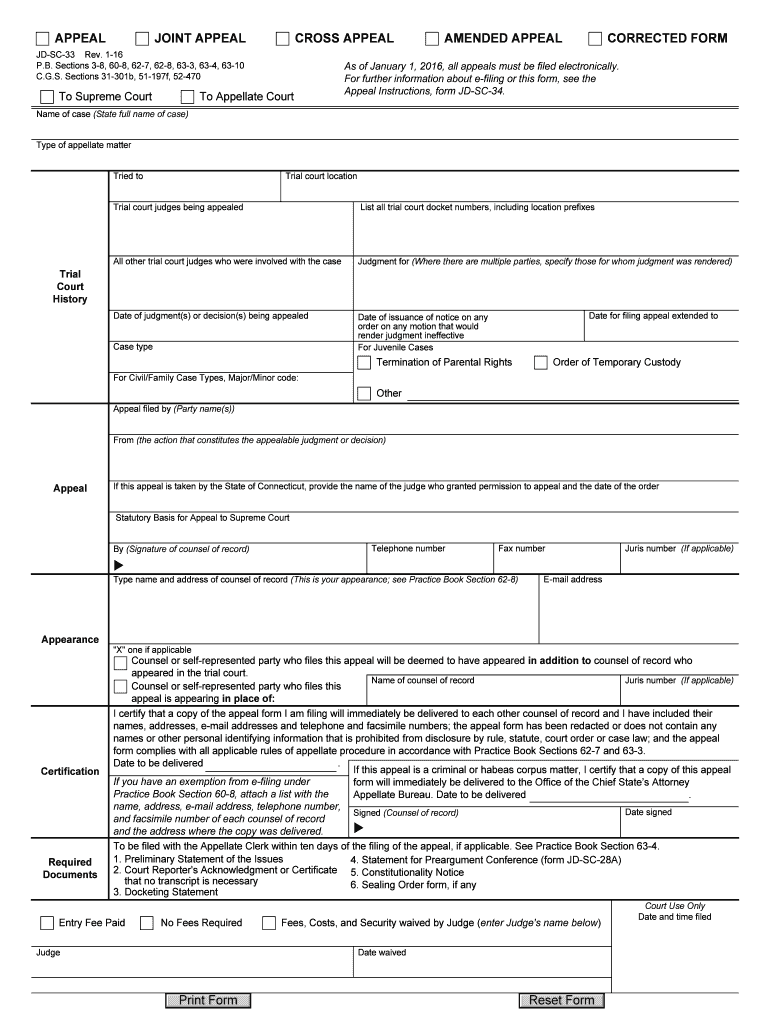
The "APPEAL JOINT APPEAL CROSS APPEAL AMENDED APPEAL - jud ct" form is a legal document used in the process of appealing court decisions in the state of Connecticut. This form aids individuals and entities in formally expressing their disagreement with a court's judgment, allowing them to request a higher court to review the decision. The form covers various types of appeals, such as appeals, joint appeals, cross appeals, and amended appeals, each catering to different circumstances within the legal system.
Types of Appeals
- Appeal: A request for a higher court to review the decision of a lower court.
- Joint Appeal: Filed by two or more parties together, who are jointly interested in the appeal's outcome.
- Cross Appeal: Initiated by the opposing party in response to an initial appeal.
- Amended Appeal: Submitted when changes or corrections are needed in an original appeal.
How to Use the APPEAL JOINT APPEAL CROSS APPEAL AMENDED APPEAL - jud ct
To effectively use the form, applicants must ensure that all sections are accurately completed, which involves understanding the nature of each appeal type and choosing the appropriate one based on their specific case. Preparation is key, as each appeal must meet specific criteria and adhere to legal standards set by Connecticut's Supreme Court or Appellate Court.
Step-by-Step Guide
- Determine the Type of Appeal Required: Identify if your circumstances necessitate a standard appeal, joint appeal, cross appeal, or amended appeal.
- Collect Necessary Case Information: Gather details about the original judgment, including case number, court details, and parties involved.
- Complete Relevant Sections of the Form: Fill in all applicable fields with precise information to avoid processing delays.
- Review Compliance with Electronic Filing Requirements: Ensure that your submission aligns with Connecticut's electronic filing standards, if applicable.
How to Obtain the APPEAL JOINT APPEAL CROSS APPEAL AMENDED APPEAL - jud ct
The form is available through the Connecticut Judicial Branch's official website. It's crucial to download the most current version to comply with any recent amendments or updates to legal guidelines.
Access Points
- Connecticut Judicial Branch Website: Provides direct access to download the necessary forms.
- Local Courthouse: Physical copies may be available upon request, especially if assistance is needed with completion.
Steps to Complete the APPEAL JOINT APPEAL CROSS APPEAL AMENDED APPEAL - jud ct
Filing an appeal involves several critical steps, each demanding careful attention to detail to ensure the appeal is considered valid and is processed in a timely manner.
Step-by-Step Breakdown
- Identify the Decision to Appeal: Determine the specific court decision being contested and ensure it is eligible for appeal under Connecticut law.
- Fill in Appellant Information: Include all requested details about the party initiating the appeal, such as their name, address, and contact information.
- Complete Case Information Section: Supply the court case number, original judgment date, and other pertinent details.
- State Grounds for Appeal: Clearly outline the basis for the appeal, presenting the legal arguments and facts supporting your position.
- Attach Required Documentation: Gather and include any necessary certificates, prior court documents, and evidence supporting your appeal.
- Submit the Form: Follow Connecticut's submission guidelines, whether filing electronically, in person, or by mail.
Key Elements of the APPEAL JOINT APPEAL CROSS APPEAL AMENDED APPEAL - jud ct
The form is structured to guide users through the appeal process efficiently, ensuring all relevant information is gathered and presented correctly.
Essential Sections
- Appellant and Appellee Details: Recording accurate information about both parties involved in the appeal.
- Statement of Issues on Appeal: A concise summary of the key legal points and issues being contested.
- Request for Oral Argument: Options to request or waive the right for oral argument in the appeal process.
- Certification of Service: Confirmation that service requirements to other parties have been met.
State-Specific Rules for the APPEAL JOINT APPEAL CROSS APPEAL AMENDED APPEAL - jud ct
Connecticut has distinct legal requirements and deadlines for filing appeals, setting it apart from procedures in other states.
Key Connecticut Rules
- Filing Deadline: Strict adherence to submission deadlines post-judgment is essential - failure to meet these can result in dismissal.
- Electronic Filing Requirements: Many appeals must be filed electronically, requiring familiarity with Connecticut's electronic filing system.
- State Designated Formats: All filings must adhere to state-specific format requirements, including page limits and document presentation.
Important Terms Related to APPEAL JOINT APPEAL CROSS APPEAL AMENDED APPEAL - jud ct
Familiarity with specific legal terminology can enhance understanding and accuracy when completing the form.
Legal Terminology
- Appellant: The party who initiates the appeal process.
- Appellee: The party opposing the appeal, typically the winner of the initial court case.
- Oral Argument: A formal presentation of the appeal's case before the judges.
- Amended Notice of Appeal: A revision to the initial appeal notice, usually to correct errors or include additional information.
Examples of Using the APPEAL JOINT APPEAL CROSS APPEAL AMENDED APPEAL - jud ct
Practical scenarios illustrate how this form facilitates addressing legal grievances through Connecticut's court system.
Real-World Applications
- Civil Case Appeal: Contesting a civil court's ruling on a breach of contract case.
- Joint Family Law Appeal: Co-parenting parties appeal a custody decision together.
- Cross Appeal in Business Dispute: Countering an appeal initiated by an opposing business partner in a commercial lawsuit.
- Amended Appeal for Property Case: Correcting the filing information in a land ownership dispute.




