




01. Edit your tennessee form ss online
Type text, add images, blackout confidential details, add comments, highlights and more.

Type text, add images, blackout confidential details, add comments, highlights and more.

Draw your signature, type it, upload its image, or use your mobile device as a signature pad.

Send ss 4418 via email, link, or fax. You can also download it, export it or print it out.
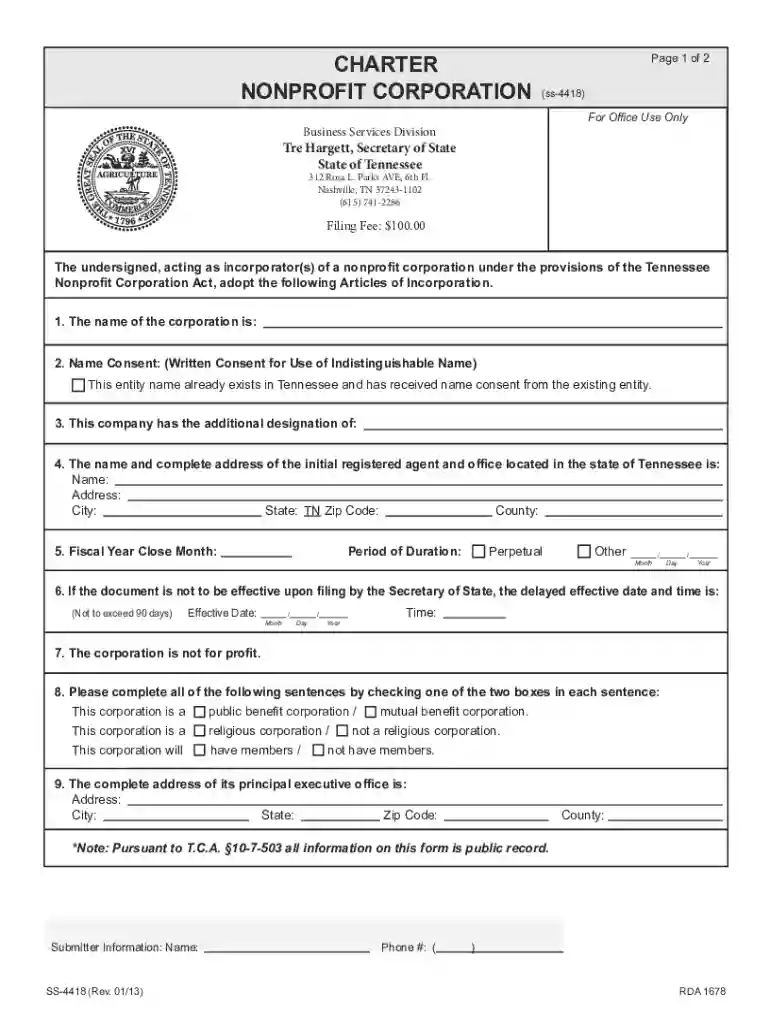
The Tennessee Form SS serves as a critical document for businesses operating within the state, specifically for those intending to file as nonprofit corporations. This form is structured to gather comprehensive information about the organization, ensuring it adheres to the necessary legal and financial regulations. The document captures essential details such as the corporation's name, registered agent, fiscal details, and plans for asset distribution upon dissolution. By completing this form, organizations affirm their compliance with state requirements, setting the foundation for legitimate and recognized operations within Tennessee's jurisdiction.
Using the Tennessee Form SS involves several key steps designed to facilitate efficient filing and compliance. Organizations must first gather all pertinent information outlined in the form, including the choice of a registered agent and the specification of fiscal year-end details. It is essential to refer to detailed instructions accompanying the form to ensure accuracy and completeness. Once all sections are filled out, organizations have the option to submit the form electronically, via mail, or through in-person delivery. Regardless of the submission method chosen, it is vital to keep a copy for organizational records and ensure all required fees are paid.
Identify Essential Information:
Complete the Form:
Submit Filing Fee:
Choose Submission Method:
The Tennessee Form SS revolves around several critical components designed to encapsulate the necessary information for nonprofit organization registration. These elements include:
Each of these elements must be carefully considered and accurately reflected within the form to ensure smooth processing and acceptance.
The primary users of the Tennessee Form SS are nonprofits seeking official recognition within the state. This includes charitable organizations, educational entities, and other groups operating as nonprofit corporations. These entities rely on Form SS to obtain the legal status required to conduct activities compliant with state regulations. Additionally, legal and financial advisors assisting clients in setting up or managing nonprofits may frequently engage with this form to ensure organizational legitimacy and adherence to the law.


When filing the Tennessee Form SS, organizations must consider specific state rules that influence how the form is completed and processed. Tennessee requires organizations to designate a registered agent physically located within the state. Additionally, naming regulations stipulate that corporation names must be distinguishable from existing entities. For organizations using specific language or terms in their name, obtaining prior consent may be necessary. Strict adherence to these rules ensures that nonprofits are established without legal complications.
Understanding the terminology associated with the Tennessee Form SS is crucial for accurate and compliant submission. Important terms include:
Familiarity with these terms assists filers in completing the form correctly, avoiding misunderstandings or errors that could impair approval.
The legal utility of the Tennessee Form SS lies in its role as a foundational document for nonprofit organization registration in the state. By completing this form, organizations confirm their intent to operate under Tennessee laws and are granted the legal authority to conduct their nonprofit activities. This form not only affirms the organization's compliance but also facilitates transparency with the state, reinforcing its nonprofit status and supporting its mission legally and ethically.
We've got more versions of the tennessee form ss form. Select the right tennessee form ss version from the list and start editing it straight away!
At DocHub, your data security is our priority. We follow HIPAA, SOC2, GDPR, and other standards, so you can work on your documents with confidence.
One step involves pH adjustment of the effluent sample to three distinct pHs, such as pH 6, 7, and 8 prior to toxicity testing to indicate the effect of pH
Statement of Change of Registered Agent/Office by Entity or Agent (PDF, 344.9KB). SS-4534, $20. Resignation of Registered Agent (PDF, 54.2KB). SS-4420, $20.
Documents with a signature of the Tennessee State Registrar (such as birth, death, marriage and divorce certificates) or the Tennessee Secretary of State


