







Definition & Meaning
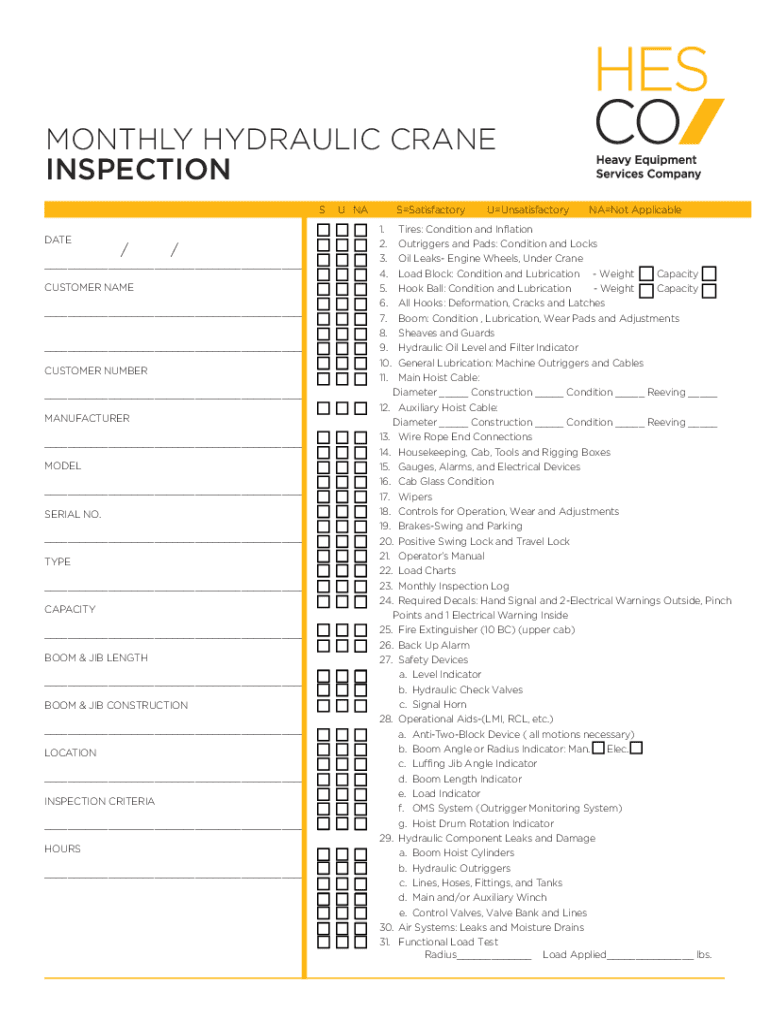
The HESCO Crane Inspection and Crane Safety checklist serves as a vital tool within industrial operations to ensure the safe and efficient functioning of cranes. It is designed to assess various mechanical and operational aspects of cranes, maintaining compliance with safety regulations and preventing accidents. This checklist meticulously examines components such as tires, outriggers, oil leaks, cables, safety devices, and operational aids to confirm their condition and operational readiness. By categorizing inspection results as satisfactory, unsatisfactory, or not applicable, it provides a clear detection method for issues requiring immediate attention.
How to Use the HESCO Crane Inspection Checklist
Utilizing the HESCO Crane Inspection Checklist involves a systematic approach to evaluating the physical and functional status of cranes. Inspectors should follow these steps:
- Gather Essential Tools and Documents: Ensure all necessary tools and the most current version of the checklist are ready.
- Checklist Review: Begin with a thorough review of each item on the checklist, understanding the criteria for evaluation.
- Physical Inspection: Examine each component detailed in the checklist, including tires for wear, cables for integrity, and outriggers for stability.
- Functional Testing: Operate the crane to test safety devices and operational aids, ensuring they perform as expected.
- Document Findings: Record satisfactory, unsatisfactory, or not applicable findings for each checklist item, providing notes for any anomalies.
- Reporting: Compile the results in a formal report, highlighting urgent repairs or maintenance needed.
Steps to Complete the HESCO Crane Inspection Checklist
Completing the HESCO Crane Inspection Checklist involves a detailed inspection process to ensure thoroughness and accuracy:
- Preparation: Confirm that the crane is accessible and operational for inspection, securing any required permits.
- Safety Precautions: Implement all necessary safety measures, such as wearing personal protective equipment and ensuring the work area is hazard-free.
- Component Checks: Methodically assess each crane component listed on the checklist, from mechanical parts like hydraulics to electronic safety devices.
- Operational Checks: Engage the crane in standard operational modes to verify the functioning of control systems and safety mechanisms.
- Documentation: Complete the checklist with necessary remarks on each area's condition, noting any immediate areas of concern.
- Final Review: Conduct a final review to ensure all areas are inspected and documented properly, addressing any outstanding discrepancies.
Key Elements of the HESCO Crane Inspection Checklist
The checklist is comprehensive, focusing on both physical and operational aspects to ensure complete safety and legal compliance:
- Tires: Examine for adequate tread and pressure, checking for signs of damage or wear.
- Outriggers: Verify stability, secure locking mechanisms, and the absence of rust or fractures.
- Oil Leaks: Check hydraulic systems and joints for any signs of fluid leakage.
- Cables: Assess for fraying, corrosion, and adequate tension; ensure pulleys are functioning correctly.
- Safety Devices: Test the effectiveness of emergency stop functions and load limiters.
- Operational Aids: Ensure aids such as load indicators and anti-collision systems work accurately.
Who Typically Uses the HESCO Crane Inspection Checklist
The checklist is primarily utilized by:
- Safety Inspectors: Individuals tasked with the safety and operational readiness of lifting equipment.
- Cranes Operators: Personnel directly operating cranes, ensuring that all safety and operational guidelines are followed.
- Maintenance Technicians: Professionals responsible for the upkeep and repair of crane equipment.
- Construction Managers: Supervisors ensuring compliance with safety regulations on construction sites.


State-Specific Rules for Crane Safety
While the checklist offers a standardized approach, specific state and local regulations may influence its application:
- California: Requires additional environmental considerations due to stringent pollution controls.
- New York: Demands a higher frequency of inspections due to dense urban construction environments.
- Texas: Allows for more flexible inspection intervals in rural locations, yet maintains strict safety compliance.
Legal Use of the HESCO Crane Inspection Checklist
Using the HESCO Crane Inspection Checklist adheres to federal legislation, such as OSHA standards, ensuring cranes meet safety requirements. Regular inspections, as mandated, help prevent legal implications arising from operational failures or safety violations. Businesses are legally obliged to maintain records of inspections to avoid substantial fines and liability in case of accidents.
Software Compatibility and Integration
Technology plays a significant role in enhancing the checklist's effectiveness. While DocHub doesn't directly offer a specialized inspection software solution, it integrates with common digital platforms making it easy to document inspections digitally:
- Digital Checklists: Import PDF or DOC versions into DocHub for editing and annotation.
- Real-Time Updates: Synchronize inspection data with cloud storage through services like Google Drive or Dropbox.
- Documentation Management: Use electronic signing features for approvals, ensuring all stakeholders acknowledge inspection results seamlessly.
State-by-State Differences in Crane Safety Standards
Due to varying local legislation, the checklist may be adapted to fit state-specific safety standards:
- Washington: Incorporates earthquake readiness checks.
- Colorado: Focuses on altitude-specific performance checks.
- Florida: Emphasizes hurricane preparedness and robustness against high winds.
Understanding these elements ensures that crane operations comply with both state and federal regulations, enhancing safety and efficiency across various regions.




