





Definition & Meaning
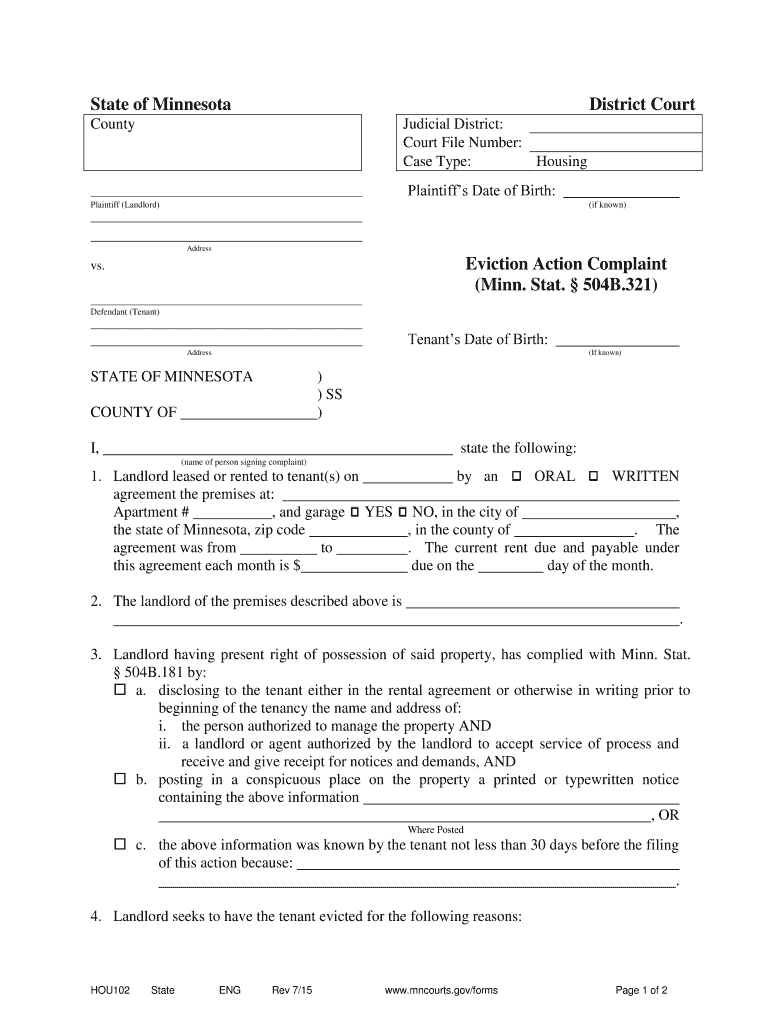
The Minnesota Eviction Complaint Form is a legal document used in the State of Minnesota to initiate the process of removing a tenant from a rental property. This form serves as the formal complaint filed by a landlord (plaintiff) against a tenant (defendant) in the district court. The document outlines specific reasons for the eviction, such as non-payment of rent, violation of lease terms, or other breaches of the rental agreement. Additionally, it seeks restitution of the premises and may include requests for recovery of unpaid balances and attorney fees. The form provides the legal framework necessary to commence eviction proceedings and protect the landlord's property rights under Minnesota law.
How to Use the Minnesota Eviction Complaint Form
-
Prepare the Necessary Information: Before completing the form, gather all essential information about the tenant, including full name, address, and details of the lease agreement. Ensure you have documented evidence of any breach or violation, such as unpaid rent notices or photographs of property damage.
-
Complete the Form: Fill out the form with accurate information. This typically includes the names of the involved parties, the property address, the reason for eviction, and any supporting details that substantiate your claim.
-
File the Form: Submit the completed document to the district court in the county where the rental property is located. You may need to pay a filing fee. Make sure to retain a copy for your records.
-
Serve the Tenant: After filing, the court will issue a summons, which must be served to the tenant along with the complaint form. The delivery can be carried out by a sheriff or a process server, ensuring the tenant is officially notified of the legal action.
-
Attend the Hearing: The court will schedule a hearing date. Both parties—the landlord and tenant—must attend. During the hearing, the court will review the evidence and testimonies before making a ruling.
How to Obtain the Minnesota Eviction Complaint Form
-
Online: You can download the form from the Minnesota Judicial Branch website. Ensure you choose the most recent version to comply with any changes in state guidelines.
-
In-Person: Obtain a copy from your local district court clerk's office. They can also provide guidance on completing and filing the form.
-
Legal Help: Contact a legal aid organization or an attorney. They can assist in preparing the form and provide legal advice.
Steps to Complete the Minnesota Eviction Complaint Form
-
Identify the Parties: Enter the full legal names and contact information for both the landlord and tenant.
-
Describe the Property: Provide the exact address of the rental property, including unit number if applicable.
-
State the Grounds for Eviction: Clearly specify the reason(s) for seeking eviction, such as lease violations or failure to pay rent.
-
Specify the Relief Sought: Outline what you are requesting from the court, including repossession of the property and any financial compensation.
-
Verification: Include a statement ensuring that all the information provided is truthful and accurate to your knowledge.
-
Attach Supporting Documents: Enclose copies of the lease agreement, written notices given to the tenant, and any other relevant evidence.
-
Sign and Date: Ensure the form is signed by the landlord or their attorney.
Key Elements of the Minnesota Eviction Complaint Form
-
Plaintiff and Defendant Information: Identifies the party initiating the eviction and the tenant involved.
-
Legal Grounds for Eviction: Details the specific legal reasons that justify the eviction under Minnesota housing laws.
-
Property Description: Provides a precise description of the rental unit subject to the complaint.
-
Relief Requested: Specifies the outcomes sought by the landlord, such as eviction and payment of owed rent.
-
Verification of Military Status: Confirms whether the tenant is on active military duty, as this affects the eviction process under federal law.
State-Specific Rules for the Minnesota Eviction Complaint Form
-
Timeframes: Notice periods required before filing can vary based on the reason for eviction. For example, non-payment of rent typically requires a written demand for payment before proceeding with the complaint.
-
Court Procedures: Each county may have its own specific filing requirements or local court rules. It's critical to check for any additional regulations at the district court where the complaint will be filed.
-
Tenant Rights: Tenants have the right to contest the eviction and present defenses. It's vital for landlords to follow proper procedures to avoid dismissal of the case.
Important Terms Related to the Minnesota Eviction Complaint Form
-
Unlawful Detainer: Refers to a tenant's possession of the premises without legal right, which is the subject of an eviction complaint.
-
Writ of Recovery: A court order issued after a successful eviction trial, allowing the landlord to regain possession of the property.
-
Notice to Quit: A written notice served to a tenant indicating the intention to terminate the lease or occupancy due to specific breaches.
-
Summons: An official notification sent to the tenant notifying them of the eviction lawsuit and the scheduled court hearing.
Legal Use of the Minnesota Eviction Complaint Form
-
Compliance with Housing Laws: Landlords must ensure the form aligns with Minnesota’s legal requirements for eviction. Errors in filing or procedure can lead to delays or dismissal.
-
Legal Representation: While self-representation is possible, landlords are encouraged to seek legal counsel, particularly in complex cases or when corporate entities are involved.
-
Documentation and Record-Keeping: Retain copies of all submitted forms, notices, and correspondence as part of the eviction record for future reference and potential appeals.




