





Definition & Meaning
When discussing "form online," it typically refers to electronic versions of traditionally paper-based forms, enabling users to fill out, submit, and process them digitally. These forms could range from tax forms, legal documents, employee onboarding paperwork, or any document that requires structured information collection but is now processed in an online environment.
Using forms online streamlines interactions between individuals and organizations, allowing easier collection, modification, and sharing of data. They are often hosted on secure platforms that ensure the protection of sensitive data during submission and transfer. This digital transition also supports enhancements like auto-fill capabilities, drop-down menus for selections, and integrated calculators for numeric inputs. As online forms grow in prevalence, they become crucial in facilitating daily transactions across both personal and professional realms.
Steps to Complete the Form Online
Completing an online form usually involves several sequential steps, each designed to ensure data integrity and that all required information is collected efficiently:
-
Access the Digital Form: Start by navigating to the website hosting the online form. This could be a government portal, corporate website, or cloud-based document management service such as DocHub.
-
Create or Log into an Account: Many platforms require users to sign up or log into an existing account to access the full functionalities, such as saving progress or submitting the form.
-
Fill Out Necessary Fields: Enter the required information into the designated fields. Typically, required fields are marked with an asterisk (*) or are otherwise highlighted.
-
Attach Supporting Documents if Needed: Some forms may require uploading additional documents. Be prepared with digital copies and ensure they are in an acceptable format, such as PDF, DOC, or JPEG.
-
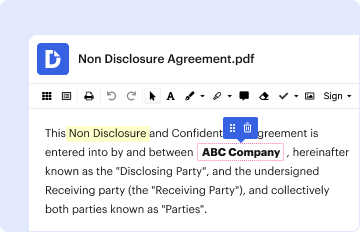
Review and Edit: Before submission, carefully review entered information to ensure accuracy. Some platforms allow editing using features like text boxes, annotations, and highlighting for clarity.
-
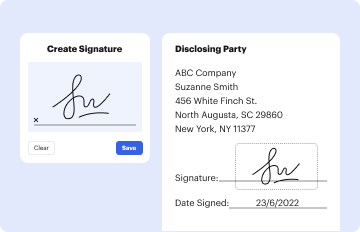
Sign the Document Electronically: If required, use electronic signature tools compliant with legal standards, such as those adhering to the ESIGN Act, to sign the form.
-
Submit the Form: Once all information is verified and signatures are applied, complete the form submission process by clicking the submit button. Confirmation of submission and receipt notification may follow.
-
Track Status: Some platforms offer tracking options to check form approval status or identify needed follow-up actions.
Why Should You Form Online
Choosing to utilize online forms provides numerous advantages:
-
Efficiency: Completing a form online is generally faster than filling out paper forms, reducing administrative workload and potential delays from postal services.
-
Accuracy: Online forms often include validations that ensure proper data formats, reducing human errors associated with manual data entry.
-
Accessibility: Users can fill out forms from any location with internet access, supporting mobile use and ensuring convenience.
-
Security: Online forms leverage encryption and secure login credentials, protecting sensitive information during transmission. Advanced authentication protocols further enhance security.
-
Environmentally Friendly: Decreases the need for paper and physical storage requirements, supporting corporate sustainability measures.
Who Typically Uses the Form Online
Online forms are widely used across various sectors and by different groups:
-
Government Agencies: Often employ online forms for tax filings, permits, licenses, and benefits applications.
-
Businesses: Utilize forms for customer surveys, contract agreements, employee onboarding, and other HR processes.
-
Educational Institutions: Use forms for student admissions, course registrations, and staff evaluations.
-
Medical Facilities: Implement forms for patient intake, consent forms, and electronic health record updates.
-
Nonprofits: Use them for volunteer sign-ups, event registrations, and grant applications.


Key Elements of the Form Online
An effective online form should incorporate several key components to be functional and user-friendly:
-
Clear Instructions: Providing users with clear guidance on what information is required and how to enter it correctly.
-
Responsive Design: Adapts to various devices, ensuring usability on smartphones, tablets, and desktops.
-
Automated Notifications: Alerts users to errors, missing information, or successful submissions.
-
Logical Flow: Arranges questions so they guide users naturally through the form process, minimizing confusion and ensuring completeness.
-
Editable Fields: Allows users to modify input without restarting the entire process, enhancing user satisfaction and accuracy.
-
Secure Submission: Employs encryption protocols to protect data integrity throughout the submission process.
Creating and Managing Fillable Forms
Platforms like DocHub offer robust tools for creating fillable forms, turning static documents into interactive templates. Users can embed various field types like text entries, checkboxes, and dropdown menus. This interactivity ensures that information collection aligns with the intended purpose.
When setting up a form, making fields mandatory or assigning specific fields to designated recipients can streamline gathering data from multiple sources. This tool is invaluable for standardized forms like applications or evaluations, facilitating quick and organized information collection.
Legally Binding Electronic Signatures
Using platforms that provide electronic signature capabilities ensures compliance with legal standards, such as the ESIGN Act. Techniques to capture electronic signatures include drawing with a mouse or trackpad, uploading an image of a handwritten signature, or capturing signatures via touchscreen devices.
Once generated, signatures can be stored for repeated use, allowing for quick application across different documents. Tracking capabilities monitor each step of the signing process, including viewing, signing, and updates, providing a comprehensive audit trail.
Examples of Using the Form Online
Real-world applications of online forms are diverse:
-
Tax Filings: Individuals can file taxes using electronic forms on government websites, submitting documents like W-2 and 1099 electronically.
-
Job Applications: Candidates fill out employment applications online, uploading resumes and cover letters as part of the process.
-
Medical Appointments: Patients pre-fill intake forms, reducing wait times during initial medical visits.
-
Contracts and Agreements: Businesses execute contracts digitally, allowing e-signatures to finalize agreements efficiently.
Across these examples, online forms reduce delays associated with traditional methods while enhancing data accuracy and security.