






Definition & Meaning
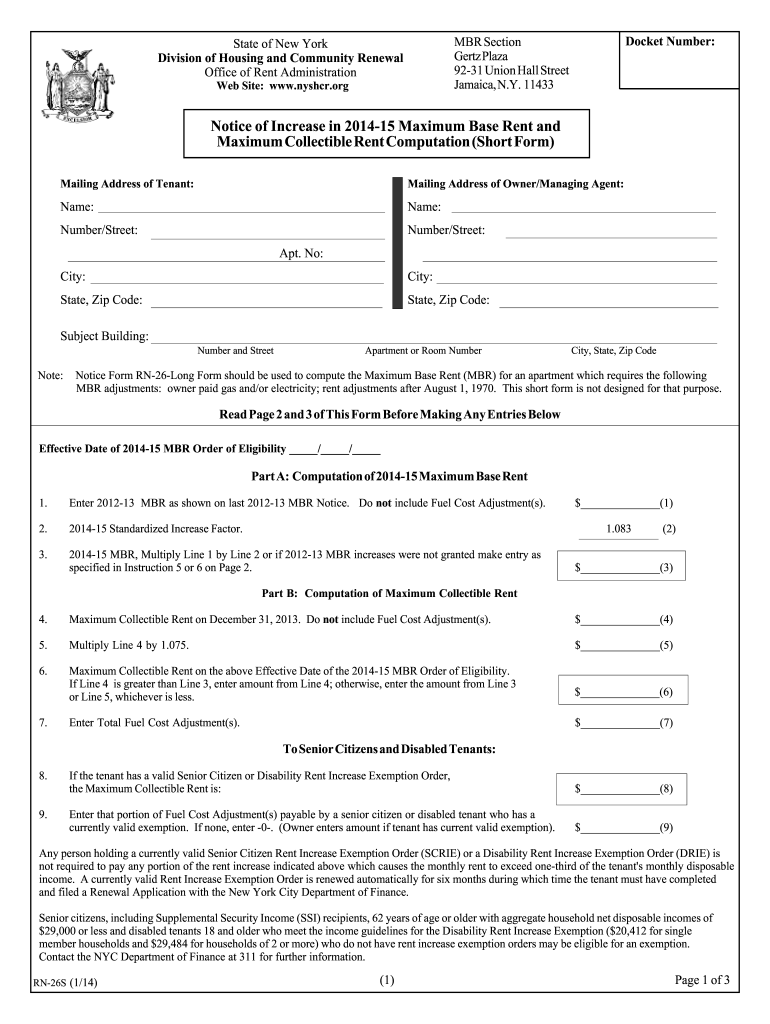
The "Notice of Increase in 2014-15 Maximum Base Rent and Maximum - housing ny" is a formal notification used within the framework of rent-controlled apartments in New York City to inform tenants of impending increases in their rent amounts. It involves determining the Maximum Base Rent (MBR) and Maximum Collectible Rent (MCR), which are calculated based on specific city regulations to ensure compliance with local housing laws.
Important Terms Related to Maximum Base Rent
Understanding the terminology is crucial when dealing with rent-controlled apartments. Key terms include:
- Maximum Base Rent (MBR): The highest legal rent a landlord can charge for a rent-controlled apartment.
- Maximum Collectible Rent (MCR): The actual rent that can be collected, often a percentage of the MBR.
- Rent-Controlled Apartments: Housing units regulated by policies that limit the amount a landlord can charge in rent.
Steps to Complete the Notice
Completing the "Notice of Increase in 2014-15 Maximum Base Rent and Maximum" involves several critical steps:
- Calculation of MBR and MCR: Utilize the approved guidelines to compute rent amounts.
- Fill Out the Notice: Enter tenant and property details, along with calculated rent figures.
- Verification: Double-check calculations and data for accuracy.
- Service of Notice: Deliver the notice to tenants using approved methods.
- Documentation: Keep copies for record-keeping and potential audits.
Key Elements of the Notice
The notice must include several essential elements to be valid:
- Tenant's name and address
- Details of the rental property
- Current and calculated MBR and MCR values
- Effective date of the rent increase
- Instructions for tenant inquiries or disputes
Legal Use of the Notice
The legal use of the "Notice of Increase in 2014-15 Maximum Base Rent and Maximum" is governed by New York City rent control laws. Landlords must serve this notice to inform tenants of their rights and changes in their rental agreements. The landlord must ensure compliance with these regulations to avoid penalties.
Who Typically Uses the Notice
Landlords and property managers of rent-controlled apartments typically use this notice. It serves as a part of their legal obligations to tenants, ensuring transparency and adherence to local rent control regulations.


Examples of Utilizing the Notice
Real-world applications of this notice may involve:
- Landlords: Calculating the MBR for their buildings and legally notifying tenants of adjustments.
- Tenants: Understanding increases and initiating disputes if there are discrepancies.
Penalties for Non-Compliance
Failure to comply with the notice requirements can lead to significant penalties, such as:
- Fines: Monetary penalties for failing to issue the notice appropriately.
- Legal Action: Tenants may take legal action if they believe their rights under rent control laws are violated.
- Enforcement Measures: Local housing authorities may impose corrective actions against non-compliant landlords.
State-Specific Rules
While the notice is specific to New York, certain variations can arise based on local jurisdictions:
- New York City: Has stringent guidelines for rent control.
- Statewide Variations: Differences may exist in calculation methods or notification procedures.
These sections provide a comprehensive overview of the notice, helping landlords, tenants, and other stakeholders to navigate the complexities of rent control in New York City.