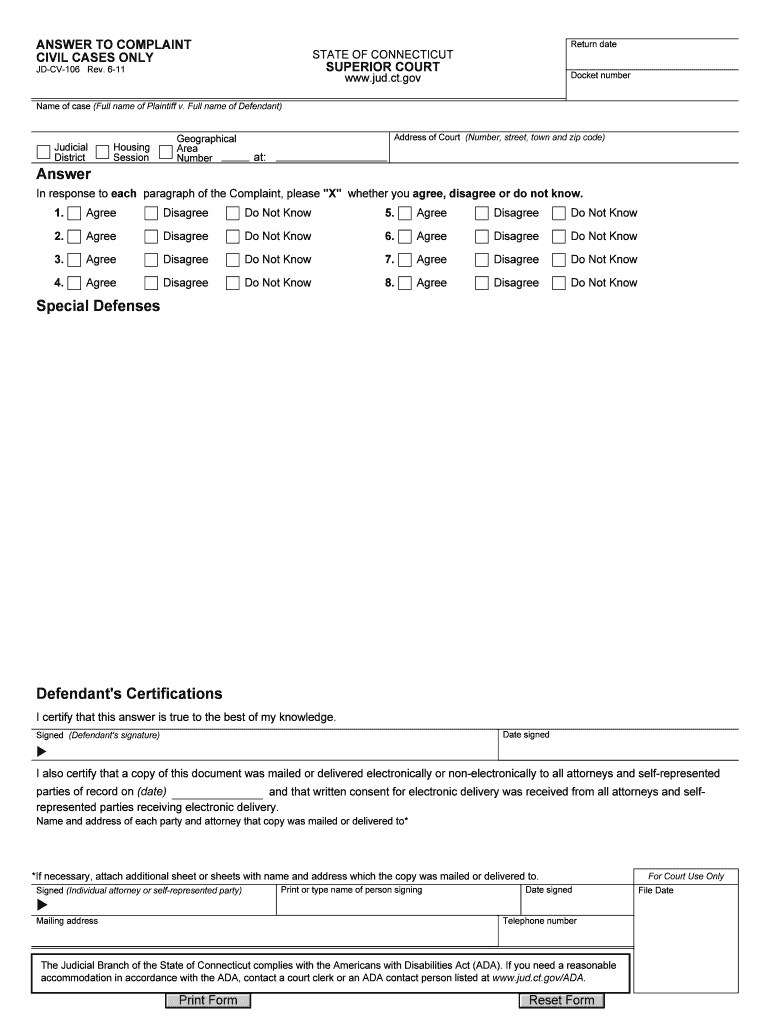







Definition & Meaning of the JD-CV Form
The JD-CV form, known formally as the “Answer to Complaint,” is utilized in the Connecticut civil court system. This legal document allows defendants to formally respond to a complaint filed against them. By providing a structured method for defendants to agree, disagree, or declare ignorance about each allegation in the complaint, the form ensures that all parties involved clearly understand the points of contention.
How to Use the JD-CV Form
To effectively use the JD-CV form, defendants should follow a series of precise steps. Each paragraph of the complaint must be addressed:
- Review Allegations: Carefully read each paragraph of the complaint to understand the charges.
- Respond Accordingly:
- Agree: If the defendant admits the allegation, they should mark the paragraph as “Agree.”
- Disagree: If the allegation is contested, they should mark it as “Disagree” and may need to provide further explanation or evidence.
- Lack Sufficient Information: If unsure about an allegation, mark it as “Do Not Know.”
- Special Defenses: Include any defenses or arguments that might counteract the claims even if the facts are admitted.
- Certification: Ensure the form is properly certified, confirming the truthfulness of the responses.
Steps to Complete the JD-CV Form
Completing the JD-CV form involves several detailed stages to ensure accuracy and legality:
- Obtain the Form: Secure a copy of the form from the Connecticut Judicial Branch's website or a local court office.
- Fill Out Personal Information: Enter the defendant’s name, case number, and court details at the top of the form.
- Respond to Complaint Sections: Methodically complete each section as described in the "How to Use" segment.
- Utilize Legal Assistance: It’s advisable to consult with a legal professional, especially if the case involves complex legal issues.
- Submit the Form: File the completed form with the court and deliver copies to the plaintiff and any other required parties.
Key Elements of the JD-CV Form
The JD-CV form comprises several critical sections that defendants must address:
- Complaint Response: This is the main component where the defendant addresses each allegation.
- Special Defenses: Offers space for additional defenses not directly related to the main allegations.
- Certification Section: Confirms the defendant's assertion that their responses are truthful.
Legal Use of the JD-CV Form
In the legal context, the JD-CV form serves multiple functions:
- Defining Dispute Areas: It helps clarify which issues are contested and which are agreed upon, streamlining the court's focus.
- Recording Official Responses: The form is an official record used in court to document the defendant’s stance on each allegation.
- Ensuring Fairness: By providing a standardized format, it helps guarantee that defendants have a chance to present their side.
Important Terms Related to the JD-CV Form
A thorough understanding of specific terms is essential for completing this form:
- Complaint: The initial document filed by a plaintiff outlining the allegations against the defendant.
- Defendant: The person or entity against whom the complaint is filed.
- Plaintiff: The party who initiates the lawsuit by filing the complaint.
- Certified Copy: A version of the form that has been officially recognized and filed with the court system.
Examples of Using the JD-CV Form
Consider a case where a tenant files a complaint against their landlord for failing to make necessary repairs. The landlord can use the JD-CV form to:
- Agree with the need for repair in specific areas.
- Disagree with allegations of negligence if repairs were attempted.
- Submit Special Defenses showing evidence of the tenant's refusal to provide access for repairs.
Who Typically Uses the JD-CV Form
Primarily, this form is used by:
- Defendants in Civil Cases: Anyone needing to formally respond to a complaint in Connecticut's civil legal system.
- Legal Professionals: Attorneys guiding clients through civil disputes.
- Business Entities: Companies or partnerships involved in lawsuits requiring official responses.