
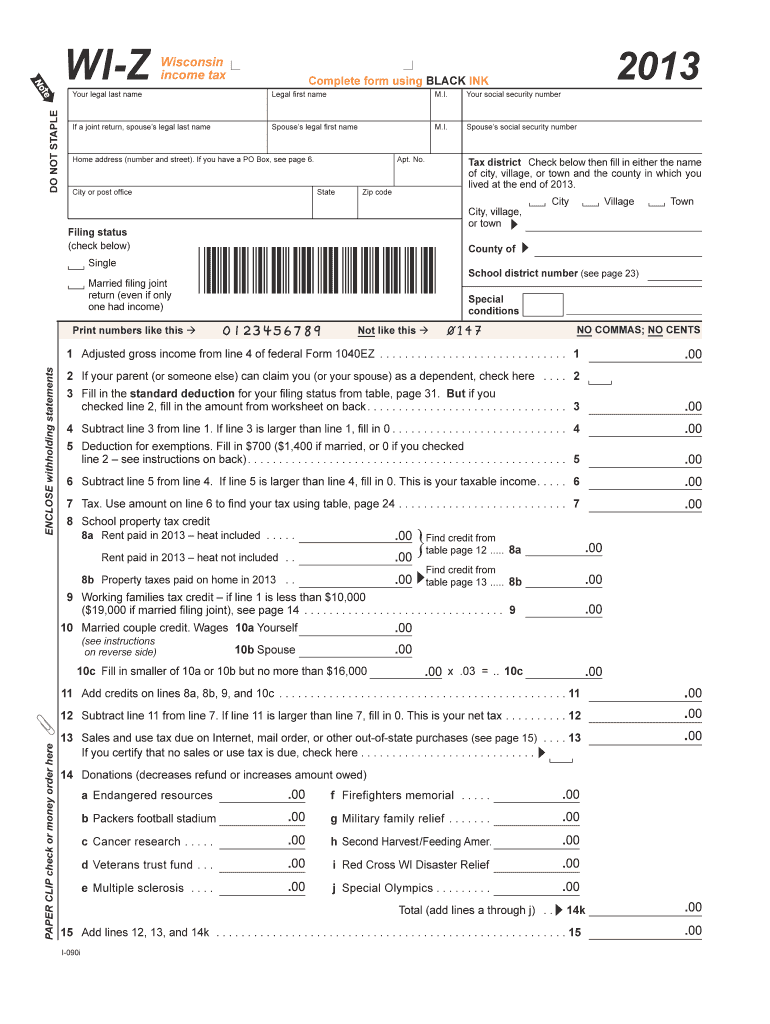







Definition and Purpose of Wisconsin Form 1A
The Wisconsin Form 1A, once known as the Income Tax Return (Short Form), served as a simplified method for residents of Wisconsin to report their state income taxes. Though now deemed obsolete, this form was specifically designed to streamline the tax filing process for individuals with straightforward tax situations. It allowed taxpayers to declare personal income, calculate potential refunds or tax liabilities, and apply eligible state tax credits. The form targeted individuals whose financial circumstances did not require the more detailed reporting found in longer, complex forms.
Steps to Complete the Wisconsin Form 1A
-
Gather Documents: Collect all necessary documents, such as W-2 forms, 1099s, and documentation of deductions and credits.
-
Personal Information: Fill out personal details, including name, address, and Social Security number, ensuring accuracy to prevent filing issues.
-
Income Reporting: Accurately report total income from all applicable sources, relying on accompanying instructional guidelines to allocate income to the correct sections of the form.
-
Claim Deductions and Credits: Review available deductions and state-specific credits, meticulously calculate their qualified amounts, and enter this information accurately to determine taxable income and benefits.
-
Calculate Tax: Use provided tables to compute state tax obligation based on reported income and adjusted calculations after deductions and credits are factored in.
-
Finalize and Submit: Review for accuracy, sign, and date the form before submitting by the specified deadline via mail or drop-off to the Wisconsin Department of Revenue.
Who Typically Used the Wisconsin Form 1A
Form 1A was primarily used by Wisconsin residents with uncomplicated financial scenarios. It catered to retirees, students, and part-time workers who anticipated straightforward tax calculations without the need for intricate schedules. The short form appealed to those who did not own businesses or extensive investments, and income sources typically encompassed wages and limited dividends or interest.
Required Documents for Completing Wisconsin Form 1A
- Identification: Valid photo ID and Social Security cards for taxpayer and dependents.
- Income Statements: Includes W-2, 1099 forms, and any corresponding schedules or supporting documentation for other income types.
- Withholding Statements: Enclose with the form to substantiate claimed credits.
- Proof of Deductions: Documentation supporting deductions claimed, such as receipts or records from eligible expenses like education or healthcare.
Eligibility Criteria for Wisconsin Form 1A
Form 1A served individuals meeting certain conditions, including:
- Resident status in Wisconsin during the tax year.
- Sources of income limited to wages, salaries, tips, dividends, or interest.
- No requirement for advanced itemization or complex tax exemptions.
- No engagement in freelance or business operations necessitating extensive forms like schedules C or SE for income reporting.


State-Specific Rules Governing Wisconsin Form 1A
Wisconsin-specific tax legislation impacted the use and completion of Form 1A through particular credits and deductions offered to residents:
- Residents were eligible for Wisconsin standard deductions, which differed from federal benefits.
- State offers specific credits for property taxes and school expenses, making it crucial to understand these state-exclusive benefits when filing.
Legal Implications of the Wisconsin Form 1A
Users of Wisconsin Form 1A could legally declare their state income and claim deductions and credits under Wisconsin laws. Filing accuracy bore legal significance, as errors could inadvertently lead to audits, fines, or additional penalties for misreporting. Therefore, it was essential to adhere to state tax laws, guidelines, and deadlines.
Filing Deadlines and Important Dates
Wisconsin required timely submission of Form 1A by April 15th annually, consistent with the federal income tax filing deadline. Extensions could be requested but must be approved by the Wisconsin Department of Revenue. Penalties for late submissions included interest on owed tax amounts and additional fees.
Form Submission Methods
- Mail: Traditional postal services allowed submission directly to the Wisconsin Department of Revenue.
- In-Person: Drop-off was permitted at physical Department locations for hands-on verification by tax officials.
- While online submissions were generally aligned with modern practices, at the time of its use, Form 1A primarily emphasized these tangible submission methodologies.
Alternatives and Versions of Wisconsin Form 1A
- Form WI-Z: A possible alternative for filers with even simpler tax situations, offering a minimalist approach compared to Form 1A.
- Wisconsin Form 1: A more comprehensive form that further explored complex income scenarios and deductions.
IRS Guidelines Impacting Form 1A
While Form 1A focused on state tax obligations, users were also subject to broader IRS guidelines influencing federal tax returns. Wisconsin residents were often required to align computations, such as adjusted gross income, with the corresponding lines on the federal 1040 series to maintain consistency in both state and federal submissions.




