
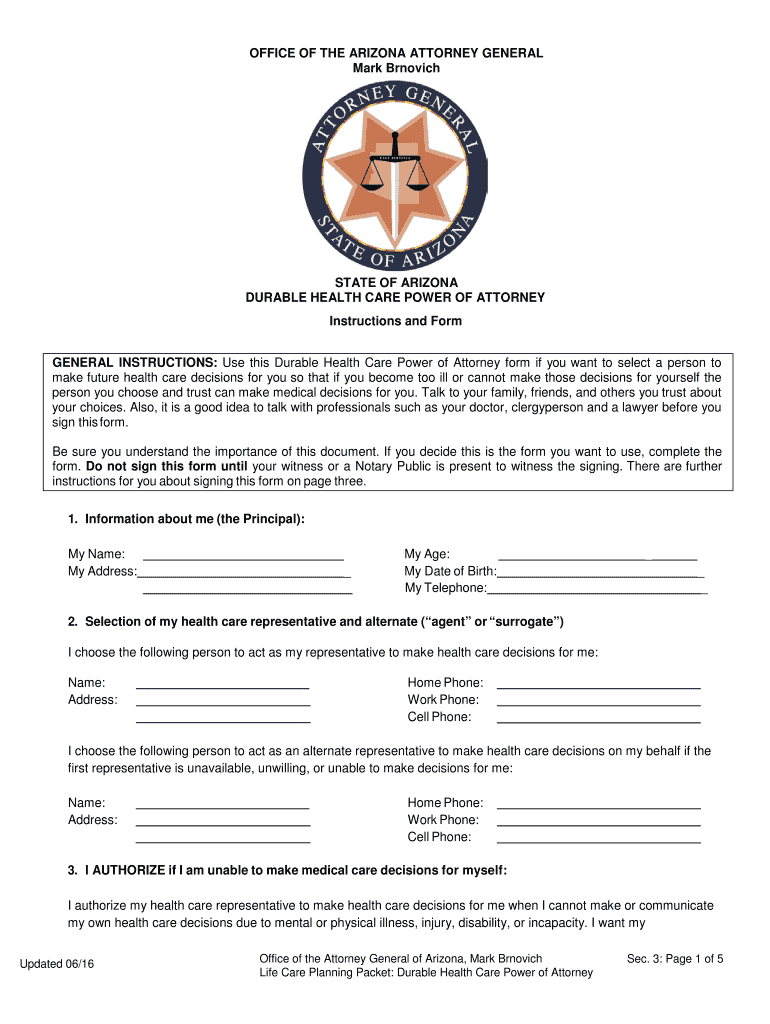







Definition & Meaning
The Arizona Medical Power of Attorney form is a legal document that allows an individual, known as the principal, to designate a representative (health care agent) to make medical decisions on their behalf in scenarios where they become incapacitated and unable to communicate their preferences. This form is vital for ensuring that the principal's medical care wishes are honored during times when they may not have the capacity to express them. It covers decisions about treatments, procedures, and other health care aspects, highlighting the importance of having clear communication with the chosen agent regarding the principal's medical preferences.
Key Elements of the Arizona Medical Power of Attorney Form
This legal document includes several essential components that ensure it functions effectively:
- Health Care Agent Designation: The principal must select a trusted individual to act as their health care agent, responsible for making medical decisions in their stead.
- Medical Decisions Authorization: The form specifies the extent of the agent’s authority, detailing which types of medical decisions they can make.
- Special Instructions: It allows the principal to provide specific guidance on particular treatments or procedures, ensuring that their personal wishes are clearly communicated.
- Preferences on Autopsy, Organ Donation, and Funeral Arrangements: The form can encompass preferences related to autopsy procedures, organ donation, and funeral arrangements, catering to the principal's comprehensive health care wishes.
- Execution Requirements: For the form to be legally binding, it must be signed in the presence of a witness or a Notary Public, ensuring its authenticity and the principal's voluntary consent.
Steps to Complete the Arizona Medical Power of Attorney Form
- Download the Form: Obtain a copy of the Arizona Medical Power of Attorney form, available from various sources including the Arizona Attorney General's Office website.
- Fill in Personal Details: Provide detailed information about the principal and the designated health care agent, including full names, addresses, and contact information.
- Specify Agent's Authority: Clearly outline the scope of the decisions the agent is allowed to make.
- Include Special Instructions: If there are specific medical wishes or conditions, these need to be detailed within the form.
- Sign the Form: The principal and a disinterested witness or a Notary Public must sign the document to validate it legally.
- Distribute Copies: Once signed, distribute executed copies to relevant parties, such as the health care agent, primary physician, and close family members.
State-Specific Rules for the Arizona Medical Power of Attorney Form
In Arizona, the medical power of attorney document must adhere to specific state legal requirements:
- Witness Requirements: Arizona mandates that the form be signed in the presence of one disinterested witness or a Notary Public. The witness cannot be the appointed health care agent.
- Age and Competence: The principal must be at least eighteen years old and of sound mind when completing the form.
- Revocation Procedures: The principal can revoke the power of attorney at any time by notifying the health care provider either verbally or in writing.
- Agent Limitations: Arizona law imposes specific restrictions on who can be appointed as an agent, such as prohibiting the designation of minors.
How to Obtain the Arizona Medical Power of Attorney Form
To access the Arizona Medical Power of Attorney Form:
- Online Access: It can be downloaded from the Arizona Attorney General’s website, among various legal form providers that offer state-specific documents.
- Local Legal Assistance: Local attorneys specializing in estate or health care law can provide these forms and guidance on completing them correctly.
- Community Resources: Hospitals and elder care facilities often provide these forms, along with informational resources to help guide individuals through the completion process.
Examples of Using the Arizona Medical Power of Attorney Form
Consider the following scenarios highlighting the importance of this form:
- Medical Incapacity: If an individual suffers from a severe accident or illness rendering them unconscious, the appointed health care agent can make treatment decisions based on the individual's documented medical preferences.
- Planned Medical Procedures: Before undergoing a major surgery, a person may execute this form to ensure their medical care aligns with their values, even if unexpected complications occur.
- Chronic Illness Management: For those with progressive conditions, this form allows their agent to make decisions about ongoing medical treatments and interventions as the illness progresses.
Legal Use of the Arizona Medical Power of Attorney Form
This document serves a critical legal function in Arizona by ensuring the principal's medical treatment preferences are respected. The legal validity of the form relies on its proper completion and adherence to state-specific rules. This includes appropriate signatures, witness requirements, and clear detailing of the health care agent's powers. It also provides a means to convey specific health care directives, mitigating conflicts and ensuring clarity among family members and medical staff about the principal's desires.
Important Terms Related to Arizona Medical Power of Attorney Form
Understanding some key terms is crucial for effectively using this form:
- Principal: Individual creating the power of attorney who designates a health care agent.
- Health Care Agent: Person appointed to make medical decisions for the principal if they are unable to do so.
- Durable: Indicates that the power of attorney remains effective even if the principal becomes incapacitated.
- Witness and Notary: Individuals or entities required to validate the execution of the form by observing the signing process.
- Revocation: The cancellation of the power of attorney by the principal, which can be done verbally or in writing.


