Definition & Meaning
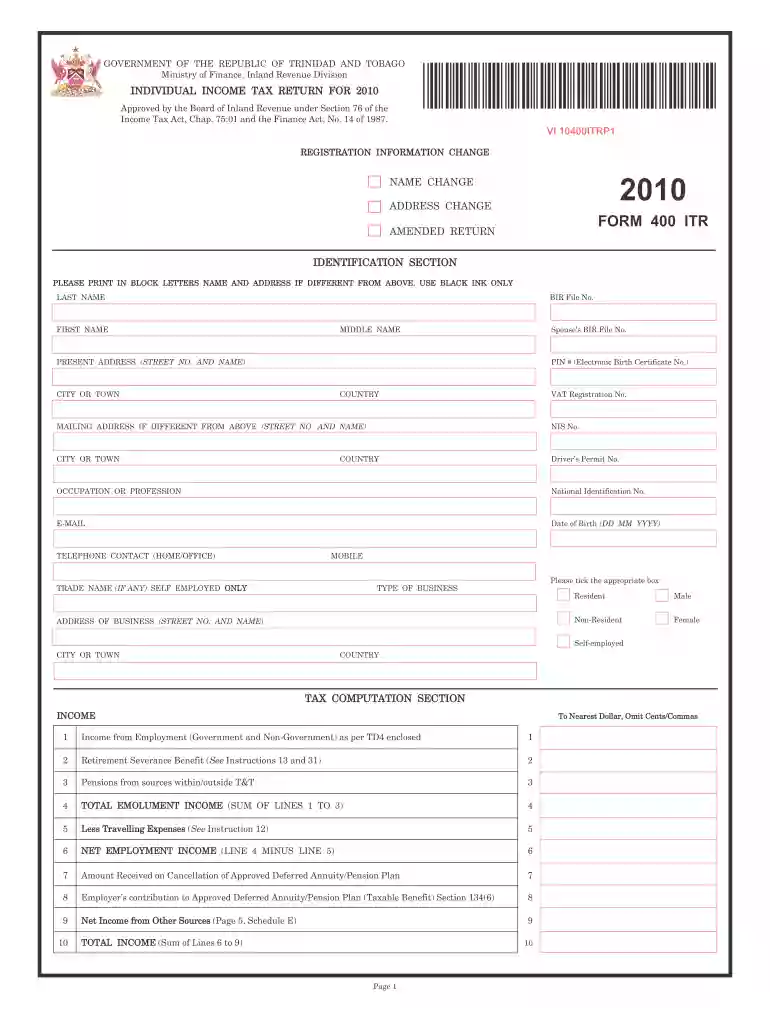
The "tax return form Trinidad and Tobago 2010" refers to the official document issued by the Ministry of Finance, Inland Revenue Division of Trinidad and Tobago, designed for individual taxpayers to report their income, deductions, and tax liabilities for the year 2010. This form is part of the regulatory process governed by the Income Tax Act and Finance Act, requiring individuals to provide accurate financial information.
Components of the Form
- Personal Information: Includes the taxpayer's name, address, and personal identification details.
- Income Computation: Details various income streams, such as wages, dividends, and rental income.
- Deductions: Lists potential deductions, like charitable contributions and business expenses, reducing taxable income.
- Tax Calculations: Calculates the amount owed or refunded based on reported income and deductions.
- Schedules: Supplemental sections for specific income types, like capital gains or business profits.
How to Use the Tax Return Form Trinidad and Tobago 2010
Step-by-Step Filing Instructions
- Gather Necessary Documents: Collect all relevant financial records, including income statements, receipts for deductions, and last year's tax returns if available.
- Complete Personal Information: Fill out your personal details accurately, ensuring all identifiers match official records.
- Report All Income: Enter income from various sources. Use supporting documents like employer W-2s or investment 1099s.
- Enter Deductions: Identify eligible deductions and ensure proper documentation to support each claim.
- Calculate Tax Liability: Utilize the form's instructions to determine your tax due or refund.
- Review and Sign: Verify all information, check calculations, and provide a signature to validate the submission.
- Submit the Form: Choose an appropriate submission method – by mail or electronically.
Tips for Accurate Filing
- Double-check all entries for accuracy.
- Use the declaration statement as a self-verification tool.
- Consider consulting a tax professional for complex situations.
Key Elements of the Tax Return Form Trinidad and Tobago 2010
Essential Sections
- Declaration Statement: A legal affirmation of the information's accuracy, which the taxpayer must sign.
- Income and Deductions: Detailed areas where taxpayers input their earnings and deductions.
- Tax Summary: A concise recap of the total tax liability, payments, and refunds.
- Supplementary Schedules: Additional pages for specific income or deductions not covered in the main form.
Importance of Each Section
- Personal Information: Ensures verification and prevents fraud.
- Income Reporting: Accurate income reporting is critical for determining the correct tax liability.
- Deductions: Directly impact the taxable income, affecting the overall tax owed.
- Tax Calculation & Summary: Provide a comprehensive overview of the financial status and tax requirements.
Steps to Complete the Tax Return Form Trinidad and Tobago 2010
Detailed Filing Process
- Acquire the Form: Available at the Ministry of Finance website or local tax offices.
- Collect Documentation: Essential for verifying income and justifying deductions.
- Fill Out Personal Details: Ensure all provided information aligns with existing records.
- Input Financial Data: Accurately record income and eligible deductions.
- Use Worksheets: Provided in the form to assist in calculating figures.
- Review and Confirm: Double-check all sections for errors or omissions.
- Sign and Submit: Conclude with a signature to finalize the filing.
Important Terms Related to Tax Return Form Trinidad and Tobago 2010
Glossary of Essential Terms
- Taxable Income: The portion of income subject to taxation after deductions.
- Deductions: Expenses subtracted from income to reduce taxable amounts.
- Tax Liability: The total tax obligation owed by the taxpayer.
- Schedules: Additional documents to report specific types of income or deductions.
- Declaration: The formal statement confirming the accuracy of the tax return.
Application in Context
- Deduction Examples: Include business-related expenses, which can significantly reduce taxable income.
- Tax Liability Calculation: Important to verify to ensure compliance and accurate payments.
- Schedules Usage: Essential for complex financial situations involving investments or business income.
Penalties for Non-Compliance
Consequences of Irregular Filing
- Monetary Fines: Penalties for late or incorrect filing can result in significant financial fees.
- Legal Action: Severe cases of evasion or fraud may lead to legal proceedings.
- Interest on Late Payment: Additional interest may accrue on unpaid tax liabilities.
Avoiding Penalties
- File promptly before deadlines.
- Ensure accurate calculations and full disclosure.
- Retain copies of all filings and supporting documentation.
Ways to Submit the Tax Return
- Online Submission: Through the Ministry of Finance's official portal, offering a streamlined filing process.
- Mail Submission: Traditional method involving sending the completed form to the local tax office.
- In-Person Submission: Direct filing at a tax office for immediate assistance and confirmation.
Considerations for Submission
- Timeliness: Ensure submission ahead of deadlines to avoid penalties.
- Record Keeping: Maintain proofs of submission, like electronic confirmations or postal receipts.
- Format Validity: Verify adherence to submission guidelines whether online or through mail.
Targeted Taxpayer Profiles
- Individuals: Primarily those who earn income within Trinidad and Tobago during the tax year.
- Business Owners: Particularly small business proprietors or self-employed persons.
- Retirees: Those receiving pensions or investment income requiring tax assessment.
Scenarios of Use
- Freelancers: Need to report diverse income streams accurately.
- Property Owners: Rental income subject to taxation necessitates detailed reporting.
- Investors: Must disclose investment-related earnings in compliance with tax laws.
By following these structured content divisions, taxpayers and individuals can better understand the intricacies of the 2010 tax return filing process and ensure compliance with Trinidad and Tobago's regulations.