







Definition and Meaning
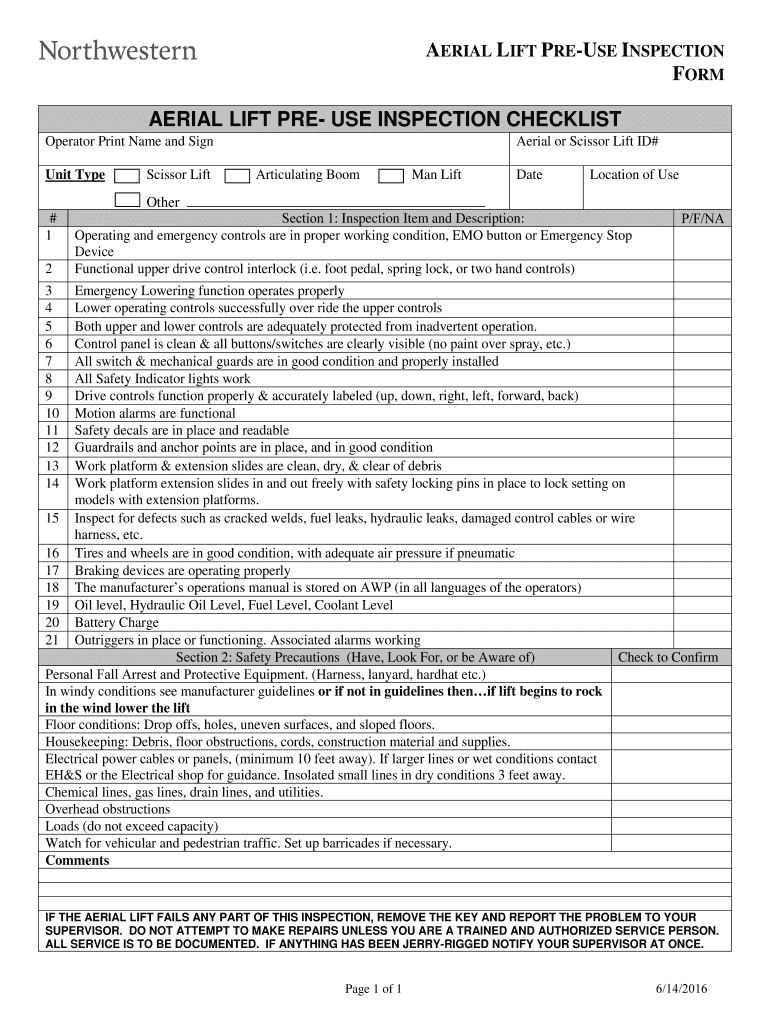
An Aerial Lift Pre-Use Inspection checklist is a document used to ensure the safety and functionality of aerial lifts before their operation. This form is crucial for verifying that all mechanical and safety features are in proper working condition. The checklist typically includes sections for inspecting operational controls, safety systems, and environmental conditions to confirm they meet the required standards. By adhering to this process, operators help ensure the safety of personnel and maintain compliance with occupational safety regulations.
Steps to Complete the Aerial Lift Pre-Use Inspection
-
Visual Inspection: Begin with a thorough visual check of the equipment, looking for any obvious signs of damage or wear on the aerial lift. Pay attention to components such as the lift arm, hydraulics, and safety harness attachments.
-
Operational Controls: Test all operational controls to verify they function as expected. This includes the lift and lower functions, tilting mechanisms, and any movement controls.
-
Safety Features: Ensure all safety features are working properly. These may include emergency stop switches, warning lights, alarms, and safety harness points.
-
Environmental Conditions: Check the surrounding area for potential hazards. Adjust safety measures to address any irregularities in terrain or potential obstructions.
-
Documentation: Record all findings and report any malfunctioning or defective components. It's essential not to operate the lift if safety standards are not fully met.
Key Elements of the Aerial Lift Pre-Use Inspection
-
Operational Controls: Includes checks on all mechanisms that control movement. Ensuring these are intact is vital for preventing accidents.
-
Safety Features: Encompasses systems like emergency stops and alarms. These are critical to safeguarding operators in emergencies.
-
Physical Condition: Examines physical parts such as ropes, cables, and bridges for integrity. Identifies wear that could lead to mechanical failure.
Who Typically Uses the Aerial Lift Pre-Use Inspection
This checklist is commonly used by construction companies, maintenance teams, and facility managers in the United States. The primary users are equipment operators and safety officers who ensure compliance with OSHA standards. By regularly implementing pre-use inspections, organizations aim to prevent accidents, extend equipment lifespan, and avoid costly repairs.


Legal Use of the Aerial Lift Pre-Use Inspection
Adhering to a pre-use inspection is often a legal requirement under federal regulations like OSHA in the United States. The guidelines stipulate that equipment must be inspected before each use to safeguard employees' health and safety. Non-compliance with these standards can lead to substantial fines or other legal consequences for businesses.
Examples of Using the Aerial Lift Pre-Use Inspection
Consider a construction site where aerial lifts are used to work on high structures. Each morning before operation, the crew chief uses the inspection checklist to verify the equipment's safety features. If a hydraulic component is found to be faulty, the lift is taken out of service for repairs, ensuring the safety of the construction workers.
How to Obtain the Aerial Lift Pre-Use Inspection
Aerial lift inspection forms can be obtained through various channels. Employers can access these documents from equipment manufacturers or safety agencies. Digital templates are available online, offering flexibility for customization to meet specific company requirements.
Penalties for Non-Compliance
Failing to conduct an aerial lift pre-use inspection can result in serious legal implications, including fines imposed by regulatory bodies such as OSHA. In the event of an accident, organizations may face heightened scrutiny and potential liability claims, primarily if it is found that an inspection could have prevented the incident.
Incorporating comprehensive pre-use inspections as a routine part of aerial lift operations not only helps ensure safety and compliance with legal standards but also promotes efficient workflow and minimizes downtime due to equipment failure. Each of these sections provides in-depth information on the importance and application of the Aerial Lift Pre-Use Inspection form, offering safety assurance and regulatory compliance for users.




