







Definition & Meaning
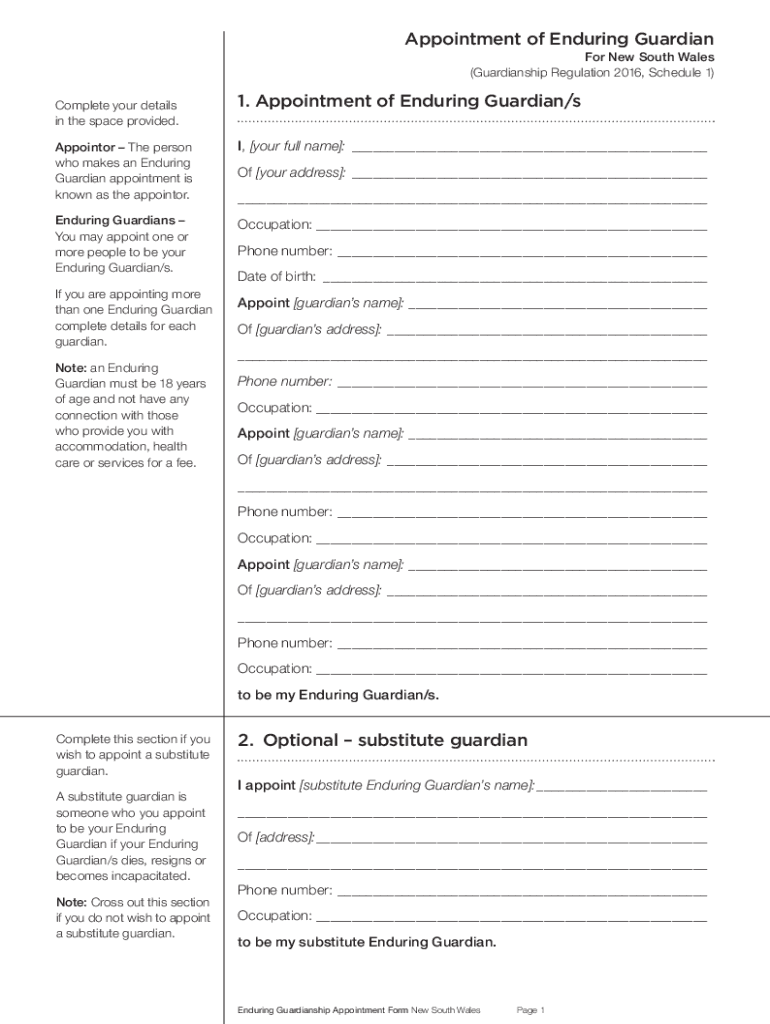
The "Free fillable Enduring Guardianship in New South Wales" is a legal form used to appoint one or more individuals as guardians to make health and lifestyle decisions on behalf of someone if they become unable to do so themselves. This document is essential for specifying who will be entrusted with making critical decisions regarding medical treatment, living arrangements, and personal services. The appointment is designed to last indefinitely, or until it is revoked or the appointer regains capacity, hence the term "enduring."
- Appointor: The individual who creates the enduring guardianship to authorize someone to make decisions on their behalf.
- Enduring Guardian: The person(s) appointed to make decisions if the appointor loses capacity.
- Scope: Covers areas like medical care, accommodation, and lifestyle choices.
Key Elements of the Form
Completing the "Free fillable Enduring Guardianship in New South Wales" form involves several key sections that require careful attention:
- Personal Information: This section records the details of the appointor, including full name, address, and date of birth.
- Details of Enduring Guardian(s): Information on the appointed guardian(s), including their names and contact details, must be provided.
- Specific Powers Granted: Specifies the areas where the enduring guardian is authorized to make decisions.
- Joint or Several Appointments: Options for appointing guardians to act jointly (together) or severally (independently).
- Optional Directives: Allows the appointer to provide specific instructions or preferences for the guardians to follow.
- Appointment Acceptance: Includes a section for the appointed guardian(s) to accept the appointment officially.
- Witness Certification: A section requiring signatures from eligible witnesses to validate the document.
Steps to Complete the Form
Completing the "Free fillable Enduring Guardianship in New South Wales" involves a thorough process to ensure the document is legally sound:
- Fill in Personal Details: Start with the appointor's and proposed guardian’s personal information.
- Specify Powers: Clearly outline what decisions the guardian(s) can make.
- Determine Appointment Type: Decide whether guardians will act jointly or severally.
- Include directives: Add any specific instructions for the guardians.
- Get Acceptance: Ensure the guardian(s) acknowledge their roles in the designated section.
- Secure Witness Signatures: Obtain the necessary witness signatures for legal validation.
How to Obtain the Form
Acquiring the "Free fillable Enduring Guardianship in New South Wales" form is a straightforward process tailored for accessibility:
- Online Platforms: Forms are available on legal document platforms that offer downloadable templates.
- Legal Offices: Forms can be obtained directly from legal advisers specializing in estate planning and guardianship matters.
- Community Centers: Some community support centers may provide the form to local residents.
Legal Use of the Form
The legal scope of the "Free fillable Enduring Guardianship in New South Wales" is significant for ensuring that the appointer’s wishes are respected:
- Health Decisions: Authorizes guardians to consent or refuse medical treatments on behalf of the appointer.
- Accommodation Changes: Guardians can decide on the appointer's residential arrangements based on their best interests.
- Day-to-Day Care: Entails decisions related to dietary, daily health, and lifestyle preferences.
Guardians appointed under this form are bound by the responsibilities outlined in the document and must act in the appointer’s best interest.
Who Typically Uses the Form
The form is generally utilized by:
- Elderly Individuals: Often used by older adults planning for potential future incapacity.
- Carers of Disabled Persons: Families caring for individuals with long-term disabilities may establish a guardianship to ensure continued support.
- Individuals with Chronic Health Conditions: Those expecting health deterioration may appoint guardians proactively.


State-Specific Rules and Regulations
The "Free fillable Enduring Guardianship in New South Wales" comes with specific rules due to jurisdictional laws:
- Witness Requirements: Must be signed in the presence of a legal advisor or eligible witness to be effective in New South Wales.
- Revocation Protocols: The process for canceling or changing the appointed guardian requires formal documentation and legal advice.
- Registration Options: While not always required, registering the document with a central authority can provide additional legal security.
Important Terms Related to the Form
Understanding key terminologies associated with the "Free fillable Enduring Guardianship in New South Wales" is vital:
- Capacity: Refers to the appointer's ability to make their own decisions.
- Revocation: The act of canceling the guardianship arrangement.
- Substitute Decision-Maker: Another term sometimes used for an enduring guardian, emphasizing their role in decision-making.
Examples of Using the Form
Real-world applications of the "Free fillable Enduring Guardianship in New South Wales" highlight its importance:
- Medical Emergency: When the appointer is incapacitated due to an accident, the guardian can make urgent medical decisions.
- Long-Term Care Planning: Families use this form to ensure proper care settings are chosen as per the appointer's preferences.
- Estate Management: Guardians might work alongside financial planners to ensure comprehensive care and living conditions for the appointer.
This form serves as an indispensable tool for individuals planning for future incapacity, helping ensure their affairs are managed according to their wishes.




